Learn what every symbol on the card means.Full credits and sources at beakbrain.com/symbols
 ForestDomed nestLarge · 928 g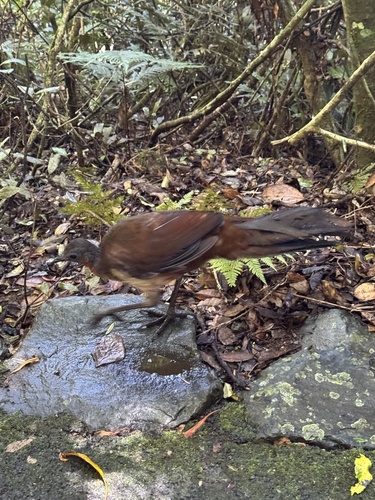




ID tip
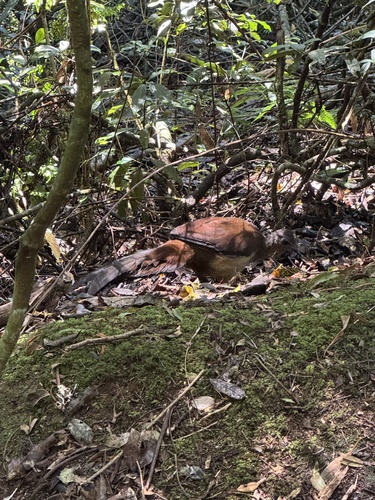
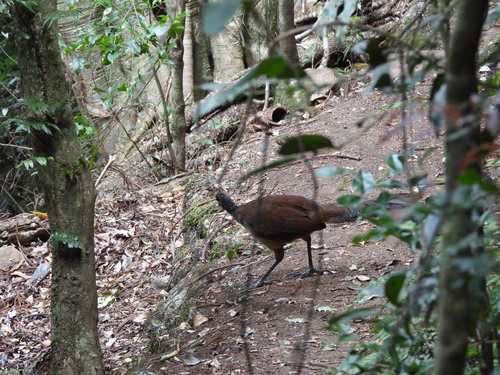
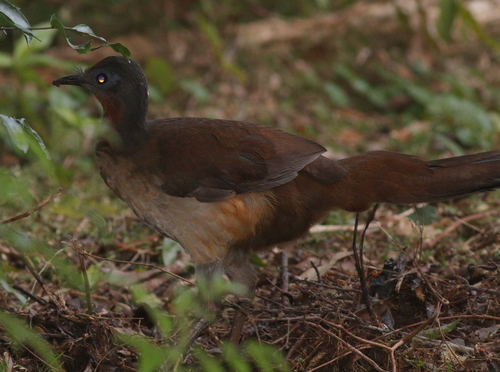
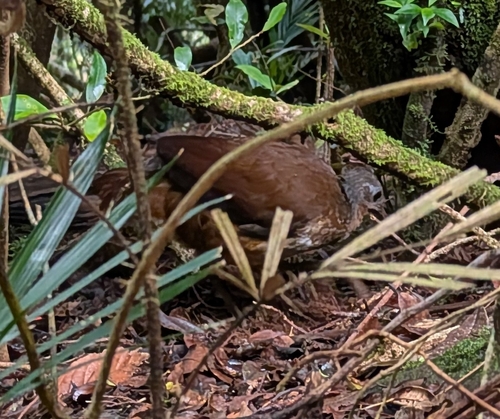
Albert's lyrebird is a ground-dwelling bird. Females reach approximately 75 cm (30 in) in length and males reach about 90 cm (35 in). They have a wingspan of 76–79 cm (30–31 in) and weigh about 930 g (33 oz). They are chestnut-brown in colour with a rufous undertail, rump, and throat. The bill is black; the iris dark brown or black, and it has a broad, blue-grey ring around the eye. The legs and feet are brownish grey to dark grey or black. The sexes are alike except for the shape of the tail. Voice: Both this species and the superb lyrebird have powerful, flexible voices and use a mixture of their own calls and mimicry of other species in long unbroken passages of song. In comparison to the superb lyrebird, the Albert's lyrebird limits its mimicry to a smaller range of species, with the green catbird and satin bowerbird featuring strongly in its imitations, as well as whipbirds and rosellas.
Text from Wikipedia, licensed CC BY-SA 4.0.
When to see the Albert's Lyrebird
One bar for each month, and every month is filled: this bird is recorded here in all twelve. The wide bar is October, the month with the most records.
Where to see the Albert's Lyrebird
The map shades 1 country with regular records. Everything unshaded has no records. Countries are listed below the map.
About the Albert's Lyrebird
Albert's lyrebird, sometimes known as the northern lyrebird, is a timid, pheasant-sized songbird which is endemic to subtropical rainforests of Australia, in a small area on the state border between New South Wales and Queensland. The rarer of the two species of lyrebirds, Albert's lyrebird is named after Prince Albert, the prince consort of Queen Victoria, queen of the United Kingdom. It lacks the elegant lyre-shaped tail feathers of the superb lyrebird and is found in a much more restricted range.
Text adapted from Wikipedia, licensed CC BY-SA 4.0.
Easily confused with

Side by side: Albert's Lyrebird vs Superb Lyrebird
Learn the Albert's Lyrebird in the BeakBrain App
Photo and call practice. Coming soon to iPhone and Android.
Play today's Daily BirdEvery photo and recording on this page is credited to its author under the licence shown. Spotted a problem with this page, or have a better photo? Contribute.