Learn what every symbol on the card means.Full credits and sources at beakbrain.com/symbols
 ForestCavity nestMedium · 84 g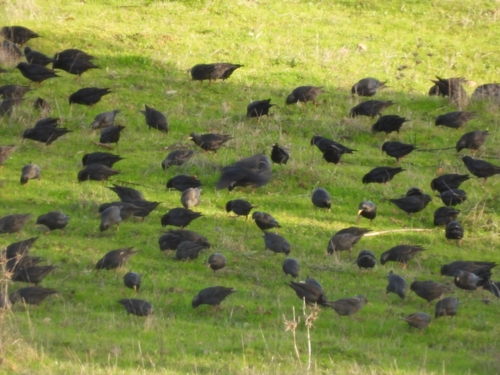


What the Spotless Starling sounds like


ID tip
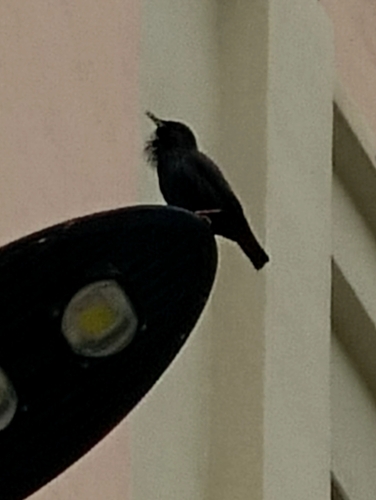
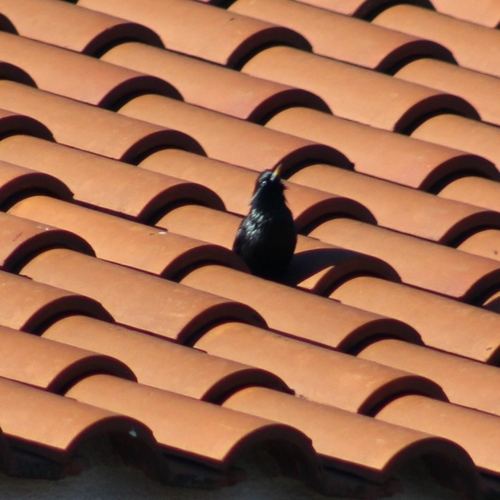
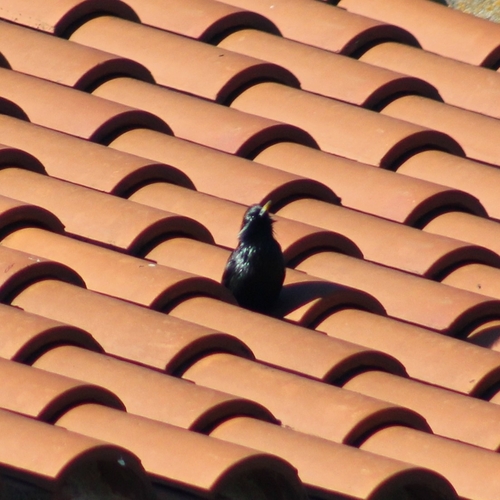
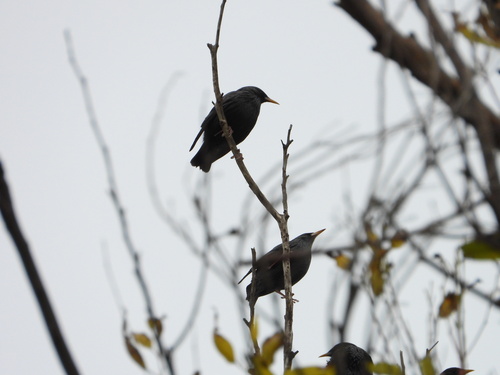
The adult spotless starling is very similar to the common starling, but marginally larger (21–23 cm length; 70–100 g weight), and has darker, oily-looking black plumage, slightly purple- or green-glossed in bright light, which is entirely spotless in spring and summer, and only with very small pale spots in winter plumage, formed by the pale tips of the feathers. It also differs in having conspicuously longer throat feathers (twice the length of those on common starlings), forming a shaggy "beard" which is particularly obvious when the bird is singing. Its legs are bright pink.
Text from Wikipedia, licensed CC BY-SA 4.0.
When to see the Spotless Starling
One bar for each month, and every month is filled: this bird is recorded here in all twelve. The wide bar is April, the month with the most records.
Where to see the Spotless Starling
The map shades 9 countries with regular records, and 1 more in a lighter tone where the bird turns up only as a stray. Everything unshaded has no records. Countries are listed below the map.
Recorded as a rare visitor in Germany.
About the Spotless Starling
The spotless starling is a passerine bird in the starling family, Sturnidae. It is closely related to the common starling, but has a much more restricted range, confined to the Iberian Peninsula, Northwest Africa, southernmost France, and the islands of Sicily, Corsica and Sardinia. It is largely non-migratory.
Text adapted from Wikipedia, licensed CC BY-SA 4.0.
Easily confused with

Side by side: Common Starling vs Spotless Starling
Learn the Spotless Starling in the BeakBrain App
Photo and call practice. Coming soon to iPhone and Android.
Play today's Daily BirdEvery photo and recording on this page is credited to its author under the licence shown. Spotted a problem with this page, or have a better photo? Contribute.