Learn what every symbol on the card means.Full credits and sources at beakbrain.com/symbols
 ShrublandCup nestSmall · 23 g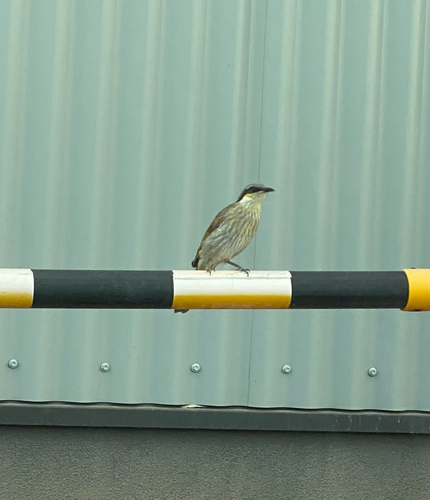

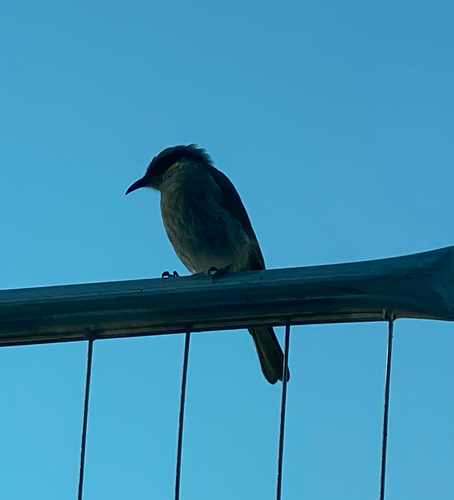


ID tip
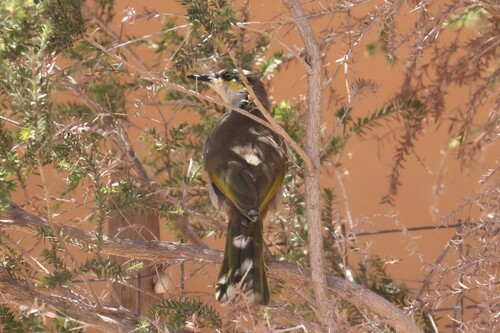
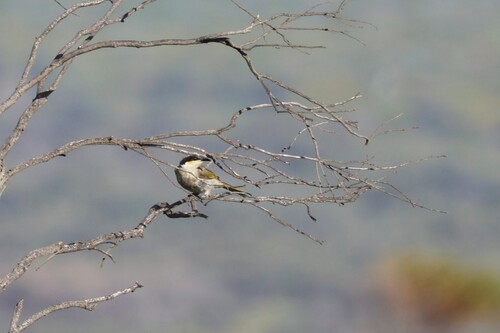
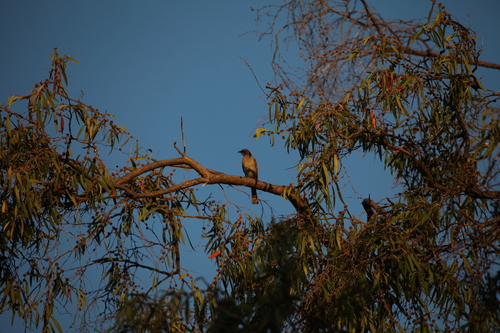
Singing honeyeaters can vary in length from 17–22 cm (6.7–8.7 in). Their overall appearance is grey-brown. The tail and wings are olive-green with flashes of yellow. There is a broad, black stripe running from the behind the beak to the back, and a yellow streak immediately below this from the eye. The bird's song ranges from scratchy to melodious. The song also varies according to where they live.
Text from Wikipedia, licensed CC BY-SA 4.0.
When to see the Singing Honeyeater
One bar for each month, and every month is filled: this bird is recorded here in all twelve. The wide bar is October, the month with the most records.
Where to see the Singing Honeyeater
The map shades 1 country with regular records. Everything unshaded has no records. Countries are listed below the map.
About the Singing Honeyeater
The singing honeyeater is a small bird found in Australia, and is part of the honeyeater family Meliphagidae. The bird lives in a wide range of shrubland, woodland, and coastal habitat. It is relatively common and is widespread right across Australia west of the Great Dividing Range, through to the west coast and on Western Australian coastal islands. It does not occur in other countries.
Text adapted from Wikipedia, licensed CC BY-SA 4.0.
Easily confused with
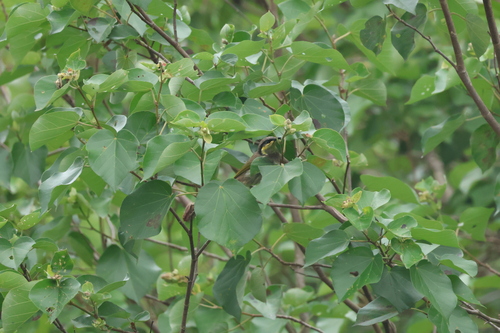 Mangrove HoneyeaterGavicalis fasciogularisVoice: The song is loud, melodious and ringing, but varying, e.g.
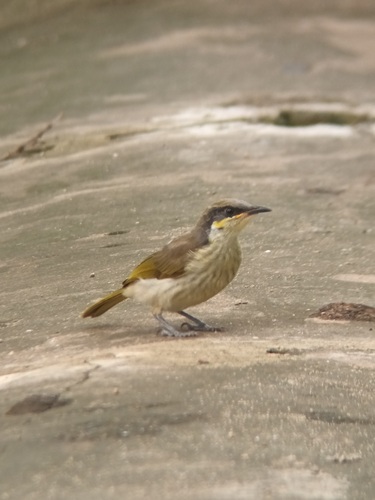 Varied HoneyeaterGavicalis versicolorThe varied honeyeater is a species of bird in the family Meliphagidae.
Side by side: Singing Honeyeater vs Tui · Blue-faced Honeyeater vs Singing Honeyeater
Learn the Singing Honeyeater in the BeakBrain App
Photo and call practice. Coming soon to iPhone and Android.
Play today's Daily BirdEvery photo and recording on this page is credited to its author under the licence shown. Spotted a problem with this page, or have a better photo? Contribute.