Learn what every symbol on the card means.Full credits and sources at beakbrain.com/symbols
 ForestCup nestSmall · 17 g


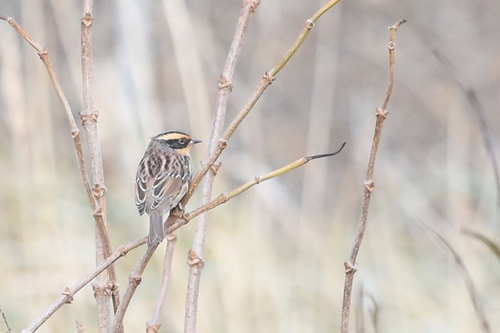
ID tip
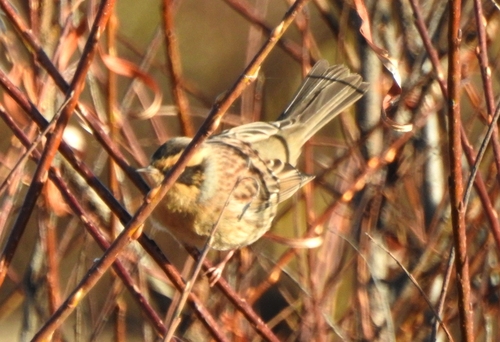
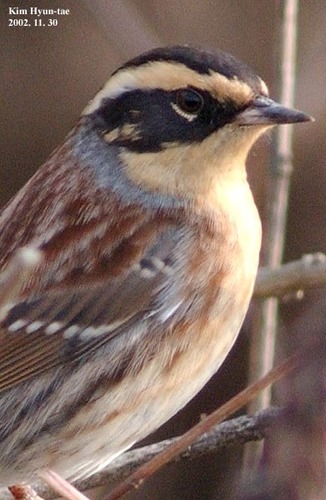
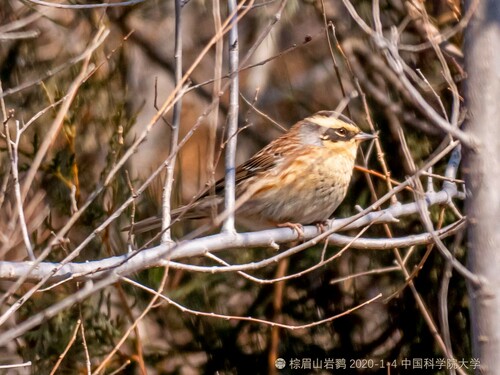
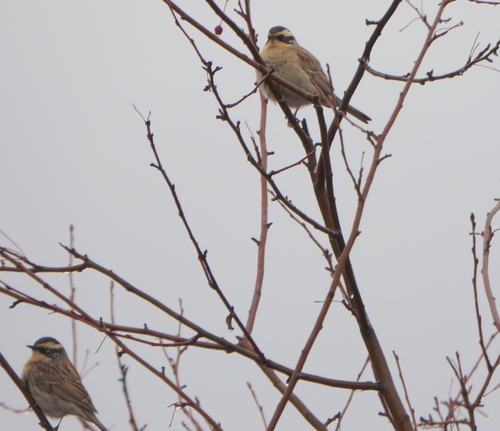
The Siberian accentor is on average 14.5 centimetres (5.7 in) long and weighs 17.5 grams (0.62 oz). The adult of the nominate race has brown upperparts and wings, with bright chestnut streaking on its back and a greyish-brown rump and tail. There are two narrow whitish bars on the folded wings. The head has a dark brown crown, a long, wide pale yellow supercilium, a blackish patch behind the eye and grey sides to the neck. The underparts are ochre yellow, becoming strongly buff on the flanks and greyish on the lower belly. Voice: The call of the Siberian accentor is a trisyllabic ti-ti-ti. The male's song, given from the top of a bush or tree, is a loud, high chirichiriri, variously described as similar to that of the Japanese accentor, the dunnock or the black-throated accentor. Breeding birds sing most vigorously early in the season, particularly at dawn, and some individuals may also sing on migration.
Text from Wikipedia, licensed CC BY-SA 4.0.
When to see the Siberian Accentor
One bar for each month. Filled bars are the 6 months with records; pale bars are months with none. The wide bar is October, the month with the most records.
Where to see the Siberian Accentor
The map shades 10 countries with regular records, and 12 more in a lighter tone where the bird turns up only as a stray. Everything unshaded has no records. Countries are listed below the map.
Recorded as a rare visitor in United States, United Kingdom, Norway, Canada, Finland, Netherlands, Germany, Taiwan, Ukraine, Luxembourg, Belarus, Latvia.
About the Siberian Accentor
The Siberian accentor is a small passerine bird that breeds in northern Russia from the Ural Mountains eastwards across Siberia. It is migratory, wintering in Korea and eastern China, with rare occurrences in western Europe and northwestern North America. Its typical breeding habitat is subarctic deciduous forests and open coniferous woodland, often close to water, although it also occurs in mountains and spruce taiga. It inhabits bushes and shrubs in winter, frequently near streams, but may also be found in dry grassland and woods.
Text adapted from Wikipedia, licensed CC BY-SA 4.0.
Easily confused with
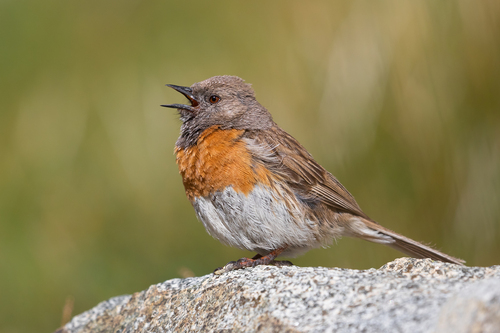 Robin AccentorPrunella rubeculoidesThe robin accentor is a large accentor, growing to a length of about 17 cm (7 in).
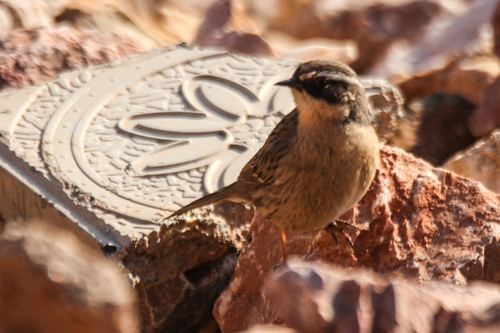 Brown AccentorPrunella fulvescensThey can be identified by their white supercilium (broader behind the eye), blackish-brown mask, blackish-brown ear-coverts, yellowish breast, and yellowish belly.
 Black-throated AccentorPrunella atrogularisThis is a dunnock-sized bird, 13.5–14 centimetres (5.3–5.5 in) in length.
Side by side: Dunnock vs Siberian Accentor · Alpine Accentor vs Siberian Accentor · Robin Accentor vs Siberian Accentor · Brown Accentor vs Siberian Accentor · Black-throated Accentor vs Siberian Accentor
Learn the Siberian Accentor in the BeakBrain App
Photo and call practice. Coming soon to iPhone and Android.
Play today's Daily BirdEvery photo and recording on this page is credited to its author under the licence shown. Spotted a problem with this page, or have a better photo? Contribute.