Learn what every symbol on the card means.Full credits and sources at beakbrain.com/symbols
 WetlandScrapeMedium · 66 g




ID tip
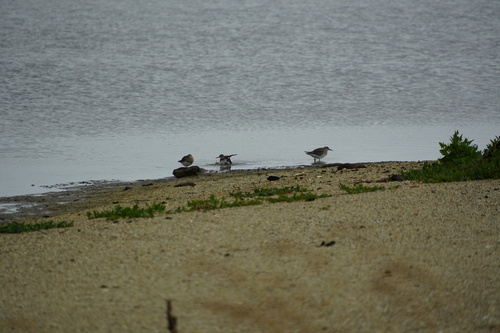
A small-medium wader, the portly sandpiper has a pot belly, flat back and somewhat drawn-out rear end. It has a mottled chestnut-brown upper body with sharp-looking feathers with a dark centre, a chestnut cap on its head and a brown stripe through each eye. Its bill is dark grey to black and straight, and its legs are olive- to yellow-coloured. The underparts are white or paler in colour, with the mottling similar to that on the breast and sides of the belly. The plumage is more vivid during the breeding season and duller in its winter plumage.
Text from Wikipedia, licensed CC BY-SA 4.0.
When to see the Sharp-tailed Sandpiper
One bar for each month. Filled bars are the 10 months with records; pale bars are months with none. The wide bar is October, the month with the most records.
Where to see the Sharp-tailed Sandpiper
The map shades 40 countries with regular records, and 16 more in a lighter tone where the bird turns up only as a stray. Everything unshaded has no records. Countries are listed below the map.
Recorded as a rare visitor in United Kingdom, France, Norway, Germany, Netherlands, India, South Africa, Finland, Denmark, Spain, Mexico, Brunei, Portugal, Bulgaria, Hungary, Kiribati.
About the Sharp-tailed Sandpiper
The sharp-tailed sandpiper is a small-medium migratory wader or shorebird, found mostly in Siberia during the summer breeding period and Australia for wintering.
Text adapted from Wikipedia, licensed CC BY-SA 4.0.
Easily confused with
 SurfbirdCalidris virgataThe surfbird is a large sandpiper, reminiscent of the turnstones or the great knot.
 Broad-billed SandpiperCalidris falcinellusBroad-billed sandpipers are small waders, 16–18 cm long, slightly smaller than the dunlin, but larger than the little stint; it has a longer, straighter bill with the tip distinctly kinked down, and shorter legs than dunlin.
 Buff-breasted SandpiperCalidris subruficollisThis species is brown above and has a buff face and underparts in all plumages.
Side by side: Red-necked Stint vs Sharp-tailed Sandpiper · Sharp-tailed Sandpiper vs Upland Sandpiper · Jack Snipe vs Sharp-tailed Sandpiper · Sharp-tailed Sandpiper vs Surfbird · Broad-billed Sandpiper vs Sharp-tailed Sandpiper · Buff-breasted Sandpiper vs Sharp-tailed Sandpiper
Learn the Sharp-tailed Sandpiper in the BeakBrain App
Photo and call practice. Coming soon to iPhone and Android.
Play today's Daily BirdEvery photo and recording on this page is credited to its author under the licence shown. Spotted a problem with this page, or have a better photo? Contribute.