Learn what every symbol on the card means.Full credits and sources at beakbrain.com/symbols
 WetlandDomed nestSmall · 44 g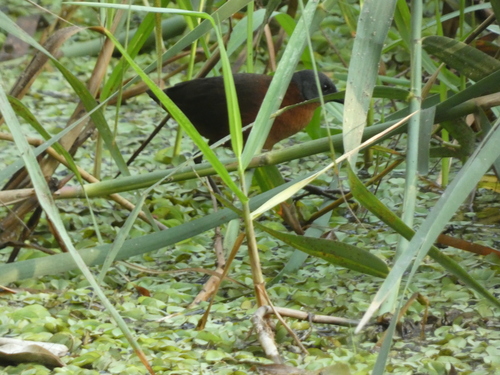

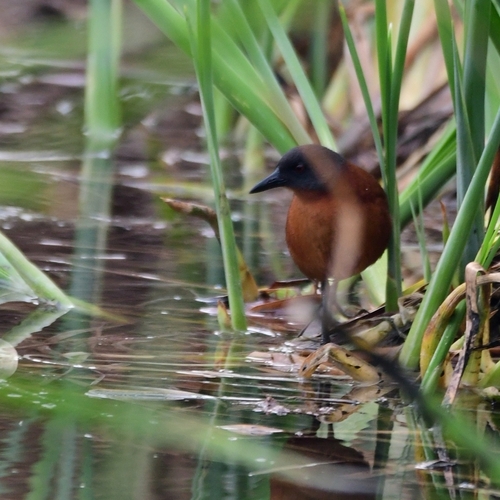
ID tip
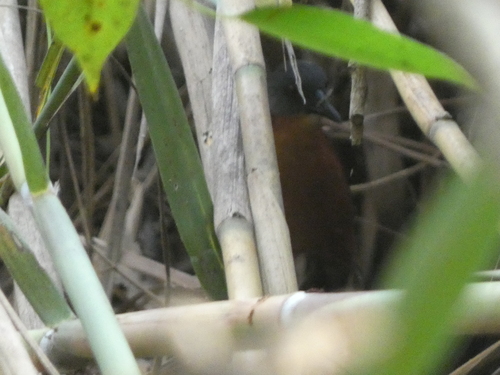
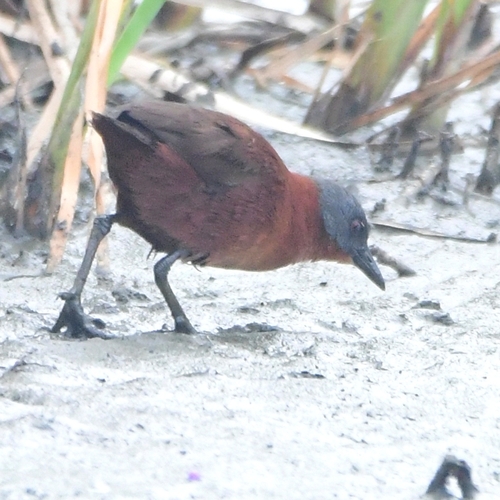
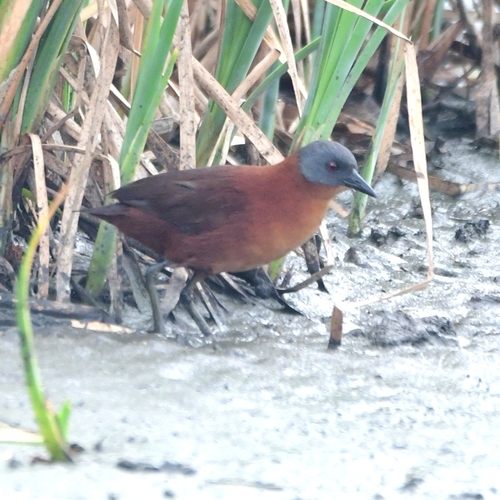
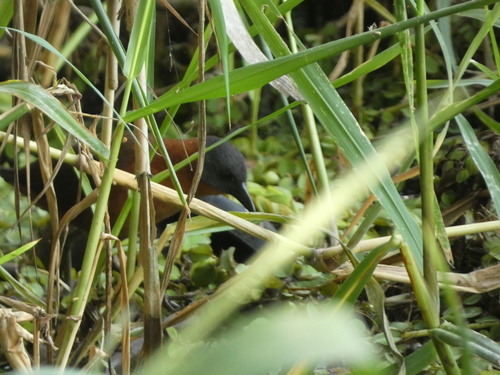
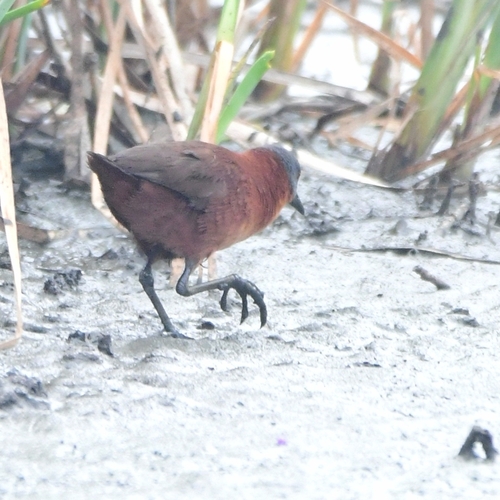
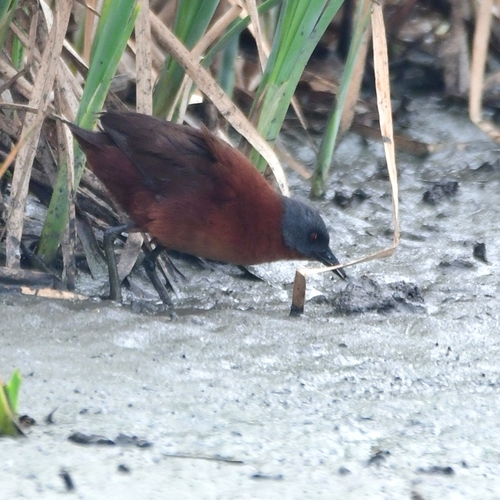
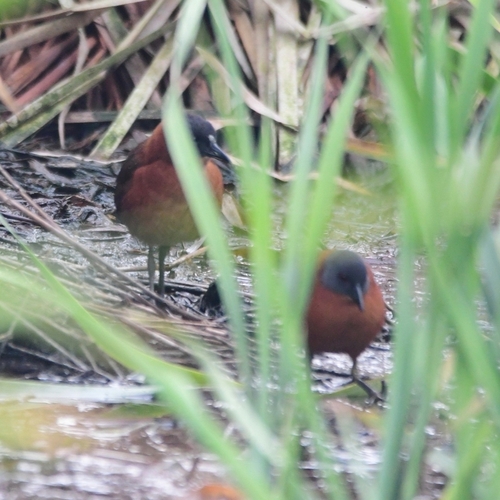
The ruddy crake can be identified by its ruddy plumage that can vary in shade and gray head with dark brown wings and tail. It is mostly bright chestnut in colour with a paler chin and belly, blackish crown and dark grey ear-coverts. Ruddy crakes are about the size of a sparrow. It is a small crake, 14–16.5 cm in length. Immature ruddy crakes tend to show discoloration on their midline or nape, such as a pale midline or chestnut colored nape. The bill is black, the iris is red and the legs and feet are olive-green.
Text from Wikipedia, licensed CC BY-SA 4.0.
When to see the Ruddy Crake
One bar for each month, and every month is filled: this bird is recorded here in all twelve. The wide bar is October, the month with the most records.
Where to see the Ruddy Crake
The map shades 6 countries with regular records. Everything unshaded has no records. Countries are listed below the map.
About the Ruddy Crake
The ruddy crake is a bird in the rail family, Rallidae. Other names the ruddy crake is known by are "red rail", "ruddy rail" and "red crake".
Text adapted from Wikipedia, licensed CC BY-SA 4.0.
Easily confused with
 Rufous-sided CrakeLaterallus melanophaiusThe rufous-sided crake is 14 to 18 cm (5.5 to 7.1 in) long and weighs about 50 to 60 g (1.8 to 2.1 oz).
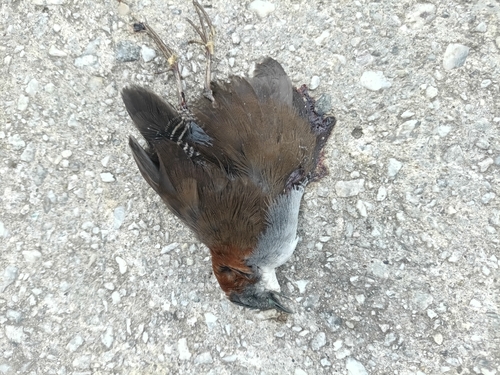 Grey-breasted CrakeLaterallus exilisThe grey-breasted crake is 14 to 15.5 cm (5.5 to 6.1 in) long.
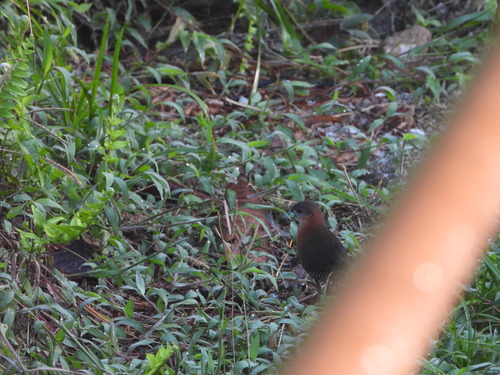 White-throated CrakeLaterallus albigularisThe white-throated crake is 14 to 16 cm (5.5 to 6.3 in) long.
Side by side: Ruddy Crake vs White-throated Crake · Ruddy Crake vs Spot-flanked Gallinule · Ruddy Crake vs Rufous-sided Crake · Grey-breasted Crake vs Ruddy Crake
Learn the Ruddy Crake in the BeakBrain App
Photo and call practice. Coming soon to iPhone and Android.
Play today's Daily BirdEvery photo and recording on this page is credited to its author under the licence shown. Spotted a problem with this page, or have a better photo? Contribute.