Learn what every symbol on the card means.Full credits and sources at beakbrain.com/symbols
 CoastalScrapeMedium · 187 g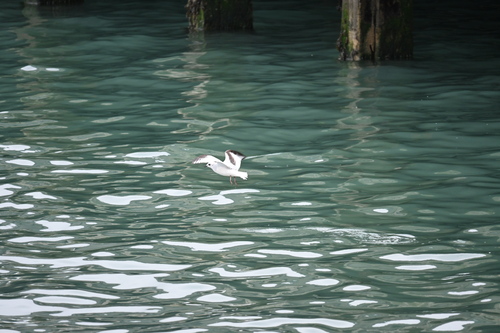



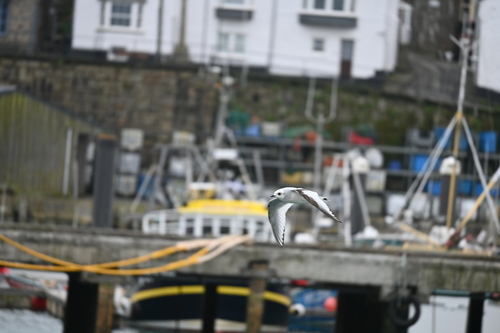

ID tip
This small bird is similar in size and some plumage characteristics to the little gull. It is slightly larger and longer winged than the little gull, and has more pointed wings and a wedge-shaped tail. Its legs are red. Summer adults are pale grey above and white below, with a pink flush to the body feathering, and a neat black neck ring. In winter, the neck collar is lost, and a small dark crescent develops behind the eye; the pink colour, which is diet-related, is lost in some but not all individuals.
Text from Wikipedia, licensed CC BY-SA 4.0.
When to see the Ross's Gull
One bar for each month. Filled bars are the 8 months with records; pale bars are months with none. The wide bar is June, the month with the most records.
Where to see the Ross's Gull
The map shades 13 countries with regular records, and 6 more in a lighter tone where the bird turns up only as a stray. Everything unshaded has no records. Countries are listed below the map.
Recorded as a rare visitor in Belgium, Spain, France, Finland, Poland, Germany.
About the Ross's Gull
Ross's gull is a small gull, the only species in its genus, although it has been suggested the genus should be merged with the closely related Hydrocoloeus, which otherwise only includes the little gull.
Text adapted from Wikipedia, licensed CC BY-SA 4.0.
Easily confused with
 Ivory GullPagophila eburneaThe ivory gull is 40–43 cm (16–17 in) long, with a wingspan of 108–120 cm (43–47 in); males weigh between 500–687 g (17.6–24.2 oz) and females between 448–583 g (15.8–20.6 oz).
 White-eyed GullIchthyaetus leucophthalmusThe white-eyed gull is a small gull that is endemic to the Red Sea.
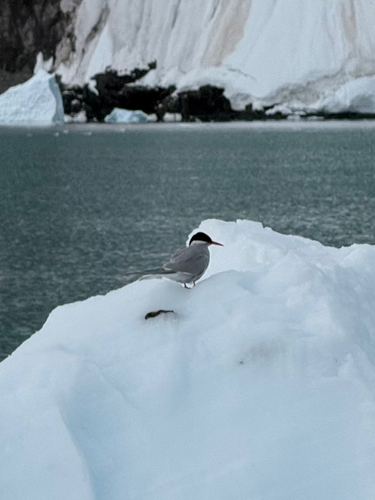 Antarctic TernSterna vittataThe Antarctic tern is a medium-sized tern ranging from 35 to 40 cm (14 to 16 in) in length with a wingspan of 74 to 79 cm (29 to 31 in).
Side by side: Ivory Gull vs Ross's Gull · Antarctic Tern vs Ross's Gull
Learn the Ross's Gull in the BeakBrain App
Photo and call practice. Coming soon to iPhone and Android.
Play today's Daily BirdEvery photo and recording on this page is credited to its author under the licence shown. Spotted a problem with this page, or have a better photo? Contribute.