Learn what every symbol on the card means.Full credits and sources at beakbrain.com/symbols
 GrasslandCup nestMedium · 81 g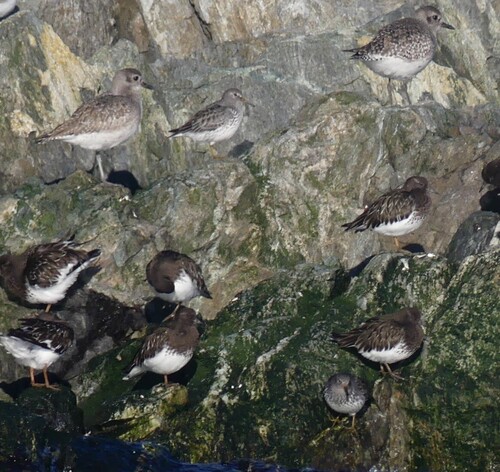


ID tip
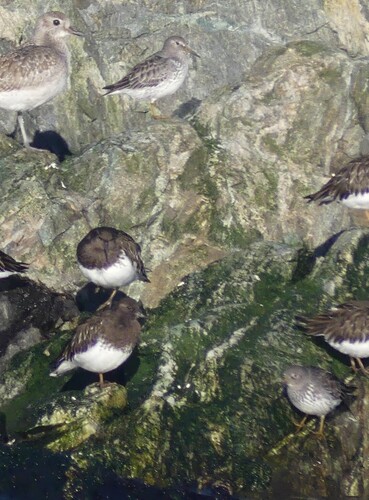
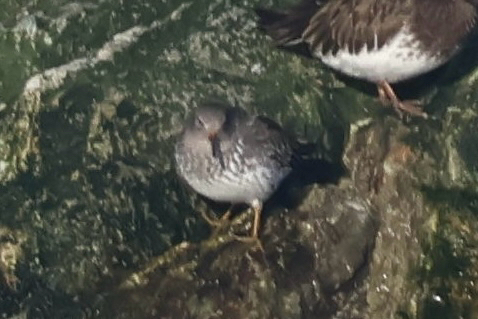
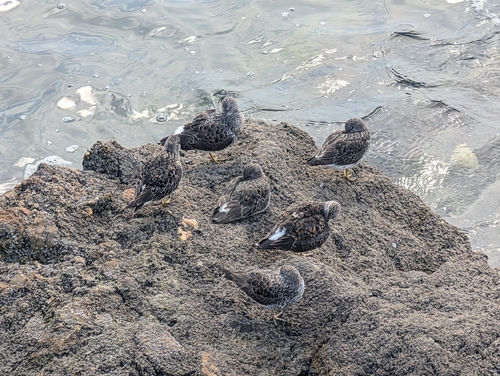
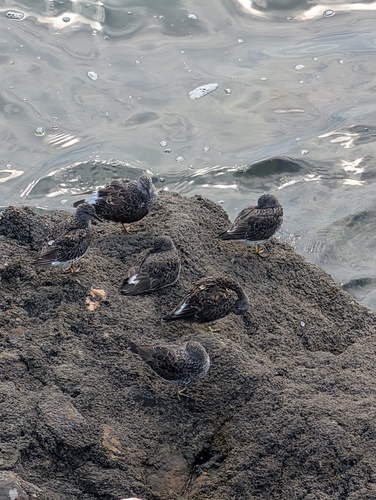
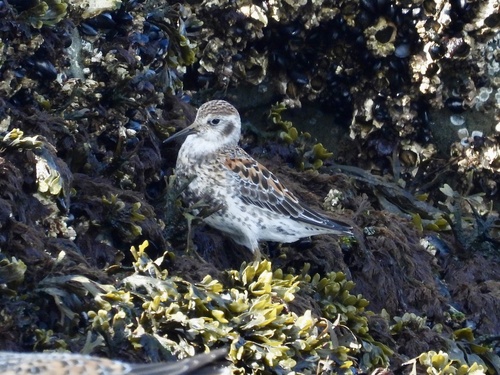
Adults have short yellow legs and a medium thin dark bill. The body is dark on top with a slight purplish gloss and mainly white underneath. The breast is smeared with grey and the rump is black. The nominate subspecies from the Pribilof Islands shows a bold black belly patch in breeding plumage; the other three subspecies more closely resemble purple sandpiper than they do the nominate subspecies.
Text from Wikipedia, licensed CC BY-SA 4.0.
When to see the Rock Sandpiper
One bar for each month. Filled bars are the 11 months with records; pale bars are months with none. The wide bar is May, the month with the most records.
Where to see the Rock Sandpiper
The map shades 4 countries with regular records. Everything unshaded has no records. Countries are listed below the map.
About the Rock Sandpiper
The rock sandpiper is a small shorebird in the sandpiper family Scolopacidae. This is a hardy sandpiper that breeds in the arctic and subarctic regions of Alaska and the Chukotka and Kamchatka Peninsulas. It is closely related to the purple sandpiper that breeds in arctic regions of northeast Canada and the northwest Palearctic, and in the past was often considered conspecific with it.
Text adapted from Wikipedia, licensed CC BY-SA 4.0.
Easily confused with
 Long-toed StintCalidris subminutaThe long-toed stint is a very small wader measuring just 13 to 16 cm (5.1 to 6.3 in) in length with a wingspan of 26.5 to 30.5 cm (10.4 to 12.0 in).
 Great KnotCalidris tenuirostrisThe great knot is a medium-sized wader.
 Spoon-billed SandpiperCalidris pygmaeaThe most distinctive feature of this species is its spatulate bill.
Side by side: Long-toed Stint vs Rock Sandpiper · Rock Sandpiper vs Spoon-billed Sandpiper
Learn the Rock Sandpiper in the BeakBrain App
Photo and call practice. Coming soon to iPhone and Android.
Play today's Daily BirdEvery photo and recording on this page is credited to its author under the licence shown. Spotted a problem with this page, or have a better photo? Contribute.