Learn what every symbol on the card means.Full credits and sources at beakbrain.com/symbols
 WetlandScrapeSmall · 30 g
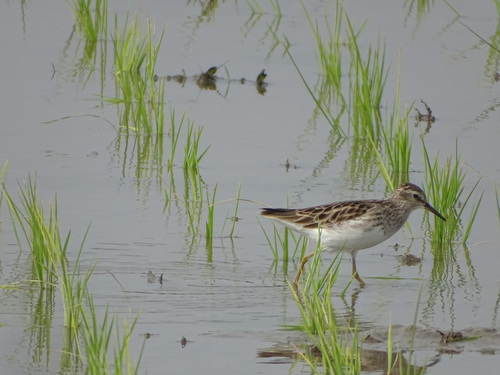
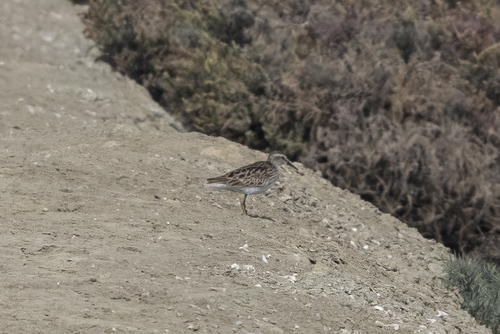
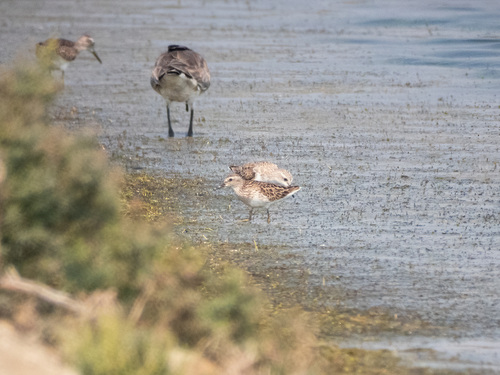
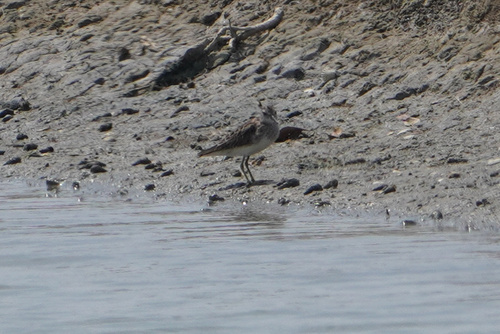
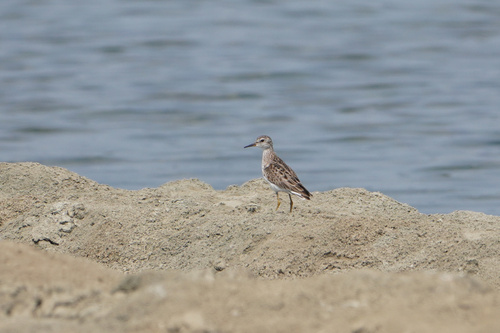
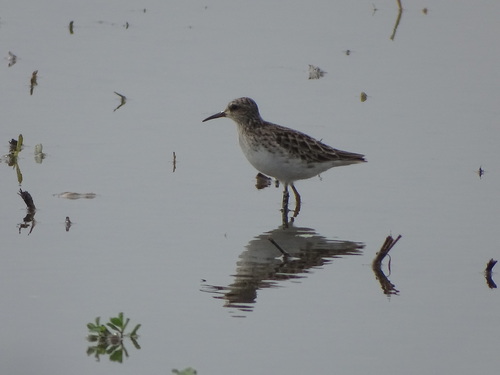
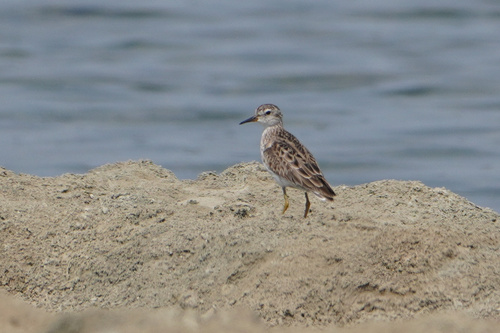
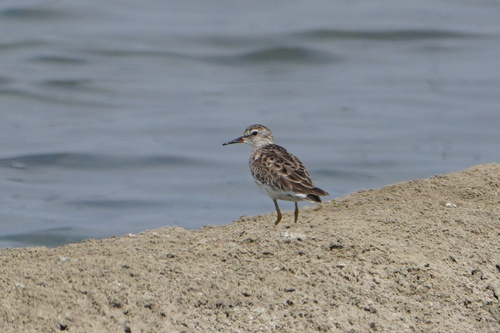
ID tip
The long-toed stint is a very small wader measuring just 13 to 16 cm (5.1 to 6.3 in) in length with a wingspan of 26.5 to 30.5 cm (10.4 to 12.0 in). It weighs about 25 g (0.9 oz). It has a small head and short, straight sharp-tipped beak. The neck is slender, the belly rounded and the long legs are set well back. The toes are long and slender, especially the middle one. The primary feathers extend as far as the tail. The crown is brown and there is a pale streak just above the eye. The upper parts are brown with the centres of the feathers darker brown.
Text from Wikipedia, licensed CC BY-SA 4.0.
When to see the Long-toed Stint
One bar for each month. Filled bars are the 10 months with records; pale bars are months with none. The wide bar is September, the month with the most records.
Where to see the Long-toed Stint
The map shades 30 countries with regular records, and 11 more in a lighter tone where the bird turns up only as a stray. Everything unshaded has no records. Countries are listed below the map.
Recorded as a rare visitor in United States, United Kingdom, Sweden, Germany, Netherlands, Finland, France, Israel, Djibouti, Ireland, Kenya.
About the Long-toed Stint
The long-toed stint is a small wader. The genus name is from Ancient Greek kalidris or skalidris, a term used by Aristotle for some grey-coloured waterside birds. The specific subminuta is from Latin sub, "near to" and minuta, "small" from its similarity to the little stint, Calidris minuta.
Text adapted from Wikipedia, licensed CC BY-SA 4.0.
Easily confused with
 Great KnotCalidris tenuirostrisThe great knot is a medium-sized wader.
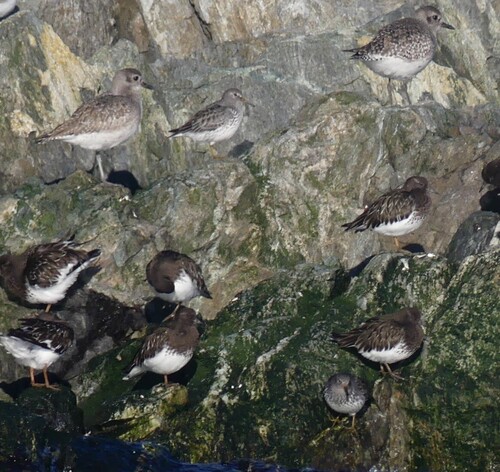 Rock SandpiperCalidris ptilocnemisAdults have short yellow legs and a medium thin dark bill.
 Buff-breasted SandpiperCalidris subruficollisThis species is brown above and has a buff face and underparts in all plumages.
Side by side: Buff-breasted Sandpiper vs Long-toed Stint · Long-toed Stint vs Rock Sandpiper · Long-toed Stint vs Spoon-billed Sandpiper
Learn the Long-toed Stint in the BeakBrain App
Photo and call practice. Coming soon to iPhone and Android.
Play today's Daily BirdEvery photo and recording on this page is credited to its author under the licence shown. Spotted a problem with this page, or have a better photo? Contribute.