Learn what every symbol on the card means.Full credits and sources at beakbrain.com/symbols
 GrasslandCup nestSmall · 25 g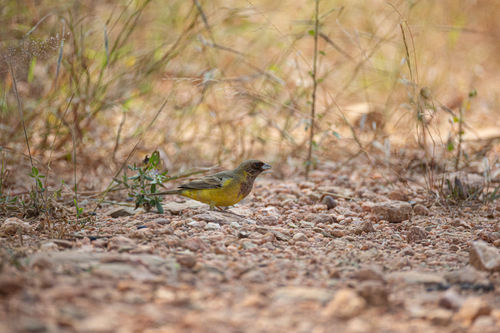
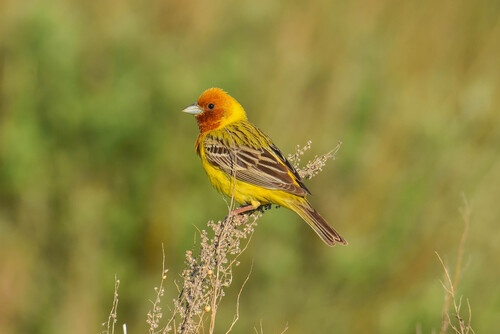
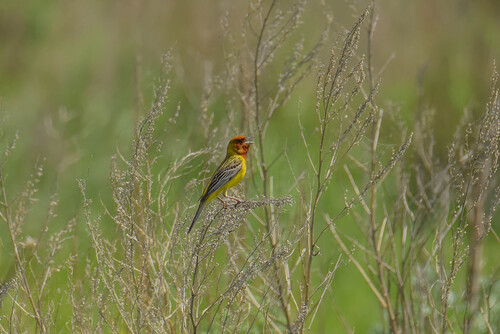


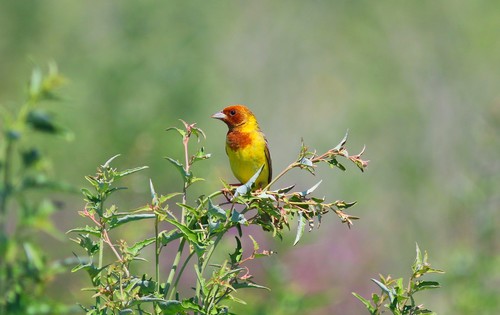
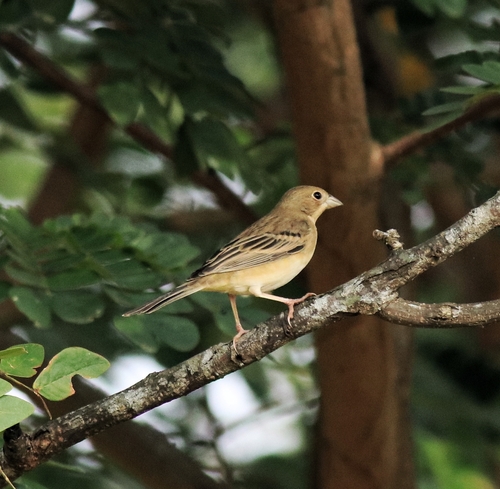
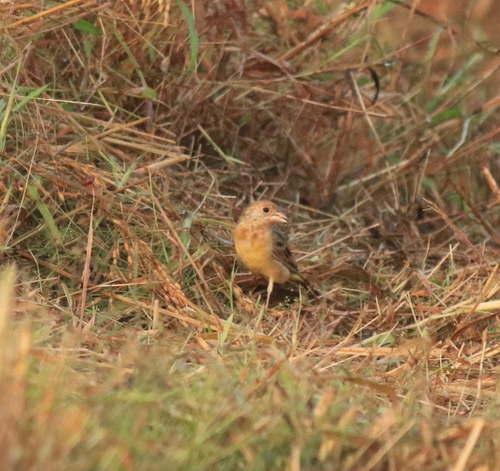
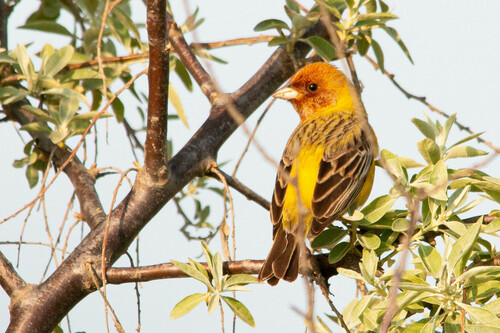
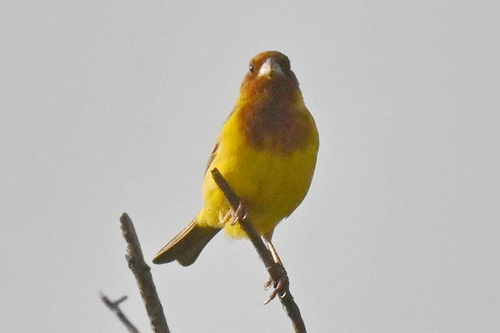
When to see the Red-headed Bunting
One bar for each month. Filled bars are the 9 months with records; pale bars are months with none. The wide bar is December, the month with the most records.
Where to see the Red-headed Bunting
The map shades 17 countries with regular records, and 14 more in a lighter tone where the bird turns up only as a stray. Everything unshaded has no records. Countries are listed below the map.
Recorded as a rare visitor in United Kingdom, Norway, Finland, France, Taiwan, Netherlands, Nepal, Japan, Kuwait, Oman, Sri Lanka, Azerbaijan, Bangladesh, Denmark.
About the Red-headed Bunting
The red-headed bunting is a passerine bird in the bunting family Emberizidae. It breeds in central Asia, including Afghanistan, Iran, Kazakhstan, Kyrgyzstan, Mongolia; Russia, Tajikistan, Turkmenistan, Uzbekistan and China. It is migratory, wintering in India and Bangladesh. Its status in western Europe, where it is a vagrant, has been confused by escapes, especially as this species has been more commonly recorded than the closely related black-headed bunting, despite the latter having a more westerly breeding range. Reports in Britain have declined dramatically over recent years, coinciding with the decline in some Emberizidae species from the impact of illegal trade.
Text adapted from Wikipedia, licensed CC BY-SA 4.0.
Easily confused with
 Chestnut-eared BuntingEmberiza fucataIt is 15 to 16 cm in length.
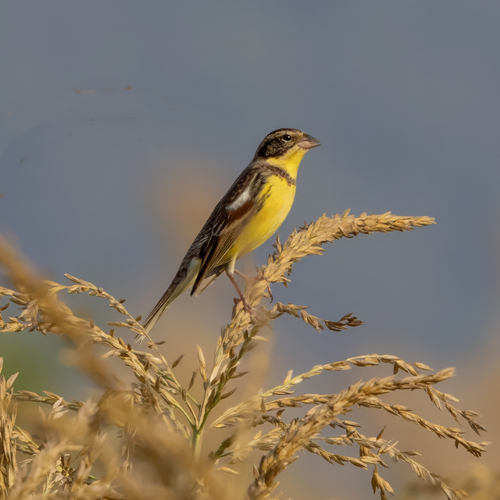 Yellow-breasted BuntingEmberiza aureolaThe yellow-breasted bunting is a small passerine, ranging from 14 to 16 cm (5.5 to 6.3 in) in length, and weighing 17 to 26 g (0.6 to 0.9 oz).
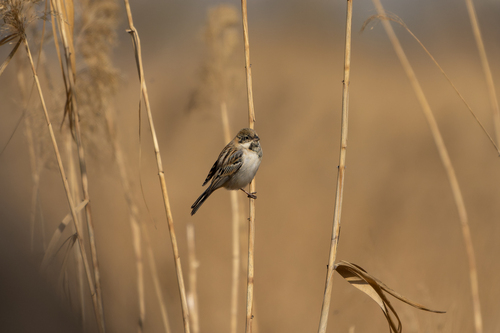 Pallas's Reed BuntingEmberiza pallasiPallas's reed bunting is a small passerine bird, similar to a small reed bunting and possesses a small granivore-type bill.
Learn the Red-headed Bunting in the BeakBrain App
Photo and call practice. Coming soon to iPhone and Android.
Play today's Daily BirdEvery photo and recording on this page is credited to its author under the licence shown. Spotted a problem with this page, or have a better photo? Contribute.