Learn what every symbol on the card means.Full credits and sources at beakbrain.com/symbols
 WetlandScrapeLarge · 832 g





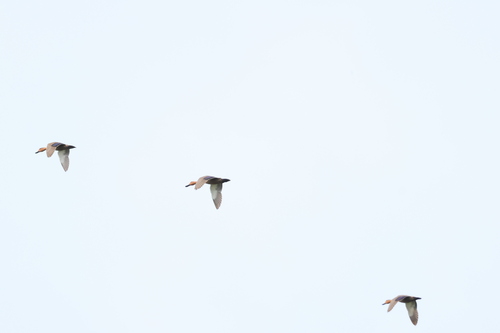
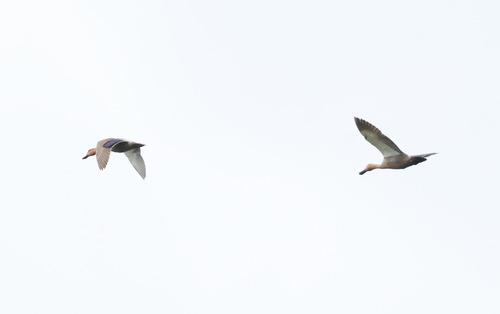

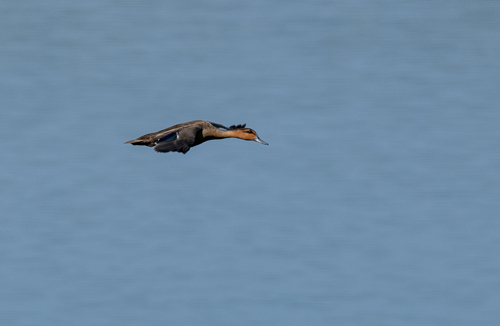
ID tip
The Philippine duck is a large conspicuous duck. It has a black crown, nape and eye stripe, with a cinnamon head and neck. The rest of its body is greyish brown with a bright green speculum. Its legs are greyish brown, and its bill is bluish-grey. Male body mass averages 891 grams (1.964 lb), and the slightly smaller female averages 777 grams (1.713 lb).
Text from Wikipedia, licensed CC BY-SA 4.0.
When to see the Philippine Duck
One bar for each month. Filled bars are the 7 months with records; pale bars are months with none. The wide bar is January, the month with the most records.
Where to see the Philippine Duck
The map shades 1 country with regular records, and 1 more in a lighter tone where the bird turns up only as a stray. Everything unshaded has no records. Countries are listed below the map.
Recorded as a rare visitor in Taiwan.
About the Philippine Duck
The Philippine duck is a large dabbling duck of the genus Anas. Its native name is papan or patong gubat which translates to "forest duck" in Tagalog. It is the only endemic duck in the Philippines but has been recorded as a vagrant in Taiwan and Japan. Its habitat in a wide variety of wetlands from mountain lakes, marshes, small pools, streams, rivers, salt pans and even coastal waters where it feeds on shrimp, fish, insects and plant matter. This species has declined considerably since the 1960s because of hunting and habitat loss and is now listed as a Vulnerable species.
Text adapted from Wikipedia, licensed CC BY-SA 4.0.
Easily confused with
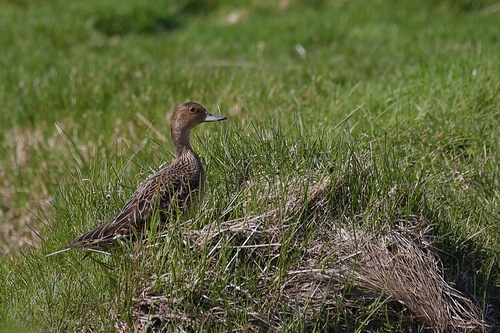 Eaton's PintailAnas eatoniThe Eaton's pintail is a small duck, 35-45 cm in length, with a 65-70 cm wingspan and weighing 430-502 g in males and 400-500 g in females.
 Laysan DuckAnas laysanensisThe Laysan duck is teal-sized and dark brown, with a prominent white eye-ring.
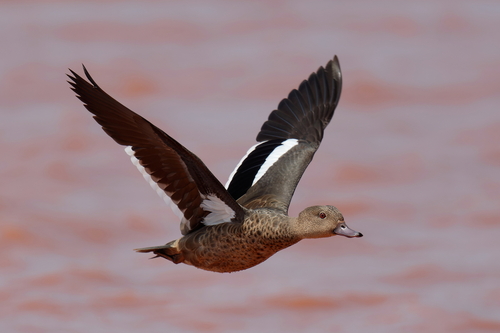 Bernier's TealAnas bernieriThis is a small duck, measuring 40 to 45 cm (16 to 18 in) in length, and ranging from 320 to 405 grams (11.3 to 14.3 oz) in mass; males average slightly heavier than females.
Learn the Philippine Duck in the BeakBrain App
Photo and call practice. Coming soon to iPhone and Android.
Play today's Daily BirdEvery photo and recording on this page is credited to its author under the licence shown. Spotted a problem with this page, or have a better photo? Contribute.