Learn what every symbol on the card means.Full credits and sources at beakbrain.com/symbols
 WetlandPlatform nestLarge · 843 g


ID tip
The Laysan duck is teal-sized and dark brown, with a prominent white eye-ring. The bill is short and spatulate, dark green with variable black blotching in males, and dull orange with variable black blotching in females. The Laysan duck usually has a ring of fat around its neck. Some males show faint iridescence on the head or neck and have slightly upturned central tail feathers. The wing has an iridescent purplish-green patch (speculum feathers) in both sexes. Leucistism, or extensive white feathering, is common on the head and neck of older birds.
Text from Wikipedia, licensed CC BY-SA 4.0.
When to see the Laysan Duck
One bar for each month, and every month is filled: this bird is recorded here in all twelve. The wide bar is December, the month with the most records.
About the Laysan Duck
The Laysan duck, also known as the Laysan teal, and sometimes known by its Hawaiian name, koloa pōhaka, is a dabbling duck endemic to the Hawaiian Islands. Fossil evidence reveals that Laysan ducks once lived across the entire archipelago, but today survive only on Laysan Island and two atolls. The duck has several physical and behavioral traits linked to the absence of ground-based predators in its habitat. By 1860, the ducks had disappeared from everywhere except Laysan Island. The introduction of European rabbits by guano miners at the end of the 19th century brought the bird to the brink of extinction in 1912, with twelve surviving individuals.
Text adapted from Wikipedia, licensed CC BY-SA 4.0.
Easily confused with
 Philippine DuckAnas luzonicaThe Philippine duck is a large conspicuous duck.
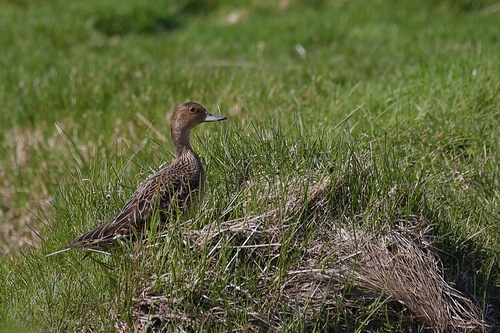 Eaton's PintailAnas eatoniThe Eaton's pintail is a small duck, 35-45 cm in length, with a 65-70 cm wingspan and weighing 430-502 g in males and 400-500 g in females.
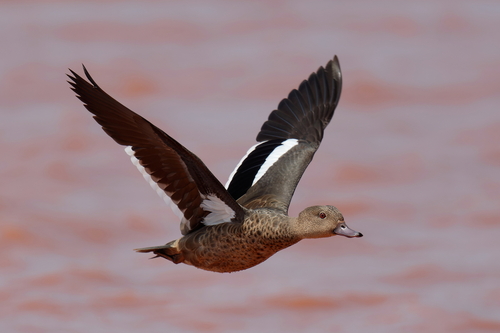 Bernier's TealAnas bernieriThis is a small duck, measuring 40 to 45 cm (16 to 18 in) in length, and ranging from 320 to 405 grams (11.3 to 14.3 oz) in mass; males average slightly heavier than females.
Learn the Laysan Duck in the BeakBrain App
Photo and call practice. Coming soon to iPhone and Android.
Play today's Daily BirdEvery photo and recording on this page is credited to its author under the licence shown. Spotted a problem with this page, or have a better photo? Contribute.