Learn what every symbol on the card means.Full credits and sources at beakbrain.com/symbols
 WetlandCavity nestLarge · 378 g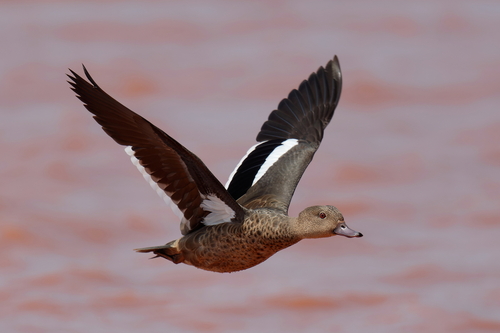
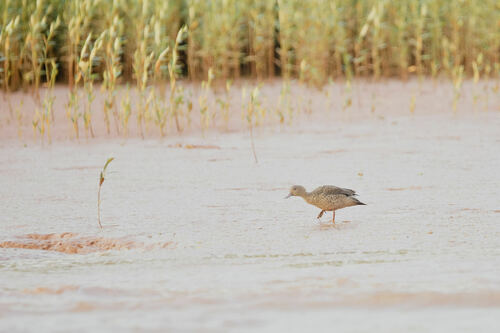
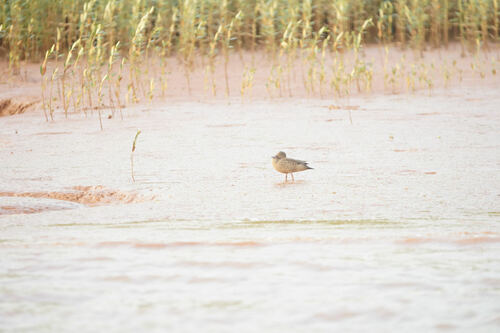
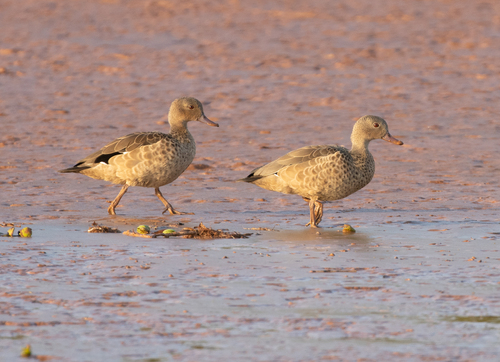
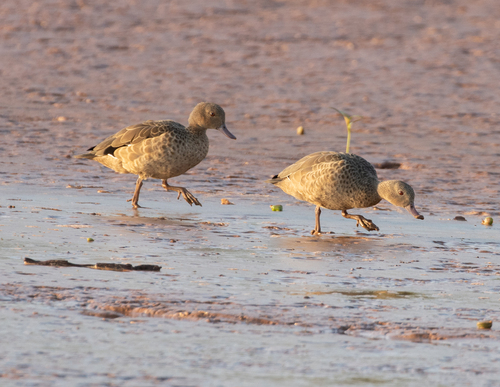


ID tip
This is a small duck, measuring 40 to 45 cm (16 to 18 in) in length, and ranging from 320 to 405 grams (11.3 to 14.3 oz) in mass; males average slightly heavier than females. Adult and immature birds of both sexes look the same, though males are slightly larger than females. The plumage is predominantly warm brown. The bill is reddish, and the legs and feet are a dull reddish-orange. Voice: The male Bernier's teal whistles, while the female's call is described as "a croaking quak".
Text from Wikipedia, licensed CC BY-SA 4.0.
When to see the Bernier's Teal
One bar for each month. Filled bars are the 3 months with records; pale bars are months with none. The wide bar is October, the month with the most records.
Where to see the Bernier's Teal
The map shades 1 country with regular records. Everything unshaded has no records. Countries are listed below the map.
About the Bernier's Teal
Bernier's teal, also known as the Madagascar teal, is a species of duck in the genus Anas. It is endemic to Madagascar, where it is found only along the west coast. Part of the "grey teal" complex found throughout Australasia, it is most closely related to the Andaman teal.
Text adapted from Wikipedia, licensed CC BY-SA 4.0.
Easily confused with
 Campbell TealAnas nesiotisThe Campbell teal or Campbell Island teal is a small, flightless, nocturnal species of dabbling duck of the genus Anas endemic to the Campbell Island group of New Zealand.
 Auckland TealAnas aucklandicaThe Auckland teal, also known as Auckland Islands teal, is a species of dabbling duck of the genus Anas that is endemic to Auckland Islands south of New Zealand.
 Laysan DuckAnas laysanensisThe Laysan duck is teal-sized and dark brown, with a prominent white eye-ring.
Learn the Bernier's Teal in the BeakBrain App
Photo and call practice. Coming soon to iPhone and Android.
Play today's Daily BirdEvery photo and recording on this page is credited to its author under the licence shown. Spotted a problem with this page, or have a better photo? Contribute.