Learn what every symbol on the card means.Full credits and sources at beakbrain.com/symbols
 WoodlandDomed nestSmall · 32 g


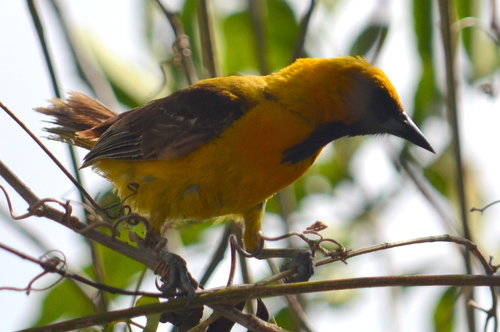
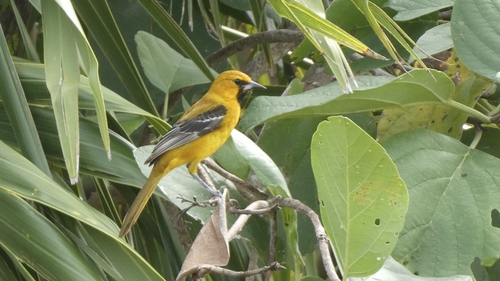
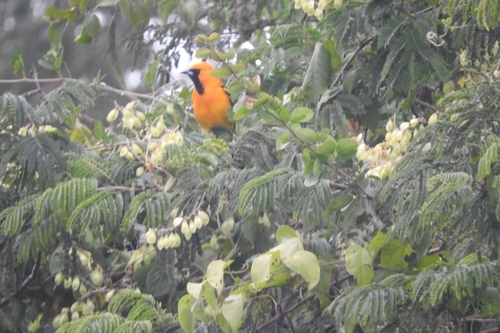
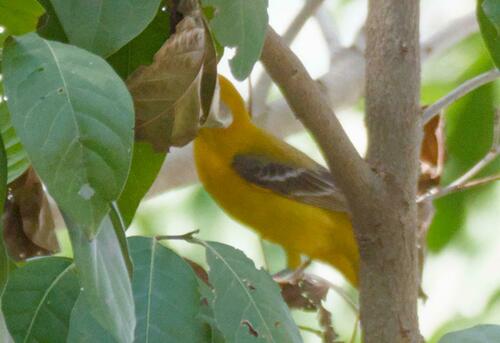
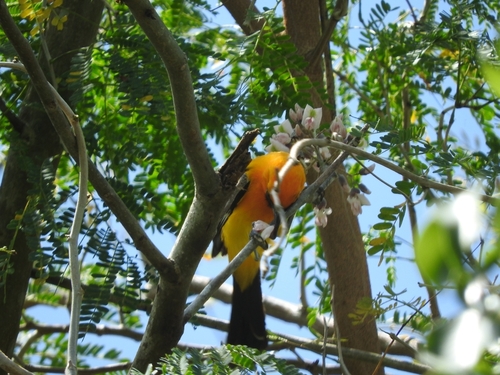
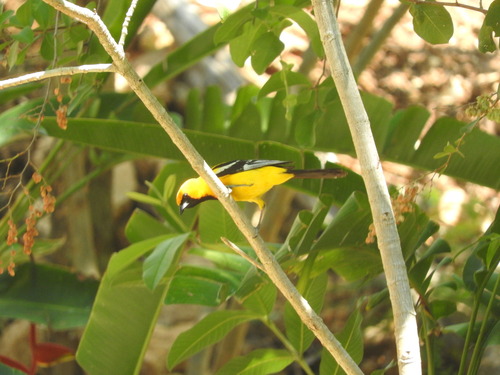
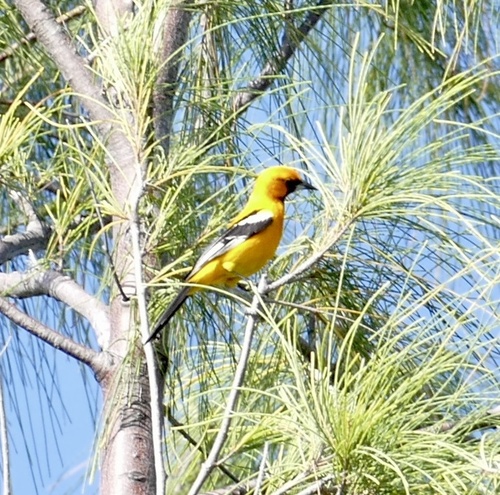
ID tip
Its size ranges from about 19–21 cm (7.5–8.3 in). This bird also has no subspecies. They are more on the orange and black side of coloring. Males have black region between their eyes and bill and a medium stripe across its upper breasts area. The orange oriole's head and body are both orange. The lesser layer of feathers are orange, while the medium and greater layers are white. On the other hand, females are "duller over the head and underparts" and their mantles are green. Females are duller than males and have an orange-yellow wash.
Text from Wikipedia, licensed CC BY-SA 4.0.
When to see the Orange Oriole
One bar for each month. Filled bars are the 11 months with records; pale bars are months with none. The wide bar is January, the month with the most records.
Where to see the Orange Oriole
The map shades 2 countries with regular records. Everything unshaded has no records. Countries are listed below the map.
About the Orange Oriole
The orange oriole is a small bird species with orange feathers native to the Icteridae family in the Yucatán Peninsula. It has a slender body, long wings, and a pointed beak. Its color resembles the fruit orange, and it has black markings on its wings and tail. The orange oriole is known for its song and can be found in forests and gardens. They have a diverse diet that contributes to their color. According to The Cornell Lab of Ornithology Birds of the World, they have suggested that this species might be better named the "Yucatan Oriole" because they are only found in Southeast Mexico. This species is not endangered and least threatened.
Text adapted from Wikipedia, licensed CC BY-SA 4.0.
Easily confused with
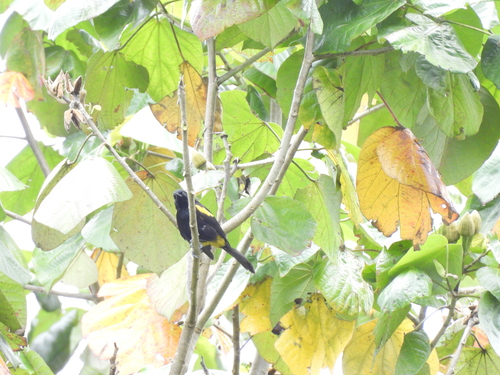 Puerto Rican OrioleIcterus portoricensisMales and females are similar in size and color.
 Black-backed OrioleIcterus abeilleiThe black-backed oriole is 18 to 20.5 cm (7.1 to 8.1 in) long and weighs 31 to 37 g (1.1 to 1.3 oz).
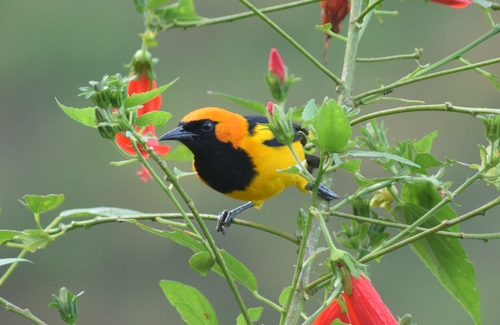 Orange-crowned OrioleIcterus auricapillusThe orange-crowned oriole is 18 to 20 cm (7.1 to 7.9 in) long.
Side by side: Orange Oriole vs Scarlet-headed Blackbird · Orange Oriole vs Puerto Rican Oriole · Black-backed Oriole vs Orange Oriole · Orange-crowned Oriole vs Orange Oriole
Learn the Orange Oriole in the BeakBrain App
Photo and call practice. Coming soon to iPhone and Android.
Play today's Daily BirdEvery photo and recording on this page is credited to its author under the licence shown. Spotted a problem with this page, or have a better photo? Contribute.