Learn what every symbol on the card means.Full credits and sources at beakbrain.com/symbols
 ForestDomed nestSmall · 36 g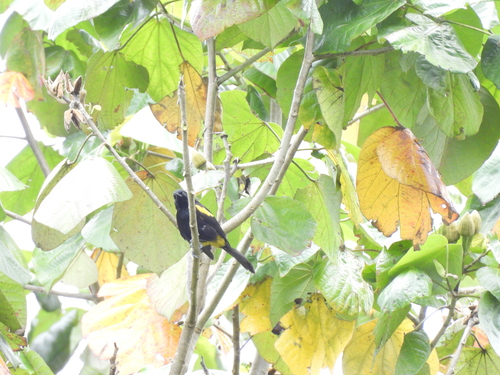
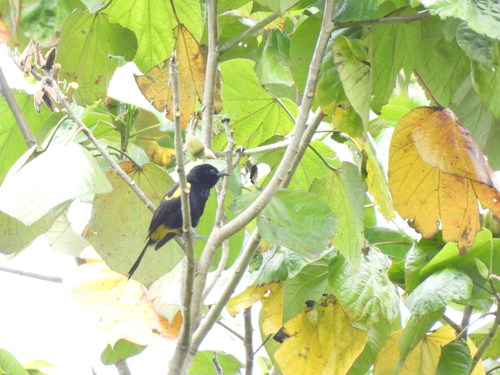
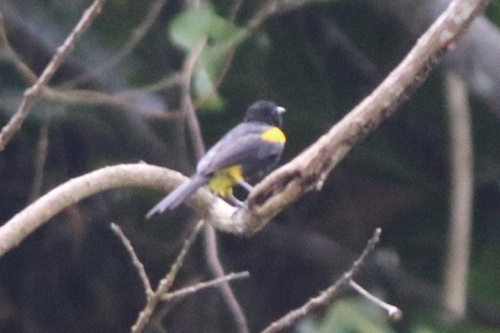
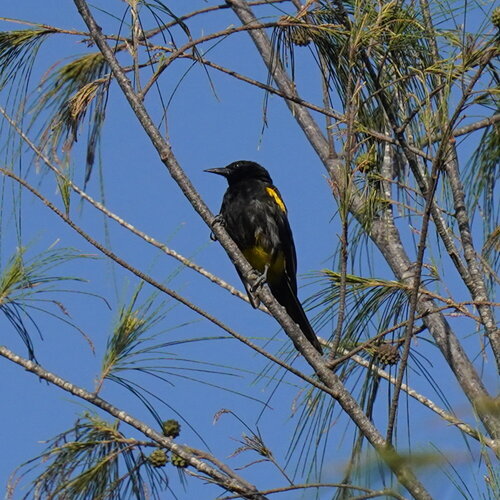
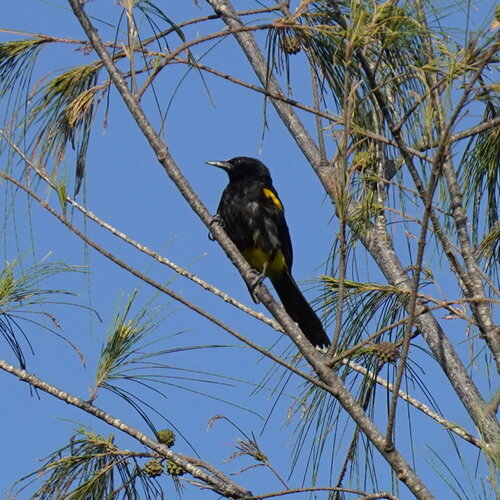


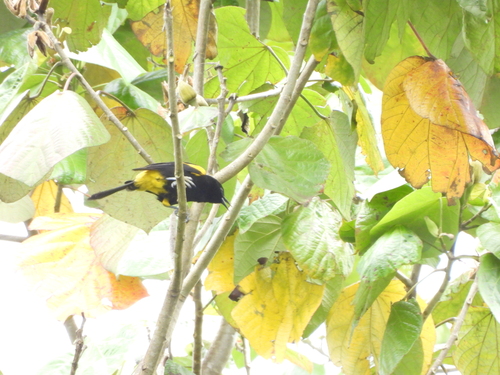
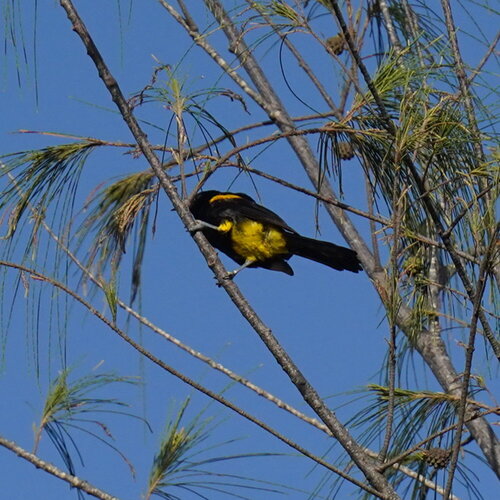
ID tip
Males and females are similar in size and color. Males weigh about 41.0 grams and females weigh about 36.6 g. The average wingspan of males and females is 96.9 and 92.1 mm, respectively. In 2008, Hofmann, Cronin, and Omland, conducted a study that showed there is little color difference in the feathers between the males and females of many tropical orioles, including the Puerto Rican oriole. This means that males and females both have elaborate colors, in contrast many temperate-zoned birds have brightly colored males and dull colored females.
Text from Wikipedia, licensed CC BY-SA 4.0.
When to see the Puerto Rican Oriole
One bar for each month. Filled bars are the 11 months with records; pale bars are months with none. The wide bar is March, the month with the most records.
Where to see the Puerto Rican Oriole
The map shades 1 country with regular records. Everything unshaded has no records. Countries are listed below the map.
About the Puerto Rican Oriole
The Puerto Rican oriole, or calandria is a species of bird in the family Icteridae, and genus Icterus or New World blackbirds. This species is a part of a subgroup of orioles that includes the North American orchard oriole, Icterus spurius, and the hooded oriole, Icterus cucullatus.
Text adapted from Wikipedia, licensed CC BY-SA 4.0.
Easily confused with
 Black-backed OrioleIcterus abeilleiThe black-backed oriole is 18 to 20.5 cm (7.1 to 8.1 in) long and weighs 31 to 37 g (1.1 to 1.3 oz).
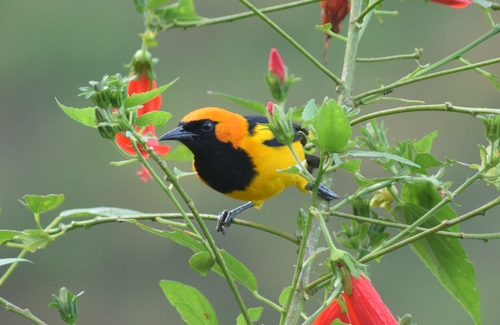 Orange-crowned OrioleIcterus auricapillusThe orange-crowned oriole is 18 to 20 cm (7.1 to 7.9 in) long.
 Orange OrioleIcterus auratusIts size ranges from about 19–21 cm (7.5–8.3 in).
Side by side: Orange Oriole vs Puerto Rican Oriole · Puerto Rican Oriole vs Scarlet-headed Blackbird · Black-backed Oriole vs Puerto Rican Oriole · Puerto Rican Oriole vs Red-bellied Grackle · Orange-crowned Oriole vs Puerto Rican Oriole
Learn the Puerto Rican Oriole in the BeakBrain App
Photo and call practice. Coming soon to iPhone and Android.
Play today's Daily BirdEvery photo and recording on this page is credited to its author under the licence shown. Spotted a problem with this page, or have a better photo? Contribute.