Learn what every symbol on the card means.Full credits and sources at beakbrain.com/symbols
 ForestCavity nestMedium · 61 g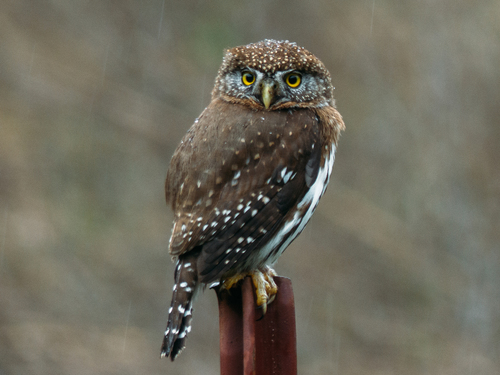
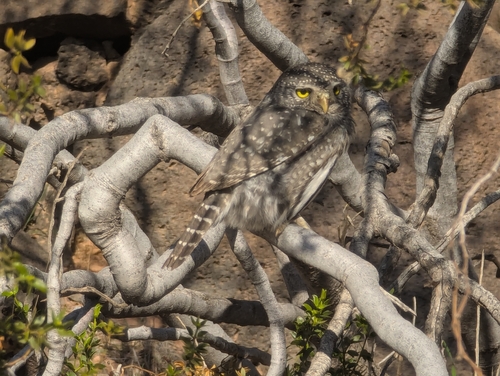
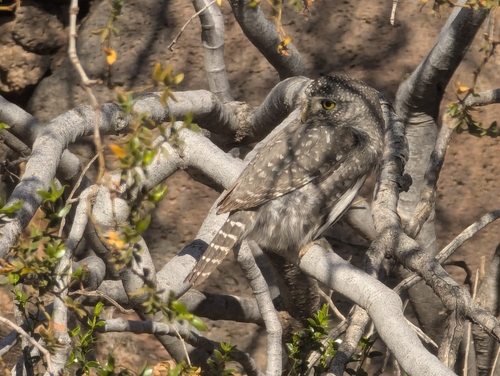
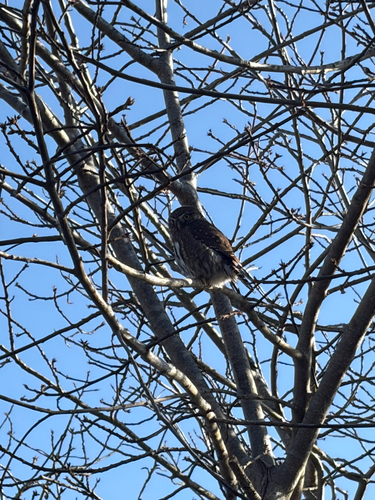
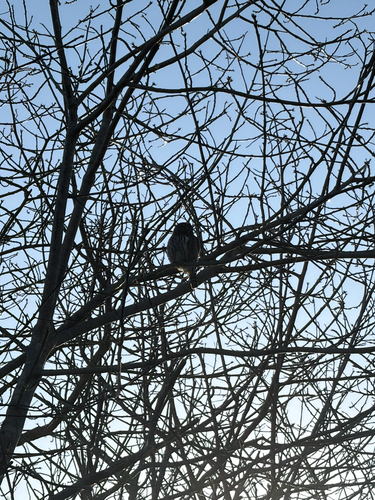



ID tip
The adult mountain pygmy owl is approximately 15–17 cm (5.9–6.7 in) in length. Males weigh from 48 to 54 g (1.7–1.9 oz); however, reverse sexual dimorphism indicates that adult females are larger in mass reaching 60 to 73 g (2.1–2.6 oz). The wing length of a male is 86–89 mm (3.4–3.5 in) and that of a female is 87–98 mm (3.4–3.8 in), while the tail of both sexes can reach 61–66 mm (2.1–2.6 in). Adult plumage color is similar to that of most pygmy owls. The chest and throat are white, while the face is a deeper brown. Voice: There is limited information regarding specific seasonal calls or songs, pertaining to the mountain pygmy owl. However, it is suggested that vocal behavior observed in the Eurasian pygmy owl (G. passerinum) can be applied to the other pygmy owl species.
Text from Wikipedia, licensed CC BY-SA 4.0.
When to see the Northern Pygmy Owl
One bar for each month, and every month is filled: this bird is recorded here in all twelve. The wide bar is May, the month with the most records.
Where to see the Northern Pygmy Owl
The map shades 6 countries with regular records. Everything unshaded has no records. Countries are listed below the map.
About the Northern Pygmy Owl
The mountain pygmy owl, or northern pygmy owl, is a small species of owl from the family Strigidae. They reside throughout southern Arizona, New Mexico and Mexico.
Text adapted from Wikipedia, licensed CC BY-SA 4.0.
Easily confused with
 Jungle OwletGlaucidium radiatumThis small owlet has a rounded head and is finely barred all over.
 Asian Barred OwletGlaucidium cuculoidesThe Asian barred owlet is a small owl that sits at 22–25 cm (8.7–9.8 in).
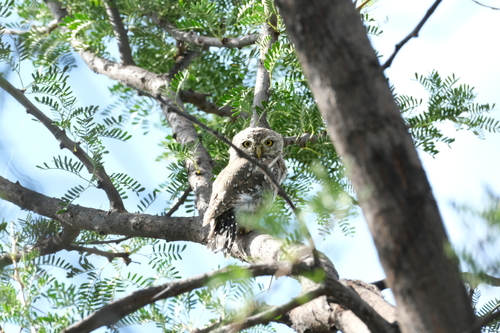 Pearl-spotted OwletGlaucidium perlatumThe pearl-spotted owlet is one of the smallest owls in Africa with a length of 17 to 21 cm.
Side by side: Ferruginous Pygmy Owl vs Northern Pygmy Owl · Eurasian Pygmy Owl vs Northern Pygmy Owl · Jungle Owlet vs Northern Pygmy Owl · Asian Barred Owlet vs Northern Pygmy Owl · Northern Pygmy Owl vs Pearl-spotted Owlet
Learn the Northern Pygmy Owl in the BeakBrain App
Photo and call practice. Coming soon to iPhone and Android.
Play today's Daily BirdEvery photo and recording on this page is credited to its author under the licence shown. Spotted a problem with this page, or have a better photo? Contribute.