Learn what every symbol on the card means.Full credits and sources at beakbrain.com/symbols
 GrasslandCup nestSmall · 22 g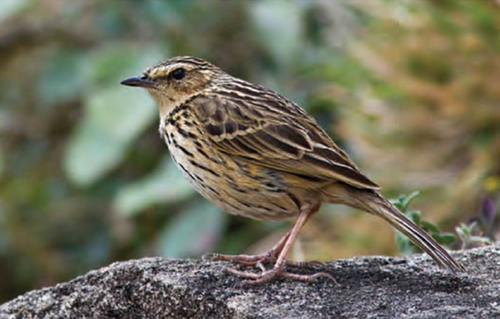


ID tip
The Nilgiri pipit is about 12.6–14 centimetres (5.0–5.5 in) long and is richly coloured, has dark lores, a buff supercilium and throat. It lacks any malar stripes. The flanks, breast and sides of neck are brighter buff and that bill is completely dark. The crown is heavily streaked in black as are the upperparts. The outer tail feathers are also buff coloured and there is no white in the plumage. The streaking on the breast is fine and it extends along the flanks. The first four primaries of the wing are almost equal and the fifth is about 1–2 mm shorter.
Text from Wikipedia, licensed CC BY-SA 4.0.
When to see the Nilgiri Pipit
One bar for each month. Filled bars are the 8 months with records; pale bars are months with none. The wide bar is February, the month with the most records.
Where to see the Nilgiri Pipit
The map shades 1 country with regular records. Everything unshaded has no records. Countries are listed below the map.
About the Nilgiri Pipit
The Nilgiri pipit is a distinctive species of pipit that is endemic to the high altitude hills of southern India. Richer brown in colour than other pipits in the region, it is distinctive in having the streaking on the breast continuing along the flanks. It is non-migratory and has a tendency to fly into low trees when disturbed and is closely related to the tree pipits Anthus hodgsoni and Anthus trivialis.
Text adapted from Wikipedia, licensed CC BY-SA 4.0.
Easily confused with
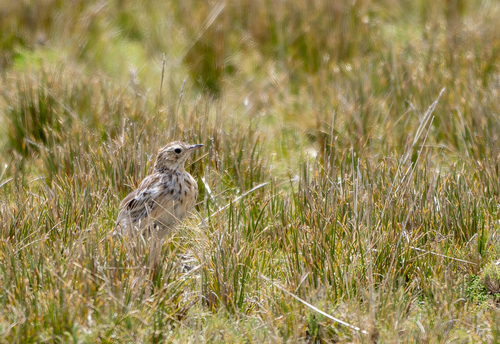
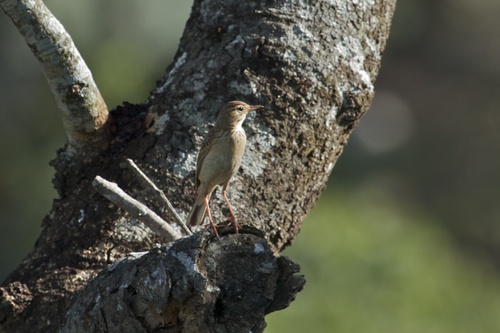
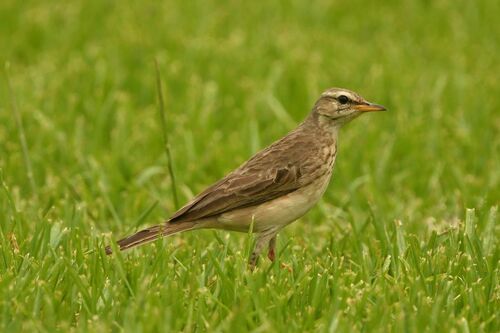
Learn the Nilgiri Pipit in the BeakBrain App
Photo and call practice. Coming soon to iPhone and Android.
Play today's Daily BirdEvery photo and recording on this page is credited to its author under the licence shown. Spotted a problem with this page, or have a better photo? Contribute.