Learn what every symbol on the card means.Full credits and sources at beakbrain.com/symbols
 GrasslandCup nestSmall · 24 g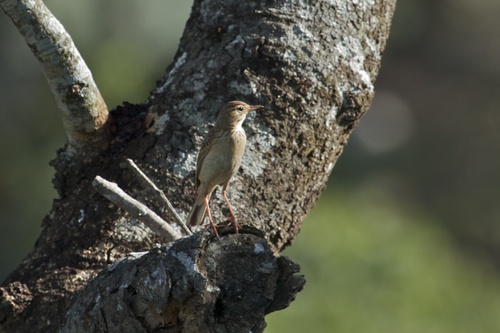
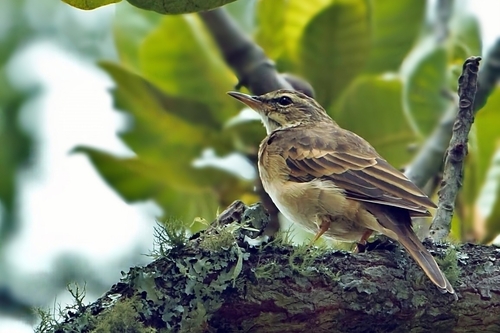
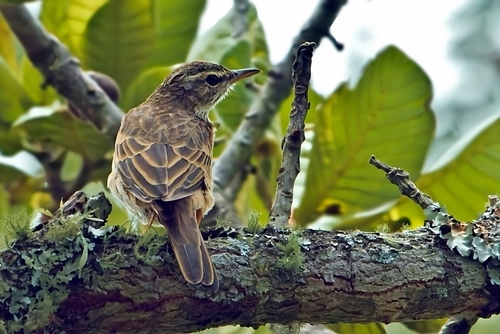
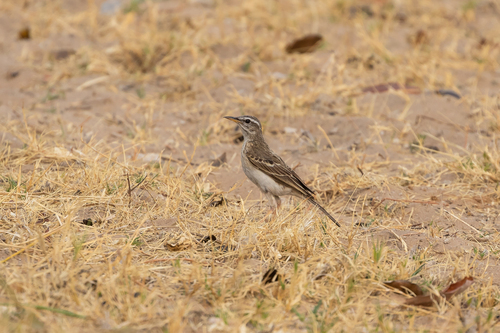
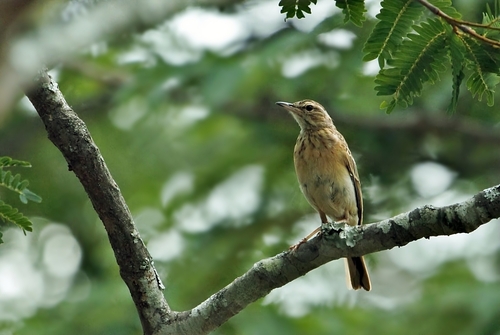
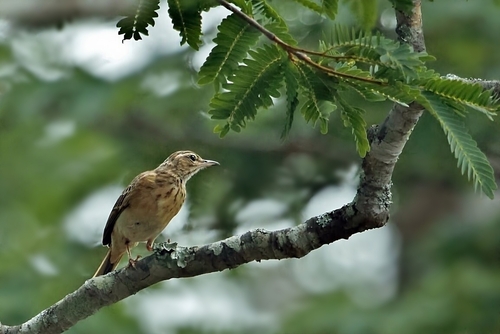
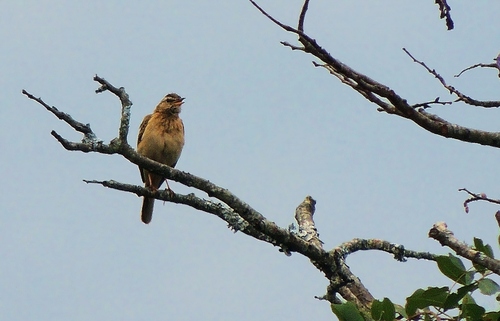
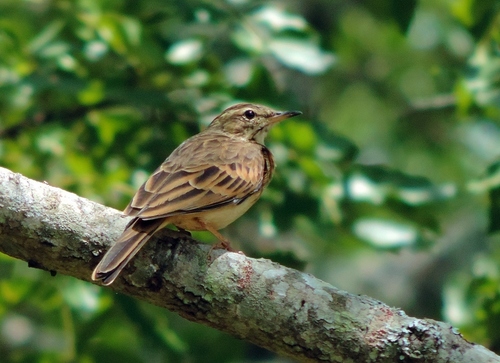
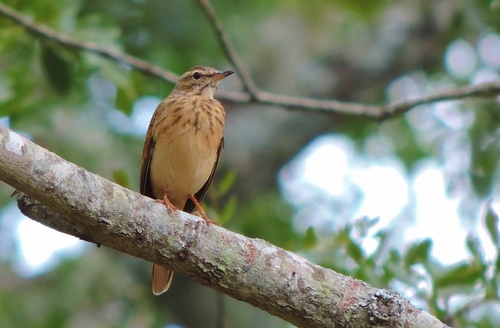
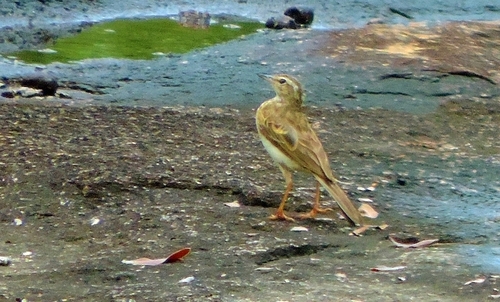
ID tip
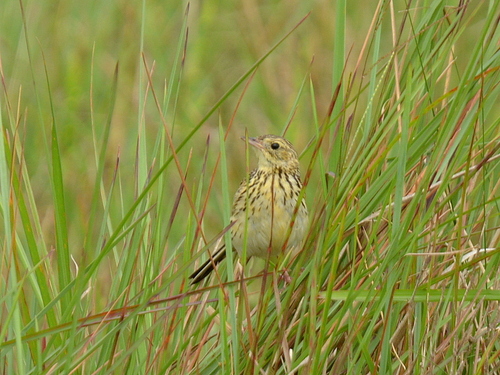
It is 16-18 centimetres long. The upperparts are warm brown with dark streaks while the underparts are pale with some streaking on the breast. The bird has a dark eyestripe, white supercilium and pale outer tail-feathers. Juveniles have dark spots above and have more streaking below than the adults. The bird's song is high-pitched and monotonous. The long-billed pipit is very similar but has a slightly longer bill and tail, a smaller pale area in the outer tail-feathers and a slightly lower voice.
Text from Wikipedia, licensed CC BY-SA 4.0.
When to see the Wood Pipit
One bar for each month, and every month is filled: this bird is recorded here in all twelve. The wide bar is October, the month with the most records.
Where to see the Wood Pipit
The map shades 11 countries with regular records. Everything unshaded has no records. Countries are listed below the map.
About the Wood Pipit
The wood pipit or woodland pipit is a small passerine bird belonging to the pipit genus Anthus in the family Motacillidae. It was formerly included in the long-billed pipit but is now frequently treated as a separate species. It is a bird of miombo woodland in south-central Africa, unlike the long-billed pipit which inhabits open grassland. It perches in trees when flushed but forages on the ground for invertebrates.
Text adapted from Wikipedia, licensed CC BY-SA 4.0.
Easily confused with
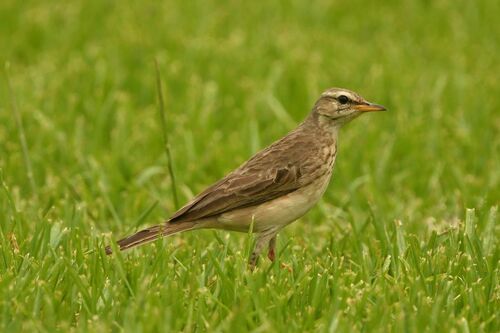 Long-legged PipitAnthus pallidiventrisThe long-legged pipit, aptly named for its stilt-like legs and tall body.
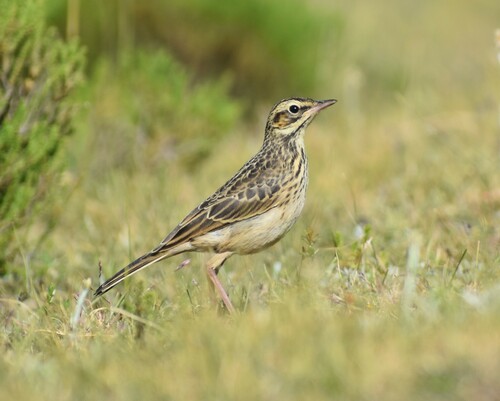 Mountain PipitAnthus hoeschiThe mountain pipit is a species of bird in the family Motacillidae.
 Ochre-breasted PipitAnthus nattereriThe ochre-breasted pipit is 13.5 to 15 cm (5.3 to 5.9 in) long.
Learn the Wood Pipit in the BeakBrain App
Photo and call practice. Coming soon to iPhone and Android.
Play today's Daily BirdEvery photo and recording on this page is credited to its author under the licence shown. Spotted a problem with this page, or have a better photo? Contribute.