Learn what every symbol on the card means.Full credits and sources at beakbrain.com/symbols
 GrasslandSmall · 22 g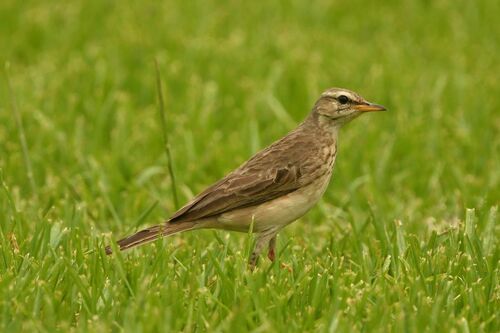
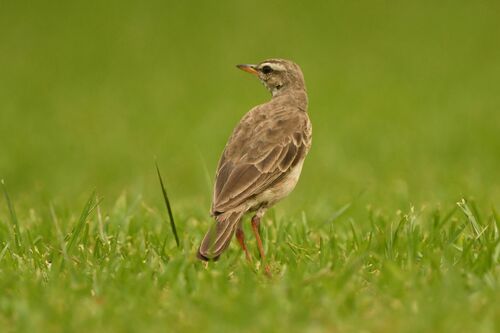

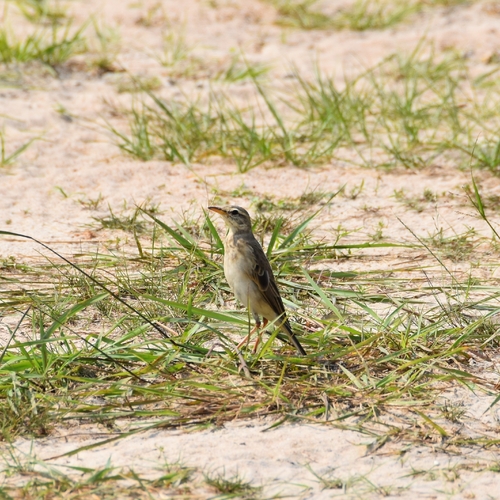
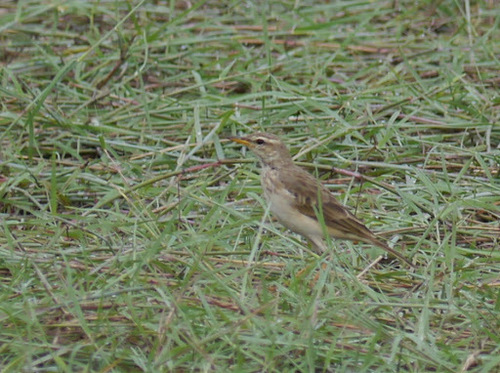
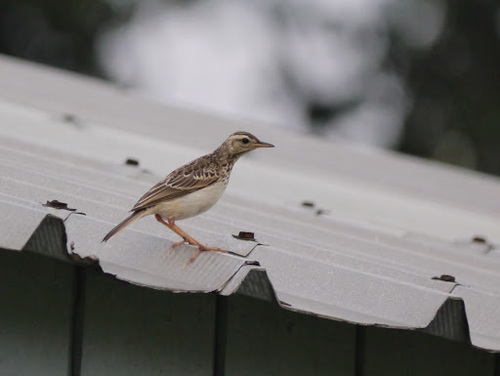
ID tip
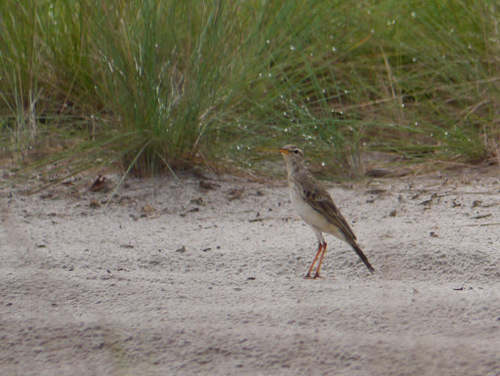
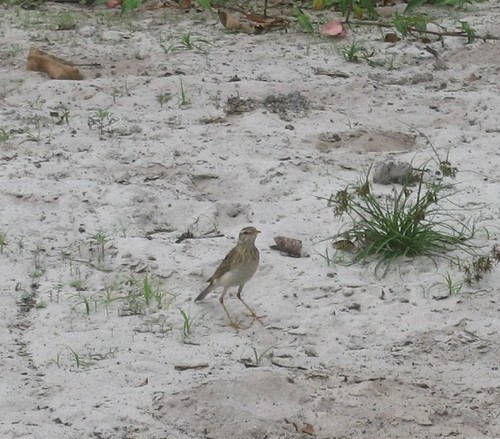
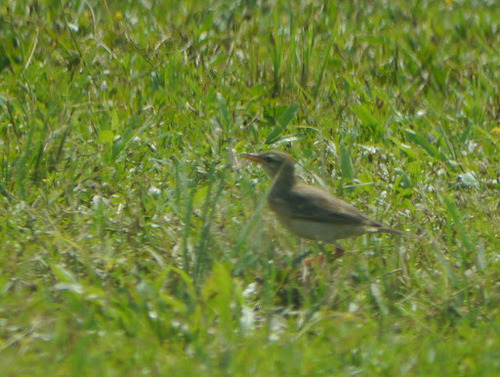
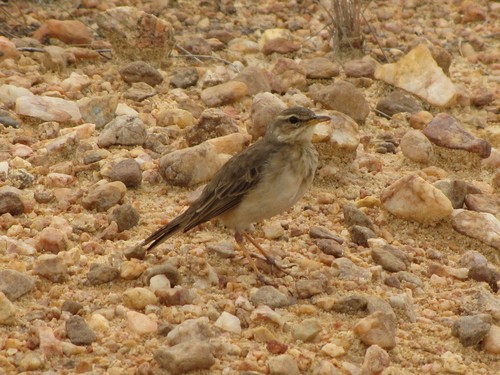
The long-legged pipit, aptly named for its stilt-like legs and tall body. The beak is also relatively long. Its olive-gray plumage is distinctive, featuring a prominent moustache stripe, minimal chest streaking, and an unstreaked back. While it's the only pipit within its range during summer, it may mingle with other pipit species in winter. Even then, its long legs, minimal chest markings, and unstreaked back remain key identifiers. Its song is a repetitive "tit-tidii"," and its calls include a "psip" contact call, a harsh "ptic-ptic", and a "poui-titit" flight call.
Text from Wikipedia, licensed CC BY-SA 4.0.
When to see the Long-legged Pipit
One bar for each month, and every month is filled: this bird is recorded here in all twelve. The wide bar is August, the month with the most records.
Where to see the Long-legged Pipit
The map shades 7 countries with regular records. Everything unshaded has no records. Countries are listed below the map.
About the Long-legged Pipit
The long-legged pipit, also known as the long-clawed pipit, is a species of bird in the family Motacillidae. It is found in Angola, Cameroon, Republic of the Congo, Democratic Republic of the Congo, Equatorial Guinea, and Gabon.
Text adapted from Wikipedia, licensed CC BY-SA 4.0.
Easily confused with
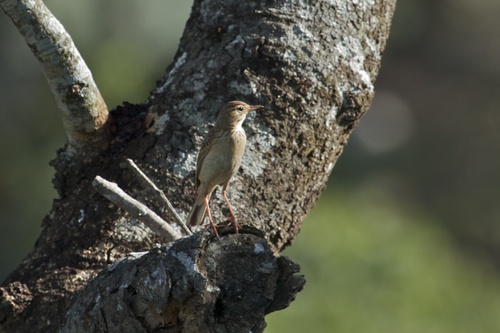
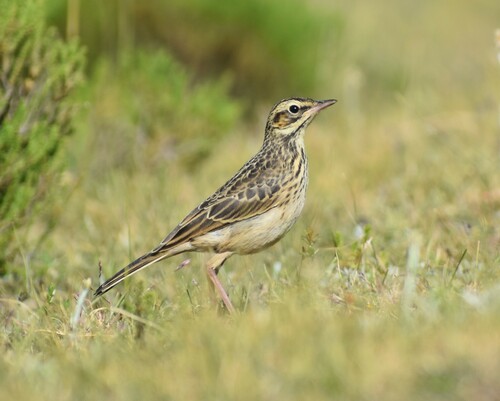
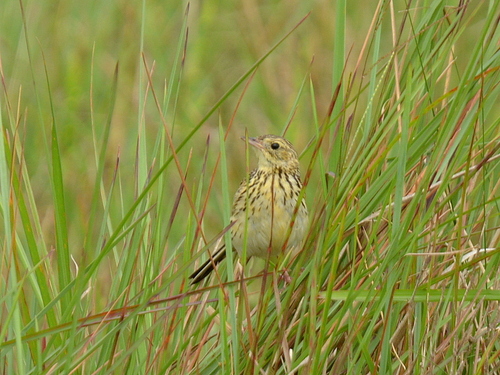
Learn the Long-legged Pipit in the BeakBrain App
Photo and call practice. Coming soon to iPhone and Android.
Play today's Daily BirdEvery photo and recording on this page is credited to its author under the licence shown. Spotted a problem with this page, or have a better photo? Contribute.