Learn what every symbol on the card means.Full credits and sources at beakbrain.com/symbols
 ShrublandCup nestTiny · 3 g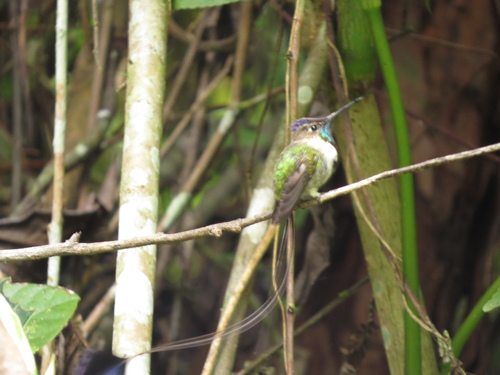

ID tip
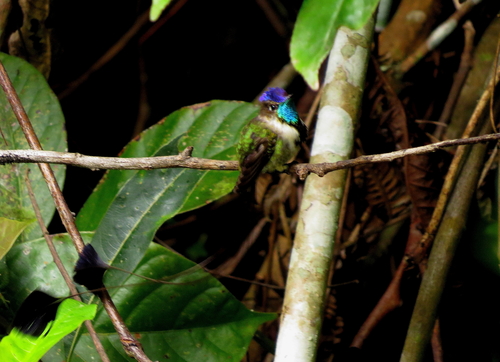
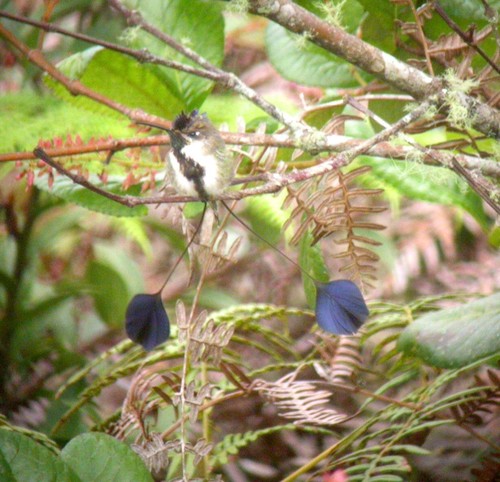
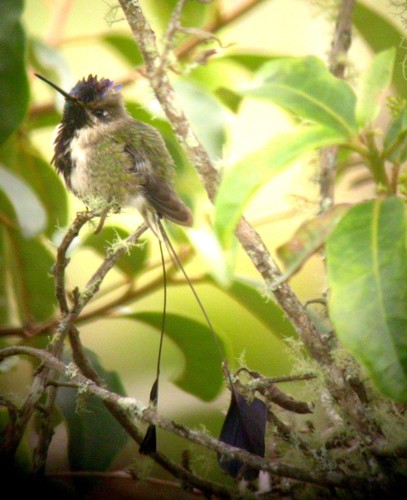
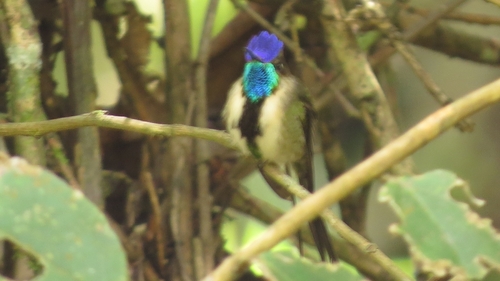
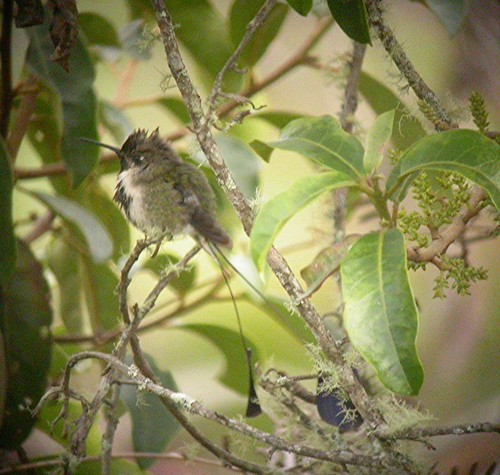
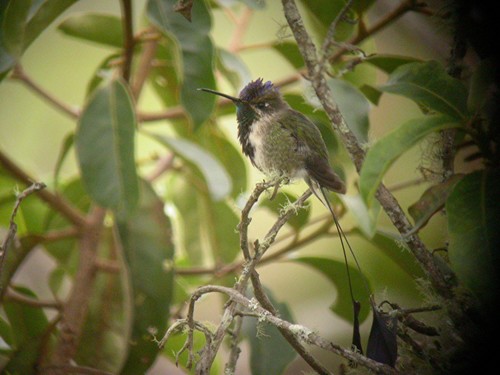
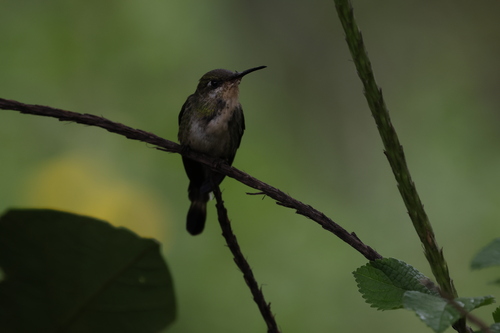
The male marvelous spatuletail is 15 to 17 cm (5.9 to 6.7 in) long including its 11 to 13 cm (4.3 to 5.1 in) tail. Females are 9 to 10 cm (3.5 to 3.9 in) long with a 5 to 7 cm (2.0 to 2.8 in) tail. The male's signature feature is its two outer tail feathers with bare shafts that cross each other and end in large purplish black racquets or "spatules". The remaining tail feathers are very short and are supported by two long undertail coverts. The female's outer tail feathers are also long, but shorter than the male's, and do not have the racquets. Voice: The male marvelous spatuletail gives "a repeated high-pitched buzzy metallic note...'tzzz...tzzz...'" during its aerial display. Its calls include "an upslurred high-pitched sweet note 'tswee'" and "a more strident 'tsik'".
Text from Wikipedia, licensed CC BY-SA 4.0.
When to see the Marvelous Spatuletail
One bar for each month, and every month is filled: this bird is recorded here in all twelve. The wide bar is November, the month with the most records.
Where to see the Marvelous Spatuletail
The map shades 1 country with regular records. Everything unshaded has no records. Countries are listed below the map.
About the Marvelous Spatuletail
The marvelous spatuletail is an endangered species of hummingbird in the "brilliants", tribe Heliantheini in subfamily Lesbiinae. It is endemic to northern Peru.
Text adapted from Wikipedia, licensed CC BY-SA 4.0.
Easily confused with
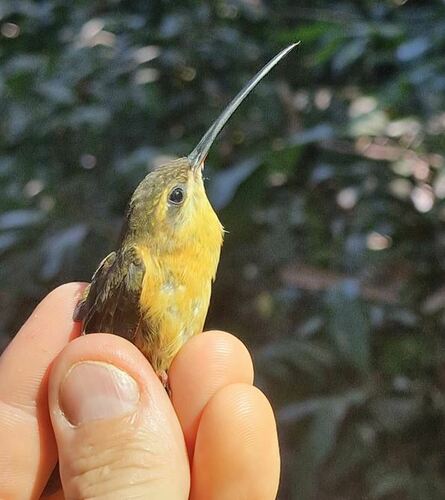 Needle-billed HermitPhaethornis philippiiThe needle-billed hermit is 12 to 13 cm (4.7 to 5.1 in) long.
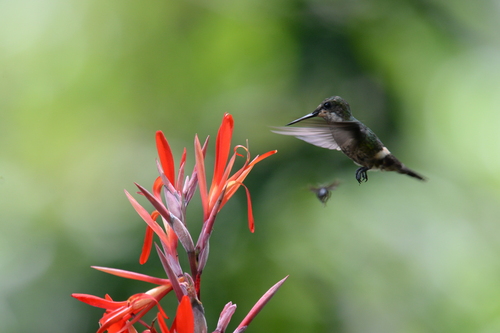 Butterfly CoquetteLophornis verreauxiiThe butterfly coquette is 7.5 to 9.1 cm (3.0 to 3.6 in) long.
 Mexican WoodnymphEupherusa ridgwayiMexican woodnymphs are small birds, generally 9–10 centimetres (3.5–3.9 in) long.
Learn the Marvelous Spatuletail in the BeakBrain App
Photo and call practice. Coming soon to iPhone and Android.
Play today's Daily BirdEvery photo and recording on this page is credited to its author under the licence shown. Spotted a problem with this page, or have a better photo? Contribute.