Learn what every symbol on the card means.Full credits and sources at beakbrain.com/symbols
 WoodlandPlatform nestLarge · 583 g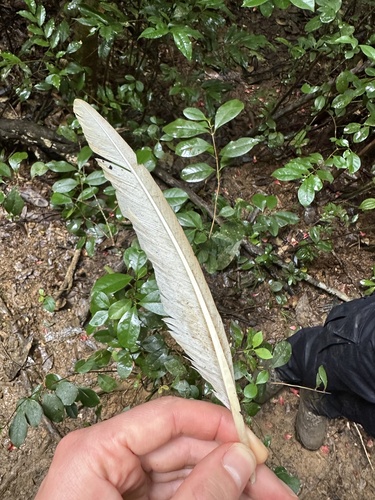
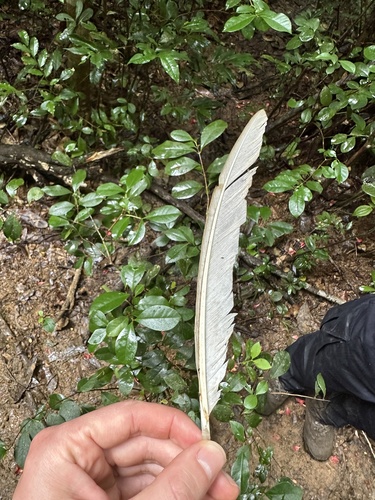
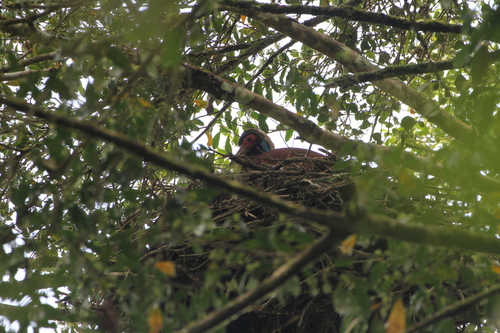


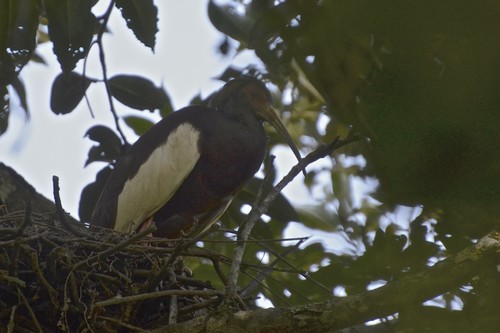
ID tip
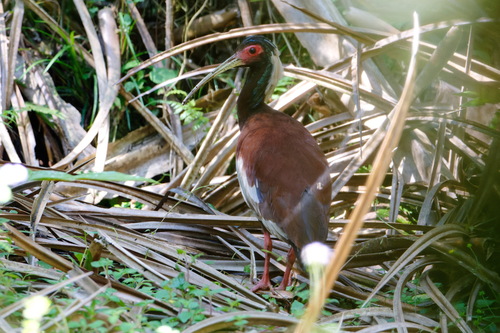
The Madagascar ibis, with a length of 50 cm (20 in), is among the largest birds in the Madagascar forest. The head is black and the upper parts are rufous brown. The chin, neck and throat and underparts are dark brown and the wing is largely white. Part of the face is naked and red, including round the eye, and the crown and back of the neck bear a crest of long feathers which are black with a metallic sheen. In the subspecies L. c. cristata, the sheen is green and there are flecks of white; in the subspecies L. c.
Text from Wikipedia, licensed CC BY-SA 4.0.
When to see the Madagascar Ibis
One bar for each month. Filled bars are the 4 months with records; pale bars are months with none. The wide bar is November, the month with the most records.
Where to see the Madagascar Ibis
The map shades 1 country with regular records. Everything unshaded has no records. Countries are listed below the map.
About the Madagascar Ibis
The Madagascar ibis, also known as the Madagascar crested ibis, white-winged ibis or crested wood ibis, is a medium-sized, brown-plumaged ibis. It has bare red orbital skin, yellow bill, red legs, white wings and its head is partially bare with a dense crest of green or gloss blue and white plumes on the nape. The Madagascar ibis is the only member of the genus Lophotibis.
Text adapted from Wikipedia, licensed CC BY-SA 4.0.
Easily confused with
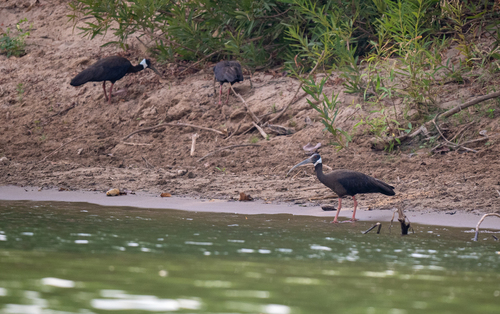 White-shouldered IbisPseudibis davisoniThe adult stands 60–85 cm tall, with males being slightly larger and having slightly longer bills than females.
 Crested IbisNipponia nipponIt is a medium-sized to large ibis, 55–78.5 cm (21.7–30.9 in) long, with a bare red face, and a dense crest of plumes on the nape.
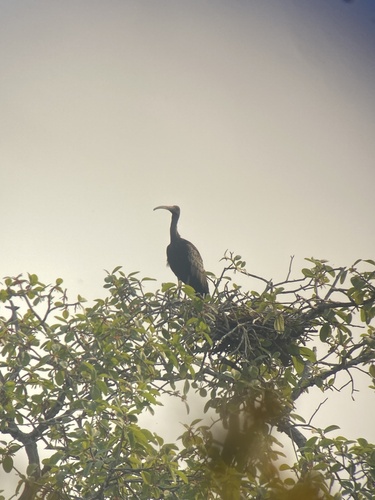 Giant IbisPseudibis giganteaTrue to its name, it is the largest extant ibis species.
Learn the Madagascar Ibis in the BeakBrain App
Photo and call practice. Coming soon to iPhone and Android.
Play today's Daily BirdEvery photo and recording on this page is credited to its author under the licence shown. Spotted a problem with this page, or have a better photo? Contribute.