Learn what every symbol on the card means.Full credits and sources at beakbrain.com/symbols
 WetlandHuge · 4.2 kg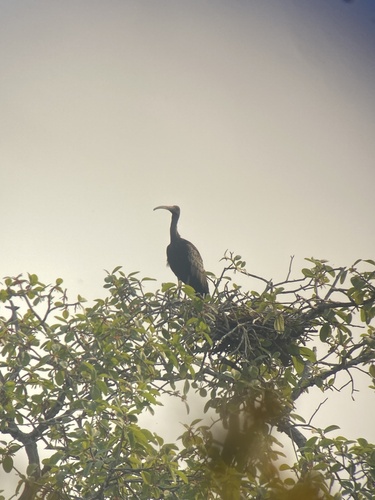
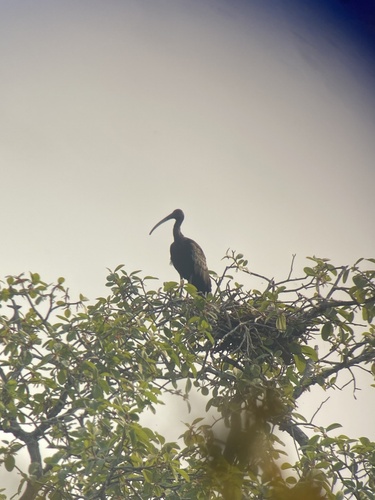
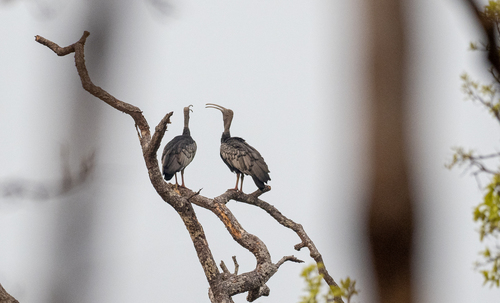
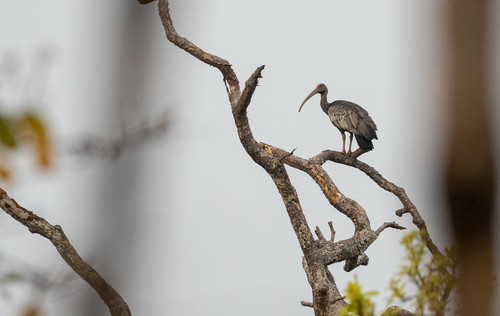

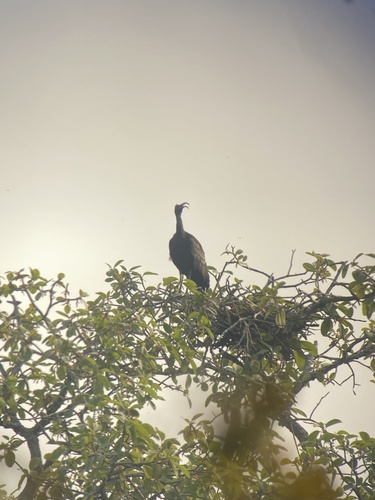
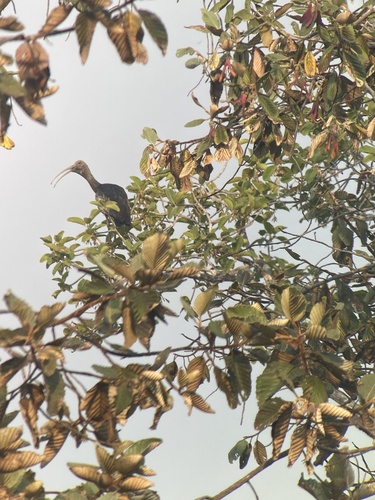
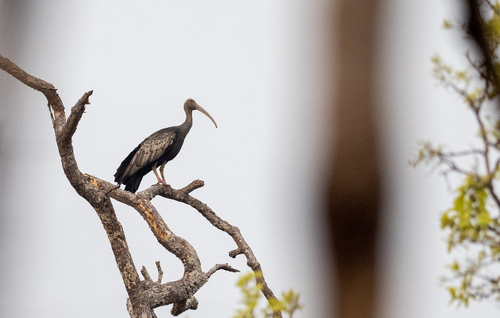
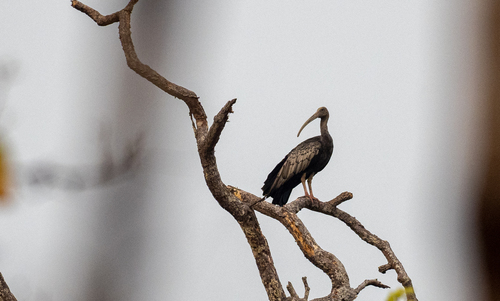
ID tip
True to its name, it is the largest extant ibis species. Adults are 102–106 cm (40–41.5 in) long and weigh about 4.2 kg (9.3 lb). Among standard measurements, the wing chord is 52.3–57 cm (20.6–22.4 in), the tail is 30 cm (12 in), the tarsus is 11 cm (4.3 in) and the culmen is 20.8–23.4 cm (8.2–9.2 in). The adults have overall dark grayish-brown plumage with a naked, greyish head and upper neck. There are dark bands across the back of the head and shoulder area and the pale silvery-grey wing tips also have black crossbars.
Text from Wikipedia, licensed CC BY-SA 4.0.
When to see the Giant Ibis
One bar for each month. Filled bars are the 5 months with records; pale bars are months with none. The wide bar is February, the month with the most records.
Where to see the Giant Ibis
The map shades 1 country with regular records. Everything unshaded has no records. Countries are listed below the map.
About the Giant Ibis
The giant ibis is a wading bird of the ibis family, Threskiornithidae. It is confined to northern Cambodia, with a few birds surviving in extreme southern Laos and a recent sighting in Yok Đôn National Park, Vietnam. It is sometimes placed in the genus Thaumatibis.
Text adapted from Wikipedia, licensed CC BY-SA 4.0.
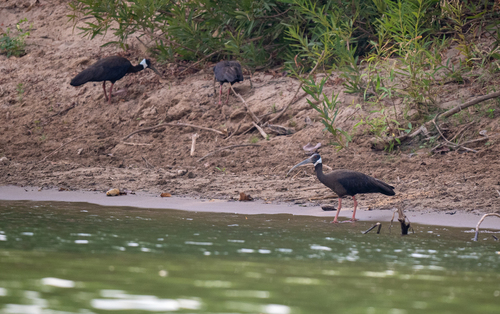
Easily confused with

Learn the Giant Ibis in the BeakBrain App
Photo and call practice. Coming soon to iPhone and Android.
Play today's Daily BirdEvery photo and recording on this page is credited to its author under the licence shown. Spotted a problem with this page, or have a better photo? Contribute.