Learn what every symbol on the card means.Full credits and sources at beakbrain.com/symbols
 WetlandPlatform nestHuge · 1.9 kg


ID tip
It is a medium-sized to large ibis, 55–78.5 cm (21.7–30.9 in) long, with a bare red face, and a dense crest of plumes on the nape. The plumage varies with seasons; in winter, it is largely white with salmon-pink tones on the wings and tail; in summer, it is pale grey above and on the breast, with a darker grey shawl across its back, and white with a salmon-pink tinge below. In flight, the upper side of the wings and tail are white; the underside of the flight feathers on the wing and tail are strongly flushed pink.
Text from Wikipedia, licensed CC BY-SA 4.0.
When to see the Crested Ibis
One bar for each month, and every month is filled: this bird is recorded here in all twelve. The wide bar is May, the month with the most records.
Where to see the Crested Ibis
The map shades 3 countries with regular records, and 1 more in a lighter tone where the bird turns up only as a stray. Everything unshaded has no records. Countries are listed below the map.
Recorded as a rare visitor in Taiwan.
About the Crested Ibis
The crested ibis, also called the Japanese crested ibis, Asian crested ibis or toki (トキ), is a species of bird in the ibis family, Threskiornithidae. It is the only species in the genus Nipponia.
Text adapted from Wikipedia, licensed CC BY-SA 4.0.
Easily confused with
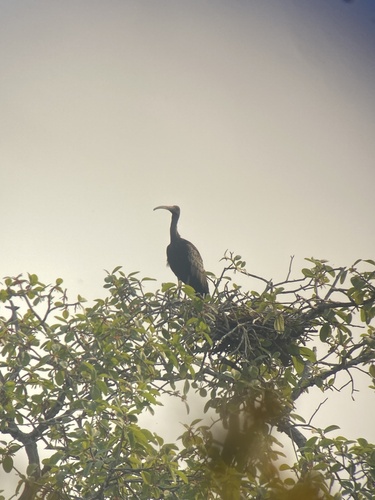 Giant IbisPseudibis giganteaTrue to its name, it is the largest extant ibis species.
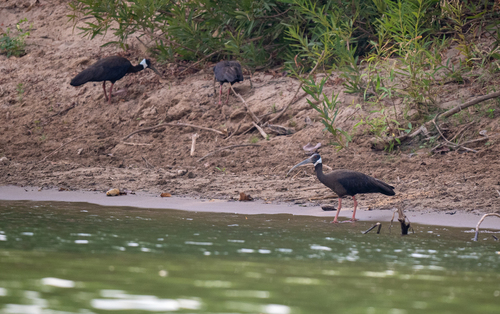 White-shouldered IbisPseudibis davisoniThe adult stands 60–85 cm tall, with males being slightly larger and having slightly longer bills than females.
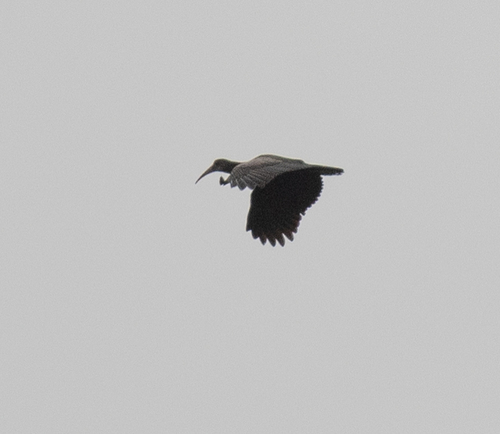 Olive IbisBostrychia olivaceaThis relatively small ibis measures 65–75 cm in length, depending on subspecies.
Learn the Crested Ibis in the BeakBrain App
Photo and call practice. Coming soon to iPhone and Android.
Play today's Daily BirdEvery photo and recording on this page is credited to its author under the licence shown. Spotted a problem with this page, or have a better photo? Contribute.