Learn what every symbol on the card means.Full credits and sources at beakbrain.com/symbols
 ForestCup nestSmall · 17 g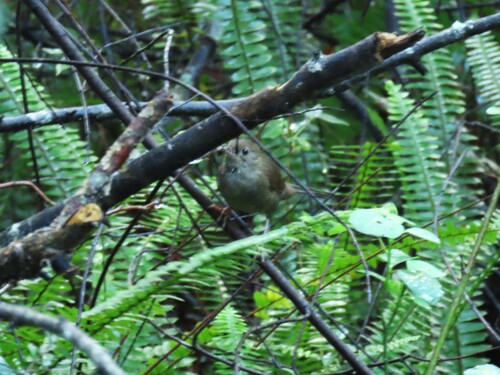

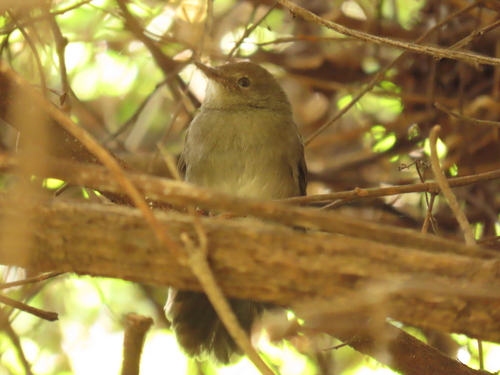
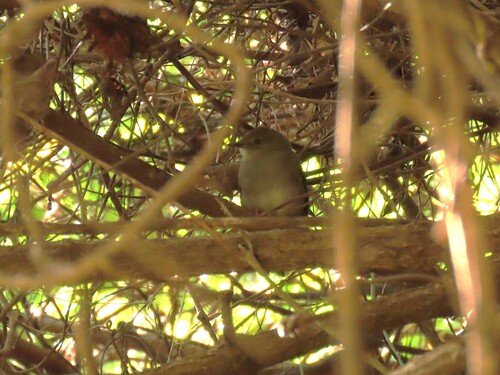
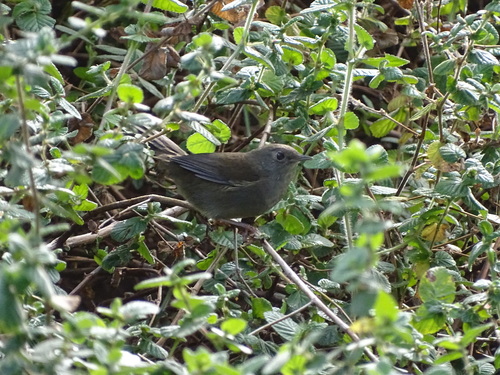
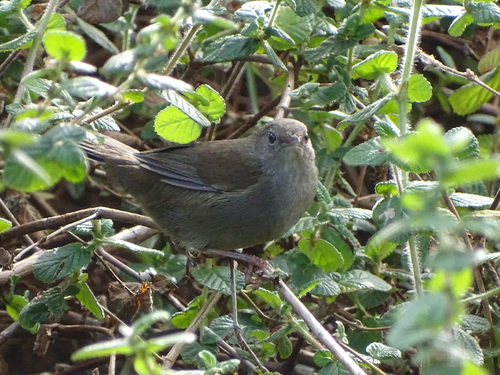
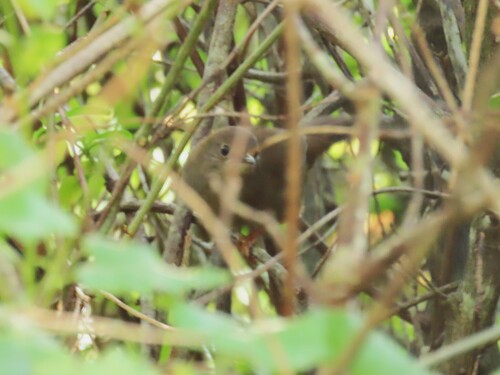
ID tip
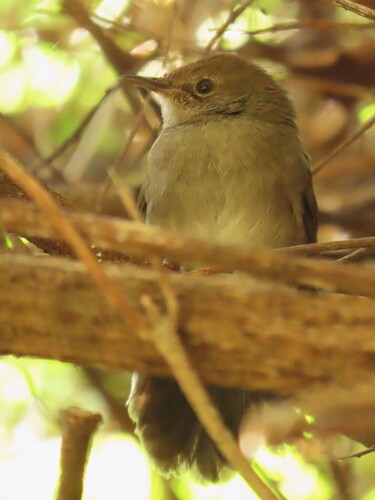
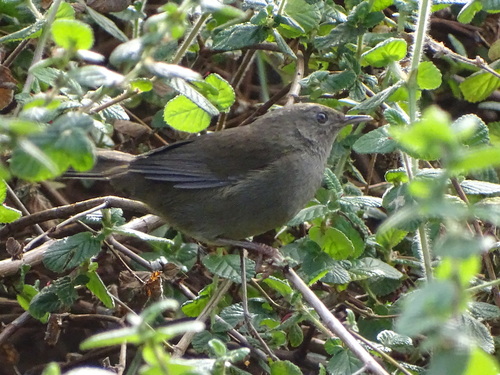
Brown with an olivaceous tinge on the upperpart plumage, including the wings and tail. Below it is paler olivaceous brown, and whitish on the centre of the belly. The chin and throat are olivaceous brown, but mottled whitish and finely streaked. The tail is relatively short and square. The eye, bill, legs and feet are brown, though the lower mandible is paler and horn-coloured. It is replaced northwards by the similar Barratt's warbler, which has a somewhat longer tail, mottled throat, and distinguishable call and song.
Text from Wikipedia, licensed CC BY-SA 4.0.
When to see the Knysna Warbler
One bar for each month. Filled bars are the 7 months with records; pale bars are months with none. The wide bar is December, the month with the most records.
Where to see the Knysna Warbler
The map shades 1 country with regular records. Everything unshaded has no records. Countries are listed below the map.
About the Knysna Warbler
The Knysna warbler or Knysna scrub warbler is a very shy and cryptic warbler, endemic to the coastal regions of South Africa. Its population is small and probably declining, due to natural and artificial fragmentation of its habitat, and limited dispersal and reproductive ability.
Text adapted from Wikipedia, licensed CC BY-SA 4.0.
Easily confused with
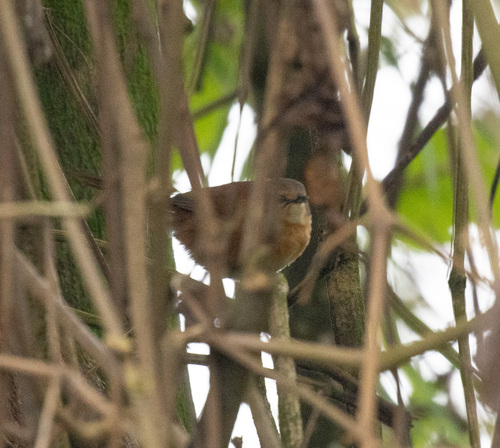 Cinnamon Bracken WarblerBradypterus cinnamomeusThe cinnamon bracken warbler is a species of Old World warbler in the family Locustellidae.
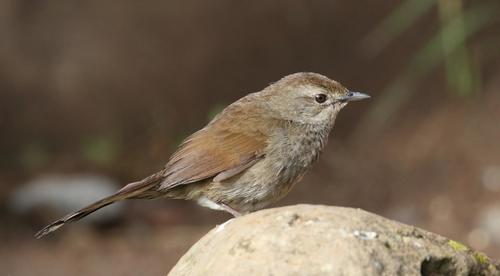 Barratt's WarblerBradypterus barrattiThe bird is 15 cm in size, and its average weight is 15 g.
 Evergreen Forest WarblerBradypterus lopeziThe evergreen forest warbler or Cameroon scrub-warbler is a grass warbler species in the family Locustellidae.
Side by side: Knysna Warbler vs Little Rush Warbler · Barratt's Warbler vs Knysna Warbler
Learn the Knysna Warbler in the BeakBrain App
Photo and call practice. Coming soon to iPhone and Android.
Play today's Daily BirdEvery photo and recording on this page is credited to its author under the licence shown. Spotted a problem with this page, or have a better photo? Contribute.