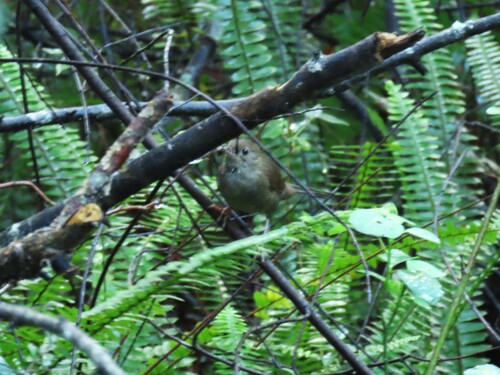
Knysna Warbler
Bradypterus sylvaticus
Brown with an olivaceous tinge on the upperpart plumage, including the wings and tail. Below it is paler olivaceous brown, and whitish on the centre of the belly. The chin and throat are olivaceous brown, but mottled whitish and finely streaked. The tail is relatively short and square. The eye, bill, legs and feet are brown, though the lower mandible is paler and horn-coloured. It is replaced northwards by the similar Barratt's warbler, which has a somewhat longer tail, mottled throat, and distinguishable call and song.
ID text from Wikipedia, CC BY-SA 4.0
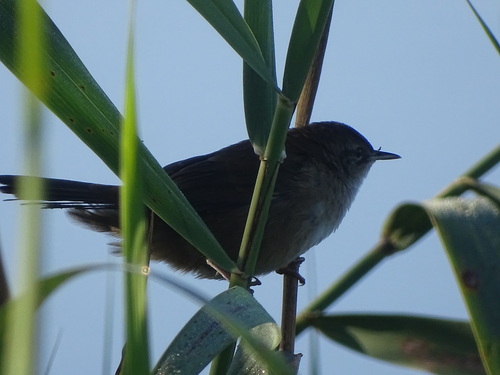
Little Rush Warbler
Bradypterus baboecala
Voice: Its characteristic vocalization starts slow and increases in speed; it has been described as "distinctive and loud." It occurs most often during breeding season, while raining.
ID text from Wikipedia, CC BY-SA 4.0

Where you might meet both
Learn this pair in the BeakBrain App
Photo and call practice. Coming soon to iPhone and Android.
Play today's Daily BirdPhotos and recordings are credited to their authors under the licence shown. Full profiles: Knysna Warbler and Little Rush Warbler.