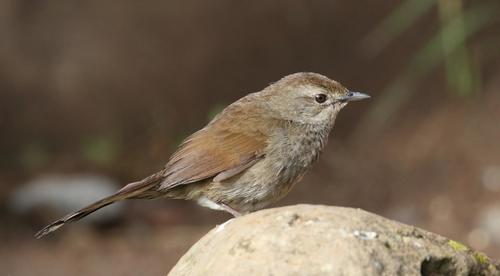
Barratt's Warbler
Bradypterus barratti
The bird is 15 cm in size, and its average weight is 15 g. Males and females are alike. In adults, the underparts of these birds are chocolate-brown; their crown-to-tail, rump, and tail are washed rufous. They have dark brown lores, cheeks, and ears coverts, and their supercilium is greyish buff. Their upper wings coverts are rufous-brown and, and the marginal part of the upper wing is buffy. Their primaries are rufous-brown with cinnamon-brown outer webs. Secondaries are rufous-brown with cinnamon brown. Their axillaries and underwings are ashy brown. Voice: The song starts with high pitched notes tik, tik, tik..., followed by lower notes speeding up to a trill. The alarm call is a quiet chrr-chrr.
ID text from Wikipedia, CC BY-SA 4.0
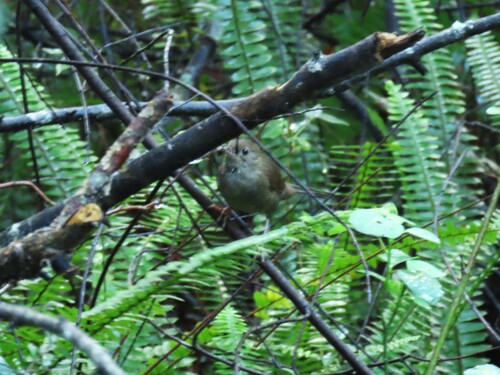
Knysna Warbler
Bradypterus sylvaticus
Brown with an olivaceous tinge on the upperpart plumage, including the wings and tail. Below it is paler olivaceous brown, and whitish on the centre of the belly. The chin and throat are olivaceous brown, but mottled whitish and finely streaked. The tail is relatively short and square. The eye, bill, legs and feet are brown, though the lower mandible is paler and horn-coloured. It is replaced northwards by the similar Barratt's warbler, which has a somewhat longer tail, mottled throat, and distinguishable call and song.
ID text from Wikipedia, CC BY-SA 4.0
Where you might meet both
Learn this pair in the BeakBrain App
Photo and call practice. Coming soon to iPhone and Android.
Play today's Daily BirdPhotos and recordings are credited to their authors under the licence shown. Full profiles: Barratt's Warbler and Knysna Warbler.