Learn what every symbol on the card means.Full credits and sources at beakbrain.com/symbols
 WetlandPlatform nestLarge · 706 g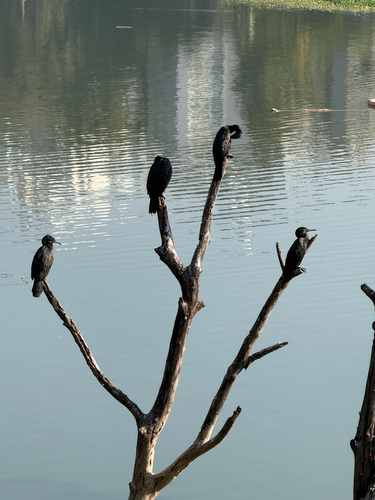
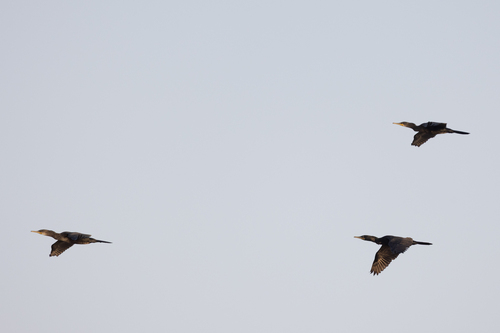
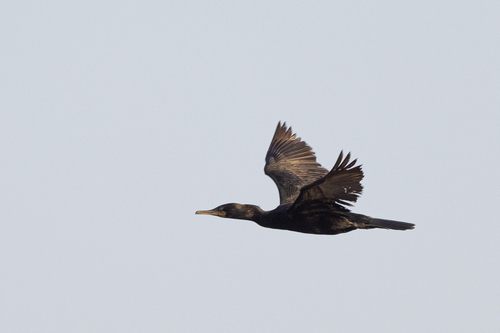
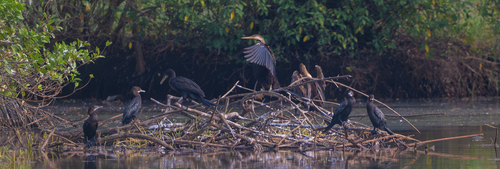
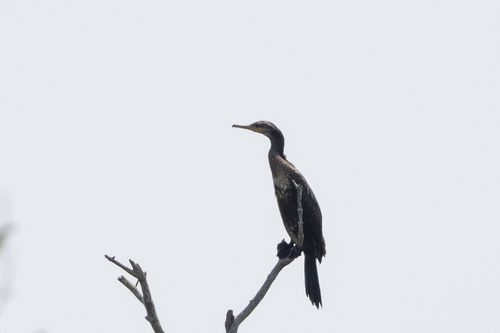
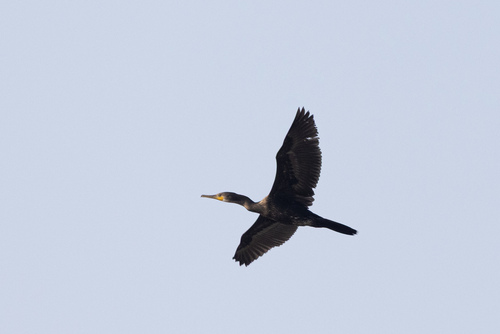
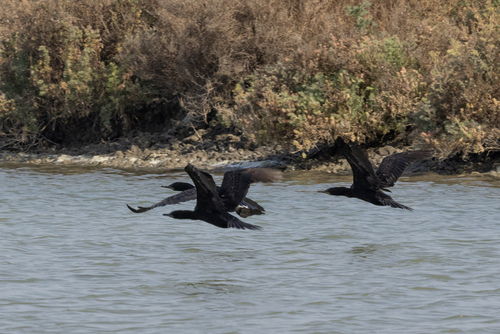
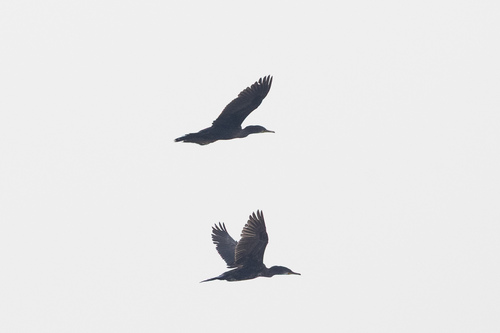
ID tip
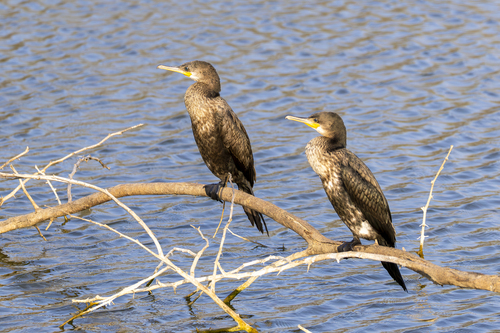
This medium-sized bronze brown cormorant is scalloped in black on the upper plumage, lacks a crest and has a small and slightly peaked head with a long narrow bill that ends in a hooked tip. The eyes are blue and it has bare yellow facial skin during the non-breeding season. Breeding birds have a short white ear tuft. In some plumages it has a white throat but the white is restricted below the gape unlike in the much larger great cormorant. Sexes are similar, but non-breeding adults and juveniles are browner.
Text from Wikipedia, licensed CC BY-SA 4.0.
When to see the Indian Cormorant
One bar for each month, and every month is filled: this bird is recorded here in all twelve. The wide bar is January, the month with the most records.
Where to see the Indian Cormorant
The map shades 10 countries with regular records. Everything unshaded has no records. Countries are listed below the map.
About the Indian Cormorant
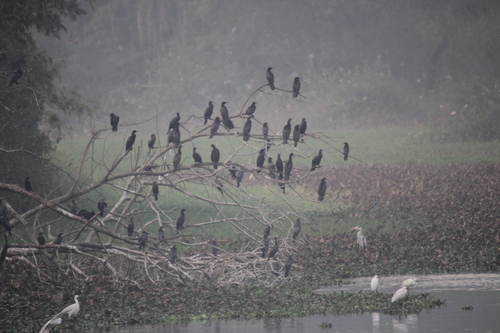
The Indian cormorant or Indian shag is a member of the cormorant family. It is found mainly along the inland waters of the Indian subcontinent but extends west to Sind and east to Thailand and Cambodia. It is a gregarious species that can be easily distinguished from the similar sized little cormorant by its blue eyes, small head with a sloping forehead and a long narrow bill ending in a hooked tip.
Text adapted from Wikipedia, licensed CC BY-SA 4.0.
Easily confused with
 Australian Pied CormorantPhalacrocorax variusThe pied cormorant is predominantly black on its back and upper surface of the wings and white on the underside with males weighing approximately 2.2 kg (4.9 lb) and females 1.7 kg (3.7 lb).
 Cape CormorantPhalacrocorax capensisThe Cape cormorant is a blue-black bird with a glossy shine.
 Spotted ShagPhalacrocorax punctatusThe spotted shag is a medium-sized marine bird.
Side by side: Great Cormorant vs Indian Cormorant · Indian Cormorant vs Little Black Cormorant · Australian Pied Cormorant vs Indian Cormorant · Cape Cormorant vs Indian Cormorant · Indian Cormorant vs Spotted Shag
Learn the Indian Cormorant in the BeakBrain App
Photo and call practice. Coming soon to iPhone and Android.
Play today's Daily BirdEvery photo and recording on this page is credited to its author under the licence shown. Spotted a problem with this page, or have a better photo? Contribute.