Learn what every symbol on the card means.Full credits and sources at beakbrain.com/symbols
 MarinePlatform nestLarge · 1.2 kg


ID tip
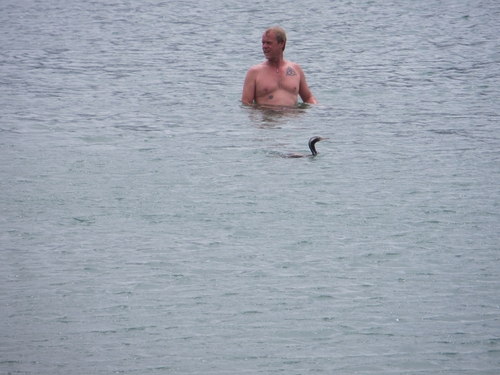
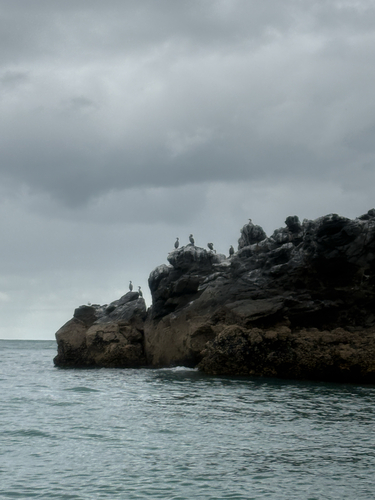
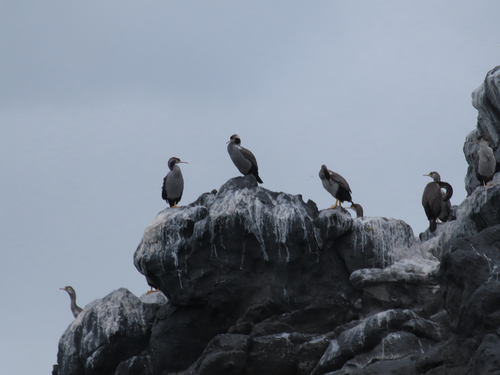
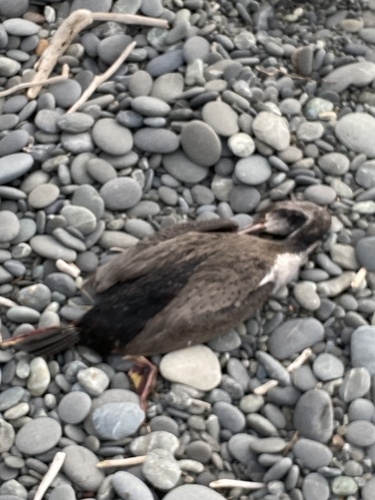
The spotted shag is a medium-sized marine bird. They are usually between 64 and 74 centimetres (25 and 29 in) high and weigh between 700 and 1,200 grams (25 and 42 oz). Their bodies are very slim and they have a very distinctive black, decurved, double crest growing on their nape and their forehead. They have a long, slender, orange-brown coloured, hooked bill and yellow-orange feet. The feathers on their bodies are grey and blue. The adults have small black spots on their backs and wings, which gave them their name. Their irises are brown, while the ring around the iris is blue.
Text from Wikipedia, licensed CC BY-SA 4.0.
When to see the Spotted Shag
One bar for each month, and every month is filled: this bird is recorded here in all twelve. The wide bar is November, the month with the most records.
Where to see the Spotted Shag
The map shades 1 country with regular records. Everything unshaded has no records. Countries are listed below the map.
About the Spotted Shag
The spotted shag or pārekareka is a species of cormorant endemic to New Zealand. Though originally classified as Phalacrocorax punctatus, it is sufficiently different in appearance from typical members of that genus that for a time it was placed in a separate genus, Stictocarbo, along with a similar species, the Pitt shag. Subsequent genetic studies show that the spotted shag's lineage is nested within the typical shags.
Text adapted from Wikipedia, licensed CC BY-SA 4.0.
Easily confused with
 Black-faced CormorantPhalacrocorax fuscescensLike other cormorant species, the black-faced cormorant is a large aquatic bird, with a long hooked bill, webbed feet, and monochromatic plumage.
 Japanese CormorantPhalacrocorax capillatusThe Japanese cormorant, also known as Temminck's cormorant, is a species of cormorant native to coastal areas of the east Palearctic.
 Bank CormorantPhalacrocorax neglectusThe bank cormorant is a heavy-bodied bird, roughly 75 cm in length.
Side by side: Indian Cormorant vs Spotted Shag · Cape Cormorant vs Spotted Shag · Red-legged Cormorant vs Spotted Shag · Black-faced Cormorant vs Spotted Shag · Bank Cormorant vs Spotted Shag
Learn the Spotted Shag in the BeakBrain App
Photo and call practice. Coming soon to iPhone and Android.
Play today's Daily BirdEvery photo and recording on this page is credited to its author under the licence shown. Spotted a problem with this page, or have a better photo? Contribute.