
Cape Cormorant
Phalacrocorax capensis
The Cape cormorant is a blue-black bird with a glossy shine. The entire body follows the same coloration. There is little to no sexual dimorphism, with both males and females measuring 61–64 cm and weighing 1.1-1.3 kg, along with a similar plumage. The beak is dark grey-black, and a deep yellow-orange gular pouch can be observed. The eyes are turquoise with a greenish eye-ring around them. Both non-breeding and immature adults have duller plumage, with a brown throat for immature adults. Juveniles are browner than immature adults, with grey eyes and a black, white, or speckled gular pouch. Voice: Vocalization in Cape cormorants is mostly used during the breeding season. Its use is significantly reduced, or even absent, during the non-breeding period. There are five vocalization variations in adults, and three in chicks. Adult Cape cormorants have different vocalizations for flying, courtship, maintenance, feeding, and the presence of a threat.
ID text from Wikipedia, CC BY-SA 4.0
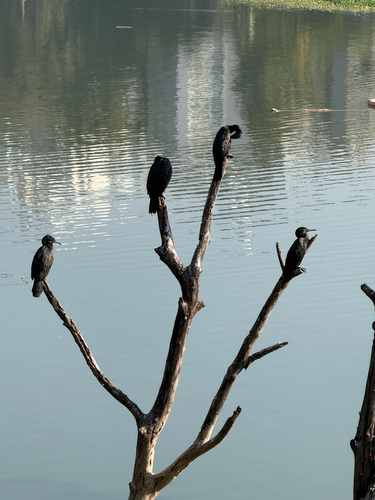
Indian Cormorant
Phalacrocorax fuscicollis
This medium-sized bronze brown cormorant is scalloped in black on the upper plumage, lacks a crest and has a small and slightly peaked head with a long narrow bill that ends in a hooked tip. The eyes are blue and it has bare yellow facial skin during the non-breeding season. Breeding birds have a short white ear tuft. In some plumages it has a white throat but the white is restricted below the gape unlike in the much larger great cormorant. Sexes are similar, but non-breeding adults and juveniles are browner.
ID text from Wikipedia, CC BY-SA 4.0
Learn this pair in the BeakBrain App
Photo and call practice. Coming soon to iPhone and Android.
Play today's Daily BirdPhotos and recordings are credited to their authors under the licence shown. Full profiles: Cape Cormorant and Indian Cormorant.