Learn what every symbol on the card means.Full credits and sources at beakbrain.com/symbols
 RiverineCavity nestSmall · 17 g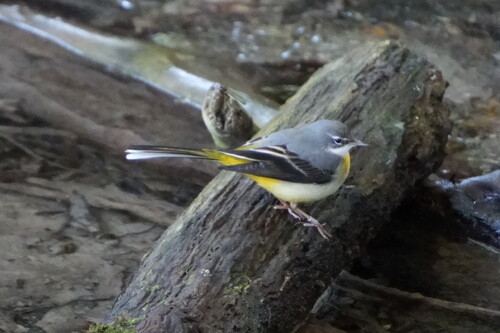



What the Grey Wagtail sounds like


ID tip
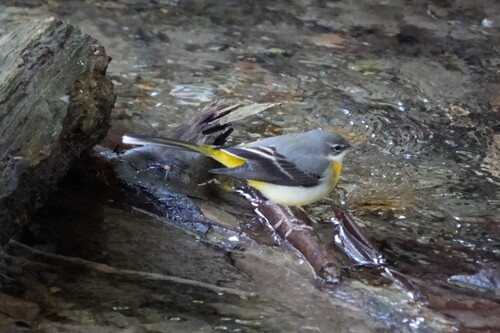
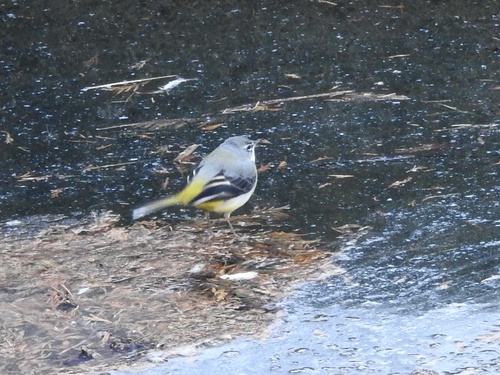
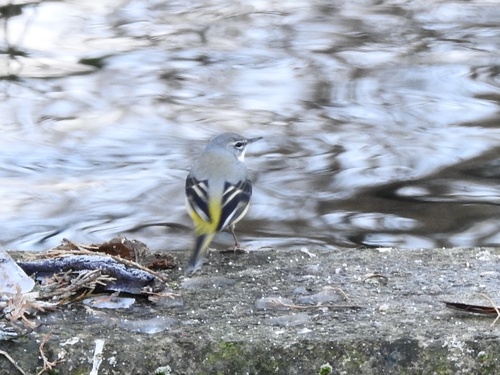
This slim wagtail has a narrow white supercilium and a broken eye ring. The upperparts are grey and the yellow vent contrasting with whitish underparts makes it distinctive. The breeding male has a black throat that is edged by whitish moustachial stripes. They forage singly or in pairs on meadows or on shallow water marshes. They also use rocks in water and will often perch on trees. They have a clear sharp call note and the song consists of trills.
Text from Wikipedia, licensed CC BY-SA 4.0.
When to see the Grey Wagtail
One bar for each month, and every month is filled: this bird is recorded here in all twelve. The wide bar is October, the month with the most records.
Where to see the Grey Wagtail
The map shades 122 countries with regular records, and 4 more in a lighter tone where the bird turns up only as a stray. Everything unshaded has no records. Countries are listed below the map.
Recorded as a rare visitor in United States, Zimbabwe, San Marino, Northern Mariana Islands.
About the Grey Wagtail
The grey wagtail is a member of the wagtail family, Motacillidae, measuring around 18–19 cm overall length. The species looks somewhat similar to the yellow wagtail but has the yellow on its underside restricted to the throat and vent. Breeding males have a black throat. The species is widely distributed, with several populations breeding in Eurosiberia and migrating to tropical regions in Asia and Africa. The species is always associated with running water when breeding, although they may use man-made structures near streams for the nest. Outside the breeding season, they may also be seen around lakes, coasts and other watery habitats.
Text adapted from Wikipedia, licensed CC BY-SA 4.0.
Easily confused with
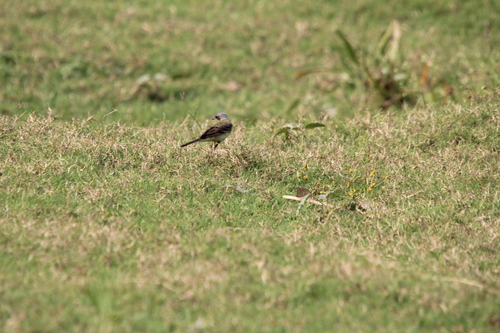 Western Yellow WagtailMotacilla flavaThe western yellow wagtail is a small passerine bird in the wagtail family Motacillidae, which also includes the pipits and longclaws.
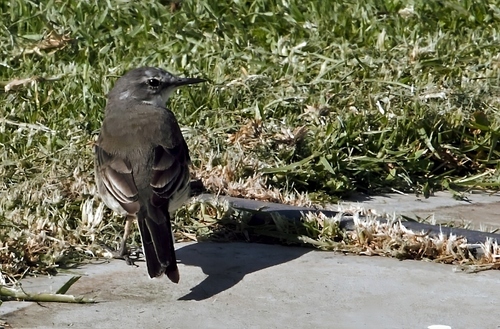 Cape WagtailMotacilla capensisThe Cape wagtail has a dull plumage and a relatively short tail, with olive grey breast and face, with a tan supercilium and dark lores.
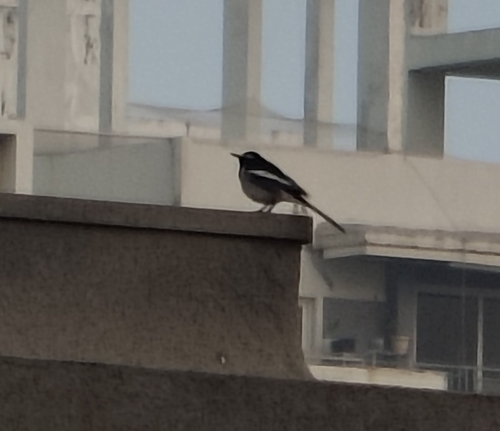 White-browed WagtailMotacilla maderaspatensisThe white-browed wagtail is the largest species of wagtail at 21 cm (8.3 in) length.
Side by side: Grey Wagtail vs White Wagtail · Cape Wagtail vs Grey Wagtail · Grey Wagtail vs White-browed Wagtail
Learn the Grey Wagtail in the BeakBrain App
Photo and call practice. Coming soon to iPhone and Android.
Play today's Daily BirdEvery photo and recording on this page is credited to its author under the licence shown. Spotted a problem with this page, or have a better photo? Contribute.