Learn what every symbol on the card means.Full credits and sources at beakbrain.com/symbols
 WoodlandCup nestSmall · 17 g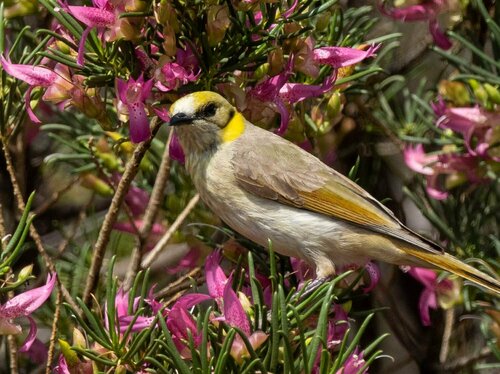

ID tip
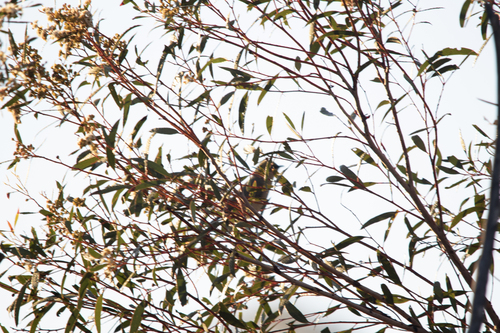
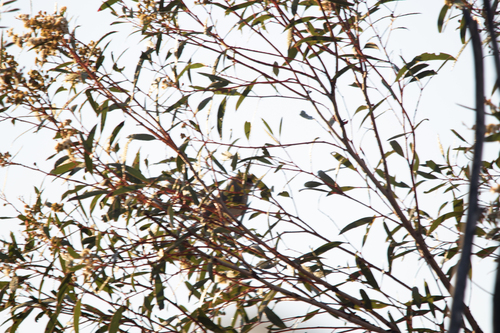
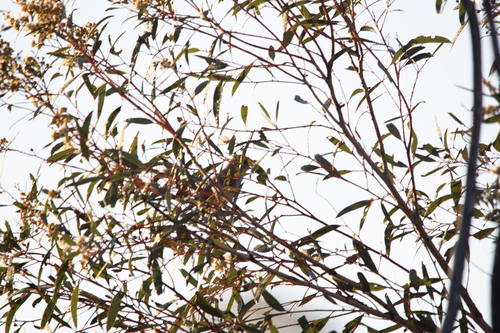
The grey-fronted honeyeater is a small, plain honeyeater with a yellow neck plume bordered above by black. It has a small grey patch at the forehead, that may be obscure in northern subspecies. The crown is olive yellow and the lores blackish. The upper parts are olive grey and flight feathers yellow olive. Underparts are off white with indistinct stripes. The grey-fronted honeyeater can easily be confused with the yellow-tinted honeyeater as their ranges overlap and they are of similar size.
Text from Wikipedia, licensed CC BY-SA 4.0.
When to see the Grey-fronted Honeyeater
One bar for each month. Filled bars are the 9 months with records; pale bars are months with none. The wide bar is September, the month with the most records.
Where to see the Grey-fronted Honeyeater
The map shades 1 country with regular records. Everything unshaded has no records. Countries are listed below the map.
About the Grey-fronted Honeyeater
The grey-fronted honeyeater is a species of bird in the family Meliphagidae. It is endemic to Australia. Its natural habitat is Mediterranean-type shrubby vegetation. The grey-fronted honeyeater was originally described in 1841 by English ornithologist John Gould as Lichenostomus plumulus. It was moved to the genus Ptilotula after a molecular phylogenetic analysis, published in 2011, showed that Lichenostomus was polyphyletic.
Text adapted from Wikipedia, licensed CC BY-SA 4.0.
Easily confused with
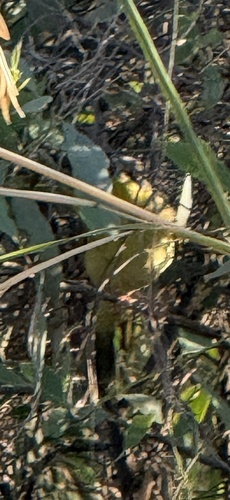 Grey-headed HoneyeaterPtilotula keartlandiThe grey-headed honeyeater is a species of bird in the family Meliphagidae.
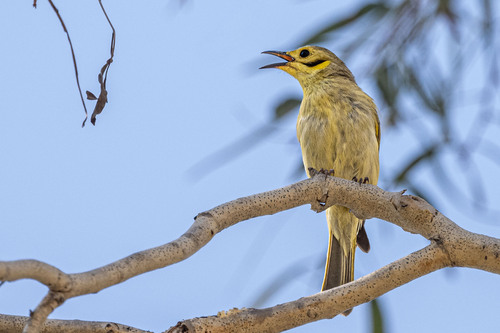 Yellow-tinted HoneyeaterPtilotula flavescensThe yellow-tinted honeyeater is a species of bird in the family Meliphagidae.
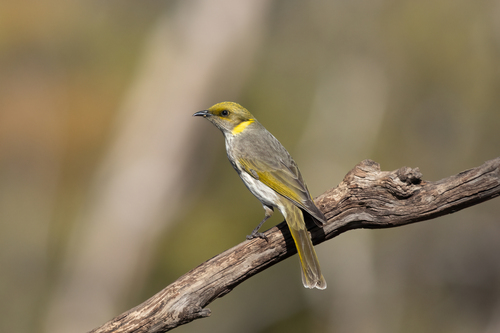 Yellow-plumed HoneyeaterPtilotula ornataThe yellow-plumed honeyeater is a medium-sized honeyeater with a relatively long, down-curved black bill, a dark face and a distinctive, upswept yellow neck plume.
Side by side: Black Honeyeater vs Grey-fronted Honeyeater · Grey-fronted Honeyeater vs Yellow-plumed Honeyeater
Learn the Grey-fronted Honeyeater in the BeakBrain App
Photo and call practice. Coming soon to iPhone and Android.
Play today's Daily BirdEvery photo and recording on this page is credited to its author under the licence shown. Spotted a problem with this page, or have a better photo? Contribute.