Learn what every symbol on the card means.Full credits and sources at beakbrain.com/symbols
 WoodlandCup nestSmall · 18 g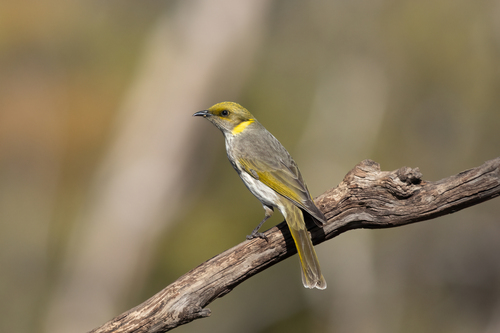
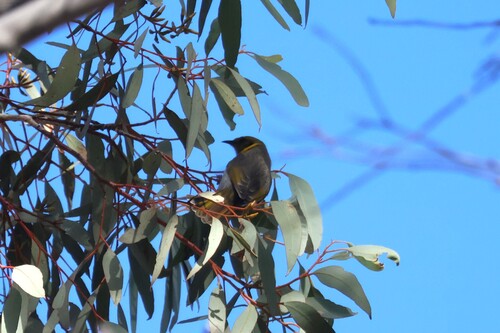


ID tip
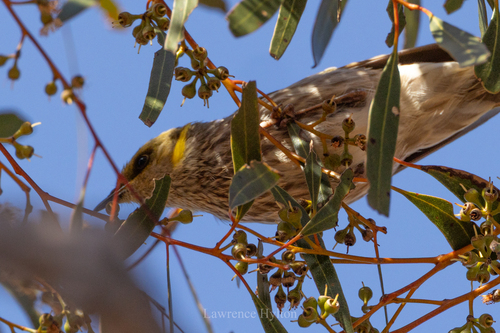
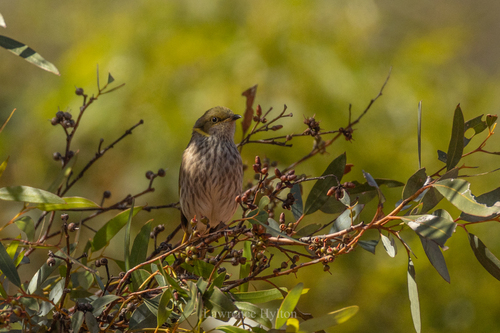
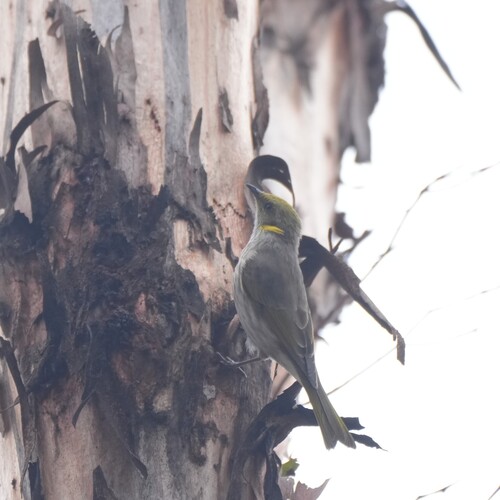
The yellow-plumed honeyeater is a medium-sized honeyeater with a relatively long, down-curved black bill, a dark face and a distinctive, upswept yellow neck plume. It has an olive-green head, with a faint yellow line under the dark eye, grey-green upperparts, and heavily streaked grey-brown underparts. Young birds have a yellow bill base and eye-ring. Similar species include purple-gaped honeyeater, grey-fronted honeyeater and fuscous honeyeater. Voice: The song is a loud, clear, three-note chier wit chier, often performed before dawn, and by males during display flight.
Text from Wikipedia, licensed CC BY-SA 4.0.
When to see the Yellow-plumed Honeyeater
One bar for each month, and every month is filled: this bird is recorded here in all twelve. The wide bar is October, the month with the most records.
Where to see the Yellow-plumed Honeyeater
The map shades 1 country with regular records. Everything unshaded has no records. Countries are listed below the map.
About the Yellow-plumed Honeyeater
The yellow-plumed honeyeater is a species of bird in the family Meliphagidae. It is endemic to Australia, where it inhabits temperate forests and Mediterranean-type shrubby vegetation.
Text adapted from Wikipedia, licensed CC BY-SA 4.0.
Easily confused with
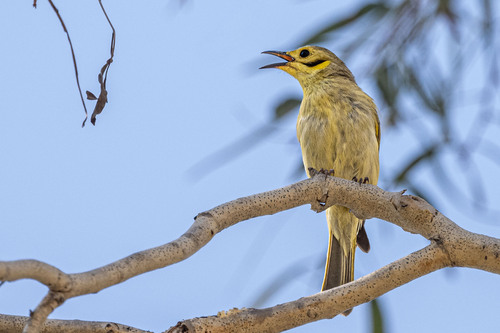 Yellow-tinted HoneyeaterPtilotula flavescensThe yellow-tinted honeyeater is a species of bird in the family Meliphagidae.
 Fuscous HoneyeaterPtilotula fuscaThe fuscous honeyeater is dull grey-brown to olive-brown above with buffy-grey underparts.
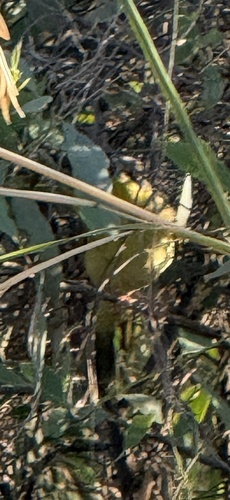 Grey-headed HoneyeaterPtilotula keartlandiThe grey-headed honeyeater is a species of bird in the family Meliphagidae.
Side by side: White-plumed Honeyeater vs Yellow-plumed Honeyeater · Fuscous Honeyeater vs Yellow-plumed Honeyeater · Grey-fronted Honeyeater vs Yellow-plumed Honeyeater
Learn the Yellow-plumed Honeyeater in the BeakBrain App
Photo and call practice. Coming soon to iPhone and Android.
Play today's Daily BirdEvery photo and recording on this page is credited to its author under the licence shown. Spotted a problem with this page, or have a better photo? Contribute.