Learn what every symbol on the card means.Full credits and sources at beakbrain.com/symbols
 WoodlandCup nestTiny · 9 g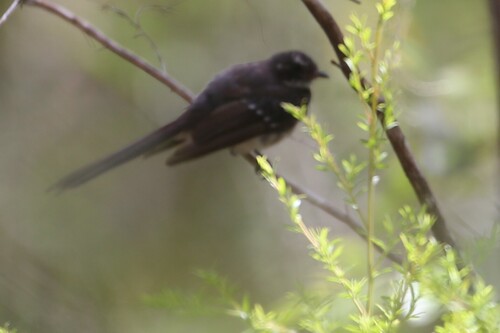
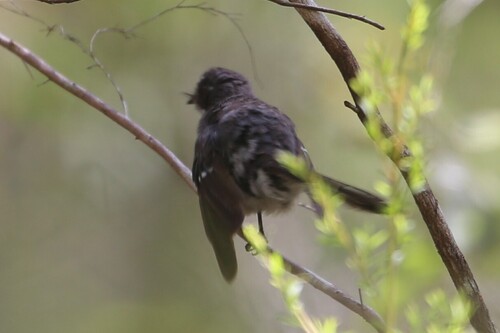
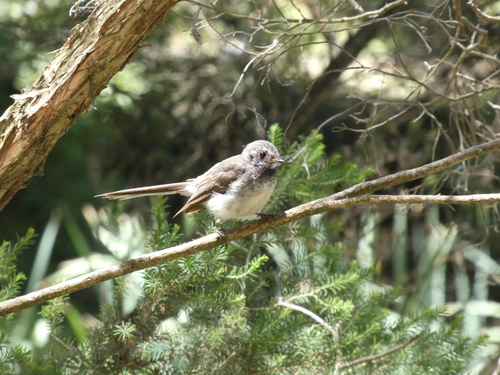
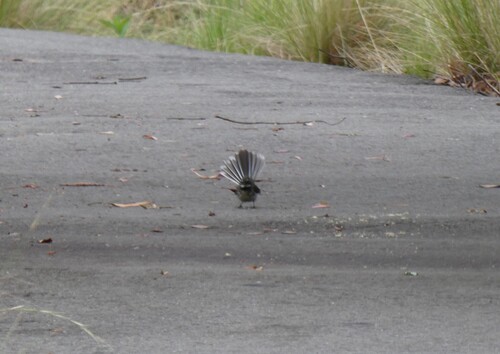
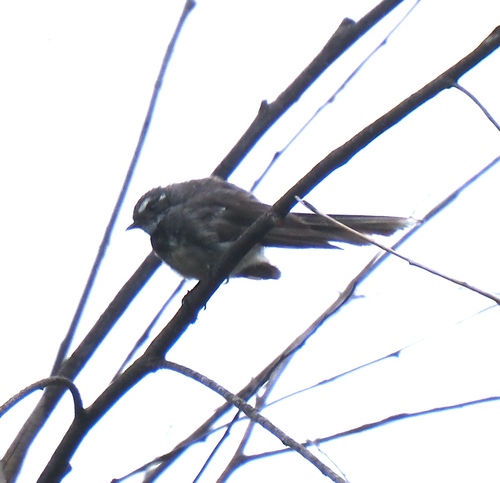
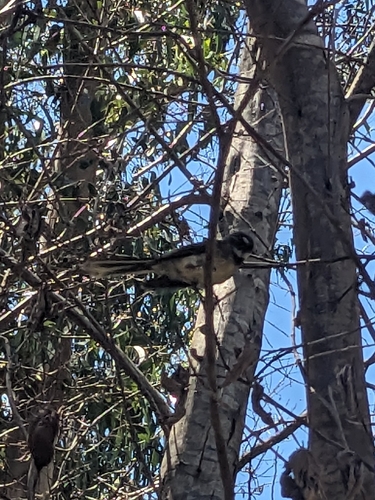
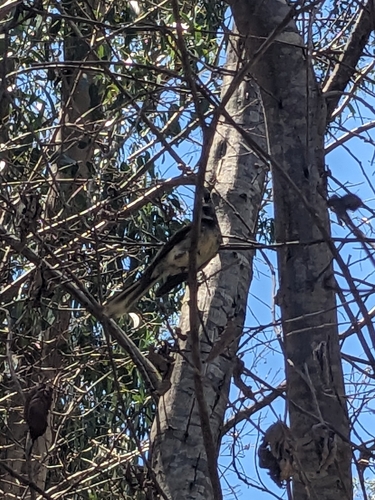


ID tip
This species is mid-to-dark grey or grey-brown above, lighter (often yellowish/orange) below, with a white throat, white markings over the eye, and with (depending on the race) either white-edged or entirely white outer tail feathers. It grows to 16 cm (6.3 in) in length, of which half is the tail, which, as the name implies, is often displayed fanned out. This reveals that the outer tail feathers are light and the centre ones are dark. Some races, such as keasti, have a darker plumage.
Text from Wikipedia, licensed CC BY-SA 4.0.
When to see the Grey Fantail
One bar for each month, and every month is filled: this bird is recorded here in all twelve. The wide bar is October, the month with the most records.
Where to see the Grey Fantail
The map shades 4 countries with regular records. Everything unshaded has no records. Countries are listed below the map.
About the Grey Fantail
The grey fantail is a small insectivorous bird. There is no sexual dimorphism. It is a common fantail found in Australia, the Solomon Islands, Vanuatu and New Caledonia. The species is considered by many to be conspecific with the New Zealand fantail ; however, differences in its calls lead some authorities to treat it as a separate species. The studies of grey fantail in 1999 by Richard Schodde and Ian Mason recommended that Tasmanian grey fantail was formally classified as R. albiscapa and New Zealand fantails populations as R. fuliginosa
Text adapted from Wikipedia, licensed CC BY-SA 4.0.
Easily confused with
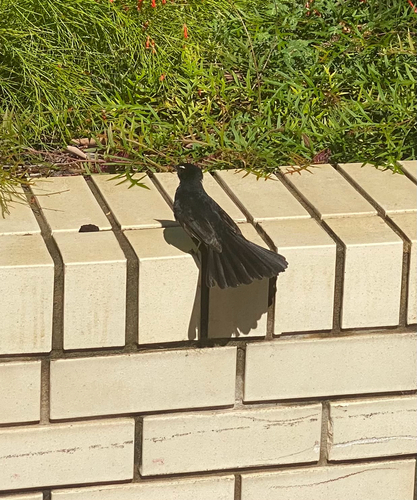 Willie WagtailRhipidura leucophrysAn adult willie wagtail is between 19 and 21.5 cm (7.5 and 8.5 in) in length and weighs 17–24 g (0.6–0.85 oz), with a tail 10–11 cm (approx 4 in) long.
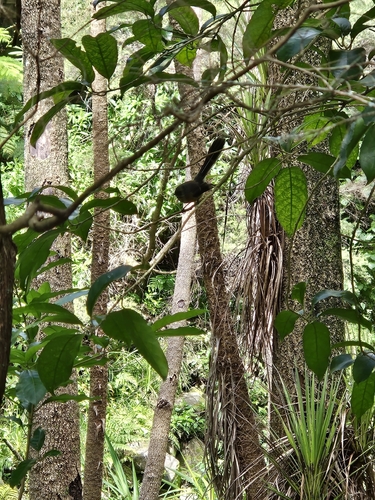 New Zealand FantailRhipidura fuliginosaThis fantail is mid to dark grey or grey-brown above, yellowish/orange below, with a dark band across the chest below a white throat, white markings over the eye, and (depending on the race) either white-edged or entirely white outer tail feathers.
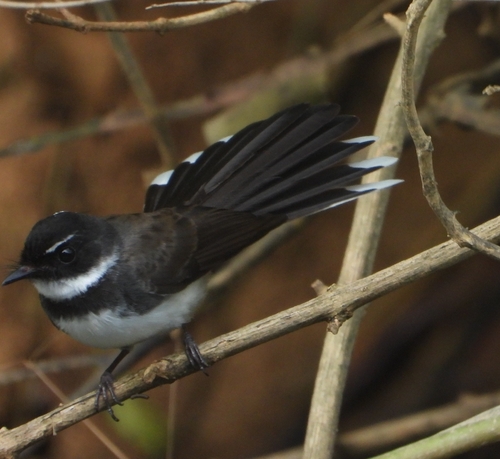 Sunda Pied FantailRhipidura javanicaThe Sunda pied fantail, also known as the Malaysian pied fantail, is a species of bird in the fantail family.
Side by side: Grey Fantail vs Willie Wagtail · Grey Fantail vs New Zealand Fantail
Learn the Grey Fantail in the BeakBrain App
Photo and call practice. Coming soon to iPhone and Android.
Play today's Daily BirdEvery photo and recording on this page is credited to its author under the licence shown. Spotted a problem with this page, or have a better photo? Contribute.