Learn what every symbol on the card means.Full credits and sources at beakbrain.com/symbols
 WetlandCup nestSmall · 30 g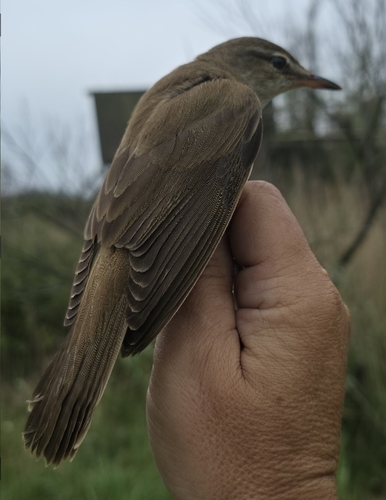
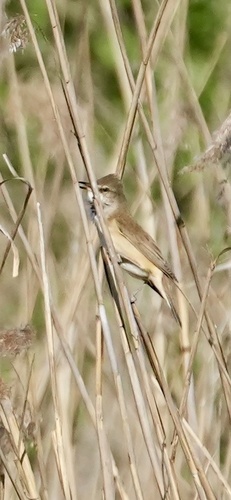
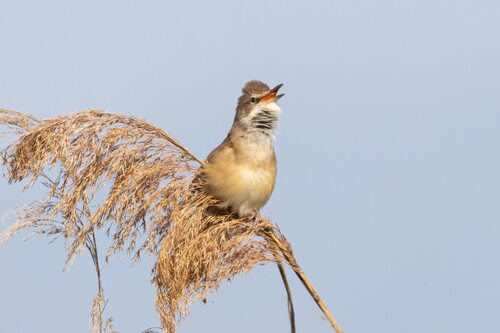
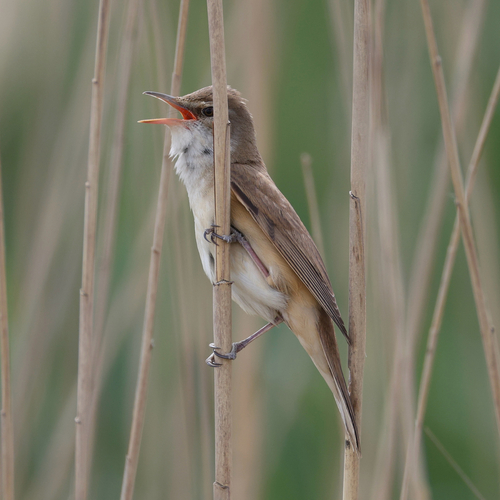
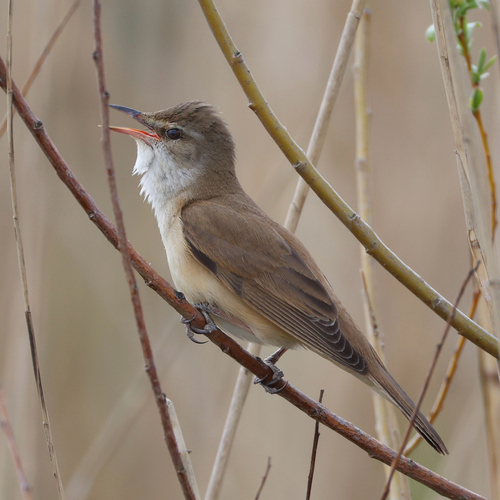


What the Great Reed Warbler sounds like


ID tip
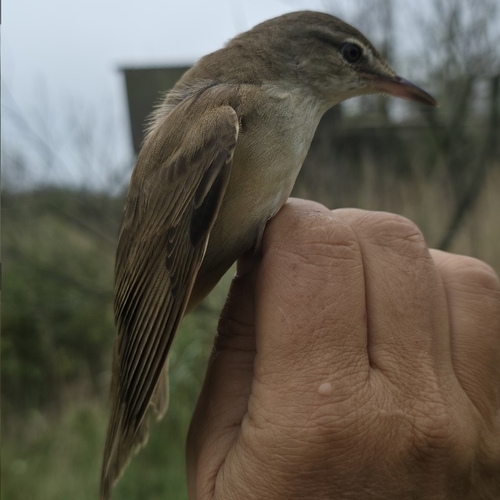
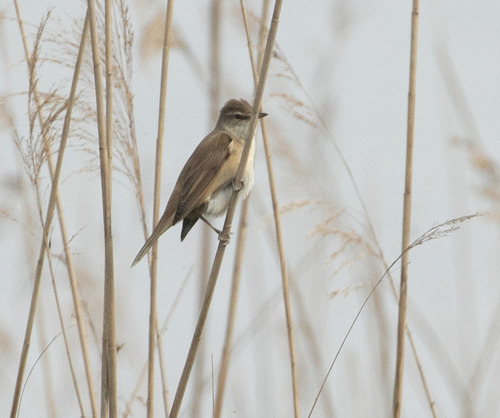
The thrush-sized warbler is one of the largest species in both its current the family Acrocephalidae, and its former family, the "Sylviidae". It measures 16–21 cm (6.3–8.3 in) in length, 25 to 30 cm (9.8 to 11.8 in) in wingspan and weighs 22 to 38 g (0.78 to 1.34 oz). The adult has unstreaked brown upperparts and dull buffish-white chin and underparts. The forehead is flattened, and the bill is strong and pointed. It looks very much like a giant common reed warbler (Acrocephalus scirpaceus), but with a stronger supercilium.
Text from Wikipedia, licensed CC BY-SA 4.0.
When to see the Great Reed Warbler
One bar for each month. Filled bars are the 5 months with records; pale bars are months with none. The wide bar is May, the month with the most records.
Where to see the Great Reed Warbler
The map shades 97 countries with regular records, and 7 more in a lighter tone where the bird turns up only as a stray. Everything unshaded has no records. Countries are listed below the map.
Recorded as a rare visitor in Gabon, São Tomé & Príncipe, India, Yemen, Libya, Sudan, Ireland.
About the Great Reed Warbler
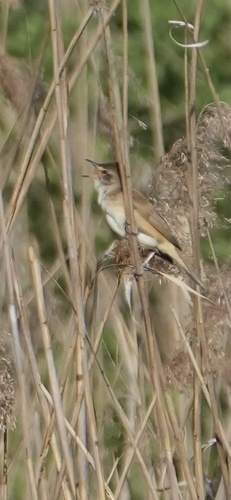
The great reed warbler is an insectivorous bird in the family Acrocephalidae. It is a medium-sized passerine bird and the largest of the warblers. It breeds throughout mainland Europe and the Western Palearctic and migrates to sub-Saharan Africa in the winter. It favours reed beds during the breeding season, while living in reed beds, bush thickets, rice fields, and forest clearings during the winter. It exhibits relatively low sexual dimorphism, and the sexes are similar in appearance. This species mates both polygynously and monogamously.
Text adapted from Wikipedia, licensed CC BY-SA 4.0.
Easily confused with
 Blyth's Reed WarblerAcrocephalus dumetorumBlyth's reed warbler is between 12 and 14 cm (4.7 and 5.5 in) in length and weighs between 8 and 16 g (0.28 and 0.56 oz).
 Australian Reed WarblerAcrocephalus australisVoice: Described as a sweet melodious warble with rich fluty notes as well as hard and metallic sounding notes, Australian reed warbler song is loud and varied.
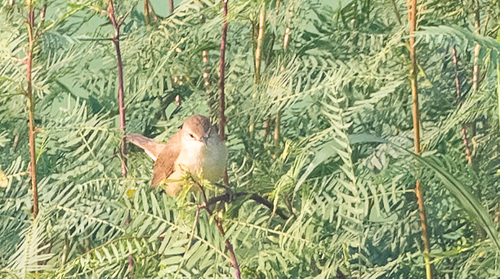 Clamorous Reed WarblerAcrocephalus stentoreusClamorous reed warbler is a large song thrush-sized warbler at 18–20 cm.
Side by side: Great Reed Warbler vs Marsh Warbler · Blyth's Reed Warbler vs Great Reed Warbler · Australian Reed Warbler vs Great Reed Warbler · Clamorous Reed Warbler vs Great Reed Warbler
Learn the Great Reed Warbler in the BeakBrain App
Photo and call practice. Coming soon to iPhone and Android.
Play today's Daily BirdEvery photo and recording on this page is credited to its author under the licence shown. Spotted a problem with this page, or have a better photo? Contribute.