Learn what every symbol on the card means.Full credits and sources at beakbrain.com/symbols
 WoodlandCup nestLarge · 676 g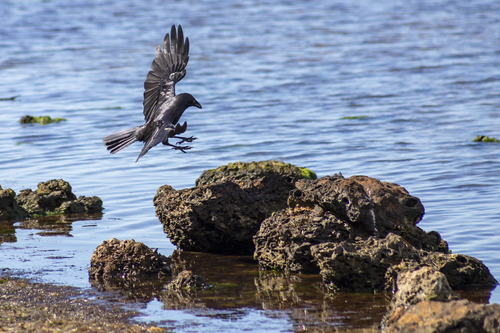
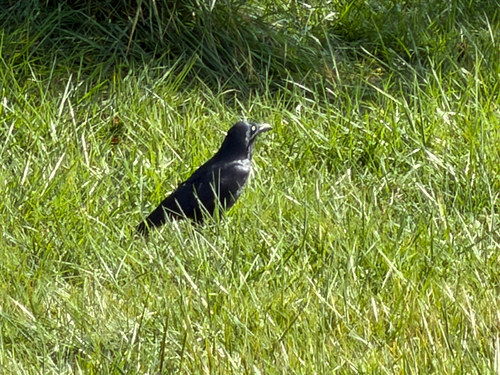
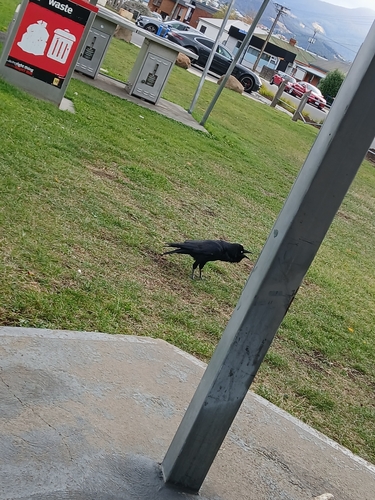
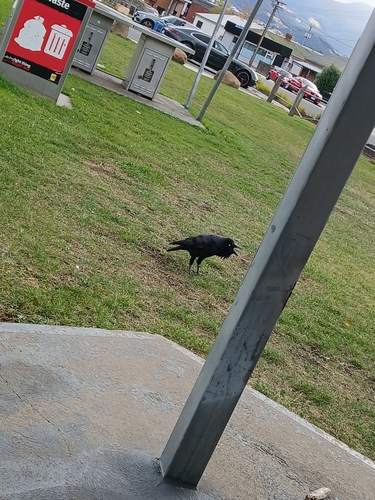


ID tip
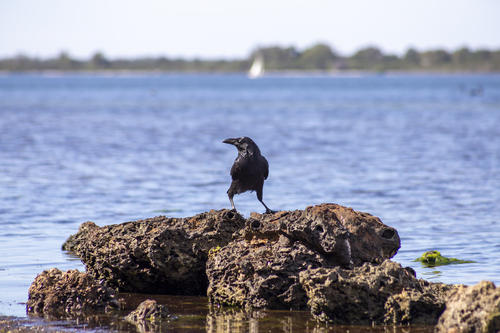
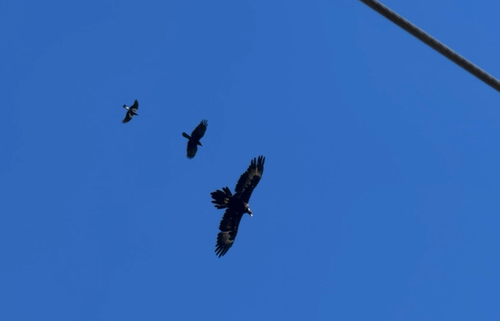
The largest of the Australian corvids, the adult forest raven is 50–53 cm (20–21 in) long with a wingspan of 91–113 cm (36–44 in) and weighing approximately 650 g (1.43 lb). There is no seasonal variation in plumage, which is entirely glossy black with a blue or green sheen visible on the upperparts. The wings are long and broad, with the largest of its ten primary feathers (usually the seventh but occasionally the eighth) almost reaching the end of the tail when at rest. The tail is rounded or wedge-shaped. It is quite short in Tasmanian populations but longer in northern New South Wales. Voice: The call is considered the most reliable means of identification in areas where the forest raven's range overlaps with other corvids. It is a deep and husky "korr-korr-korr-korr" with a similarly drawn out last note to the Australian raven. It can also utter a barking alarm call. The calls of juveniles have a higher pitch than those of adult birds.
Text from Wikipedia, licensed CC BY-SA 4.0.
When to see the Forest Raven
One bar for each month, and every month is filled: this bird is recorded here in all twelve. The wide bar is November, the month with the most records.
Where to see the Forest Raven
The map shades 1 country with regular records. Everything unshaded has no records. Countries are listed below the map.
About the Forest Raven
The forest raven, also commonly known as the Tasmanian raven, is a passerine bird in the family Corvidae native to Tasmania and parts of southern Victoria, such as Wilsons Promontory and Portland. Populations are also found in parts of New South Wales, including Dorrigo and Armidale. Measuring 50–53 cm (20–21 in) in length, it has all-black plumage, beak and legs. As with the other two species of raven in Australia, its black feathers have grey bases. Adults have white irises; younger birds have dark brown and then hazel irises with an inner blue rim.
Text adapted from Wikipedia, licensed CC BY-SA 4.0.
Easily confused with
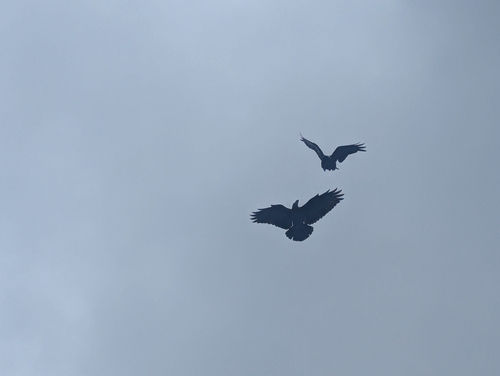 White-necked RavenCorvus albicollisThe white-necked raven has a much shorter tail than the common raven, as well as a deeper bill with a white tip that is almost as strongly arched as that of the thick-billed raven.
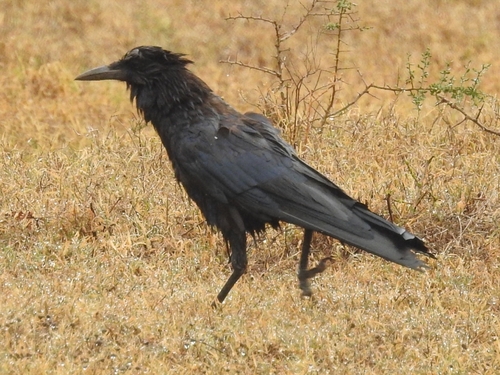 Cape CrowCorvus capensisVoice: The voice is described as a krrah.....krrah.....krrah or a quicker kah-kah-kah.
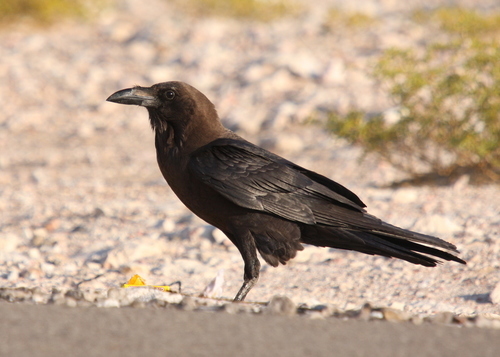 Brown-necked RavenCorvus ruficollisVoice: The voice is very similar to the common raven's consisting mainly of croaks, though higher in pitch; and a harsh "karr-karr-karr".
Side by side: Chihuahuan Raven vs Forest Raven · Cape Crow vs Forest Raven · Forest Raven vs White-necked Raven · Brown-necked Raven vs Forest Raven
Learn the Forest Raven in the BeakBrain App
Photo and call practice. Coming soon to iPhone and Android.
Play today's Daily BirdEvery photo and recording on this page is credited to its author under the licence shown. Spotted a problem with this page, or have a better photo? Contribute.