Learn what every symbol on the card means.Full credits and sources at beakbrain.com/symbols
 GrasslandCup nestLarge · 553 g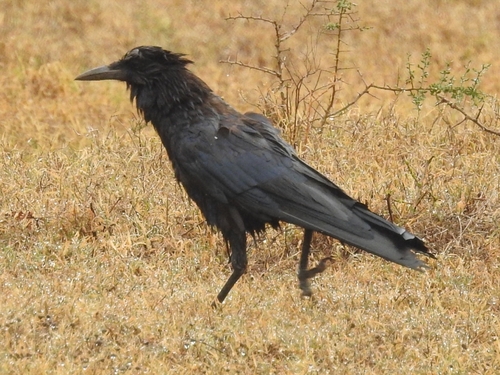
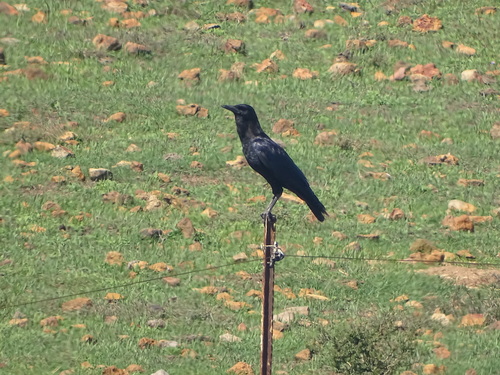
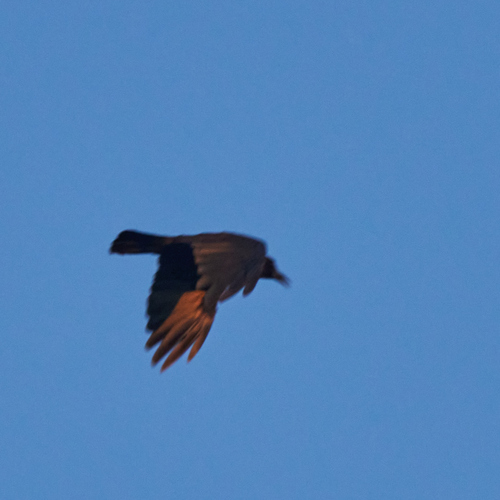
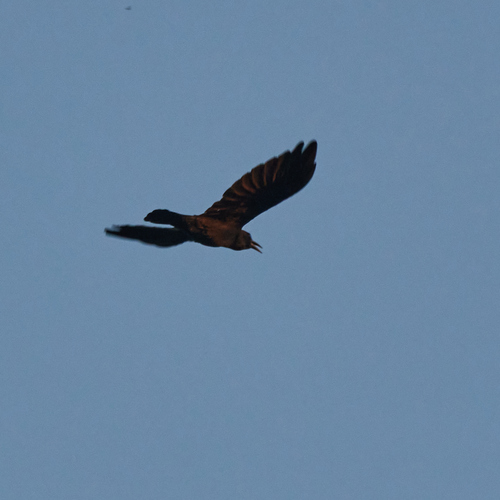
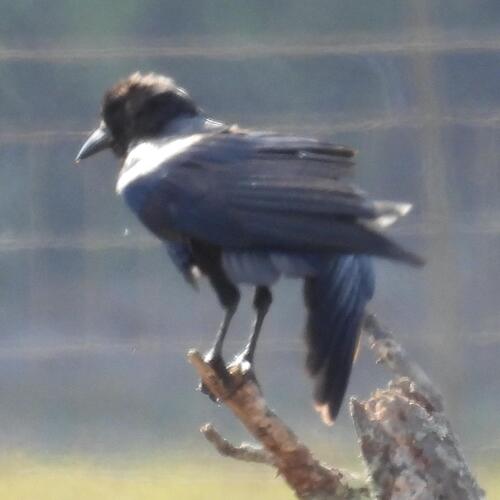


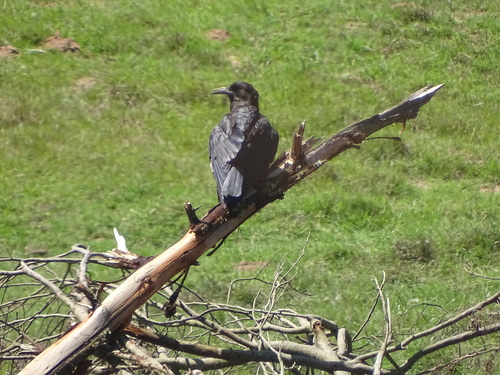
ID tip
Voice: The voice is described as a krrah.....krrah.....krrah or a quicker kah-kah-kah. It also makes very loud, liquid bubbling sounds that carry quite a distance; it also gives throaty chuckles. Some evidence indicates that vocal mimicry is practised, too.
Text from Wikipedia, licensed CC BY-SA 4.0.
When to see the Cape Crow
One bar for each month, and every month is filled: this bird is recorded here in all twelve. The wide bar is October, the month with the most records.
Where to see the Cape Crow
The map shades 13 countries with regular records. Everything unshaded has no records. Countries are listed below the map.
About the Cape Crow
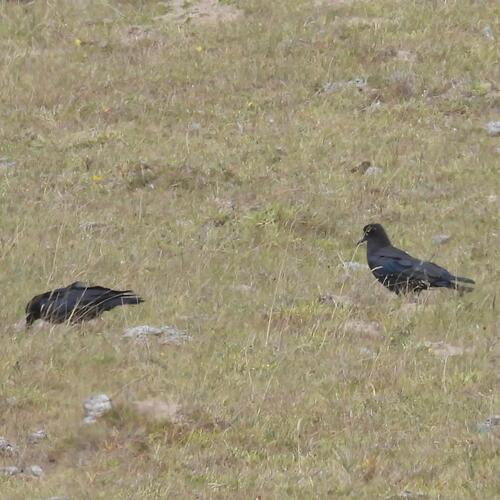
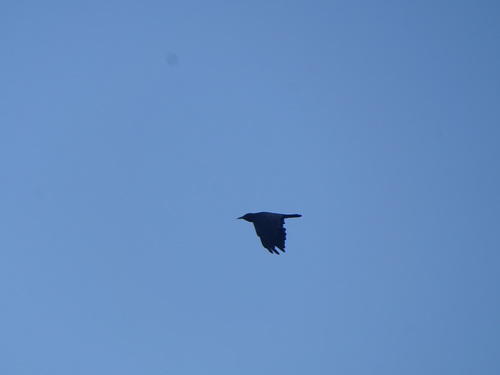
The Cape crow or black crow is slightly larger than the carrion crow and is completely black with a slight gloss of purple in its feathers. It also has proportionately longer legs, wings, and tail, and has a much longer, slimmer bill that seems to be adapted for probing into the ground for invertebrates. The head feathers have a coppery-purple gloss and the throat feathers are quite long and fluffed out in some calls and displays.
Text adapted from Wikipedia, licensed CC BY-SA 4.0.
Easily confused with
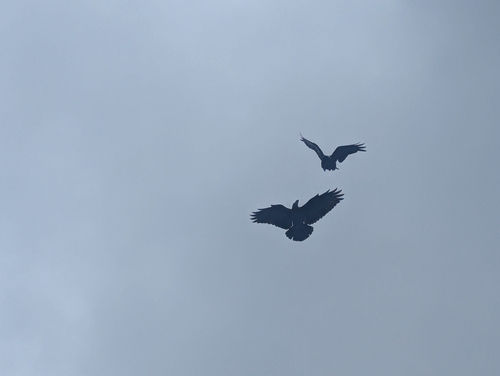 White-necked RavenCorvus albicollisThe white-necked raven has a much shorter tail than the common raven, as well as a deeper bill with a white tip that is almost as strongly arched as that of the thick-billed raven.
 Chihuahuan RavenCorvus cryptoleucusThe proportions resemble the common raven with a heavy bill, but is about the same size as a carrion crow, or slightly larger than the American crow (44–51 cm (17–20 in) long).
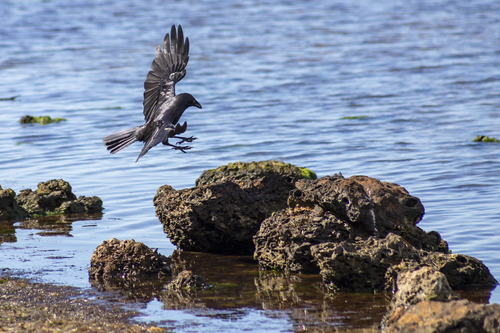 Forest RavenCorvus tasmanicusThe largest of the Australian corvids, the adult forest raven is 50–53 cm (20–21 in) long with a wingspan of 91–113 cm (36–44 in) and weighing approximately 650 g (1.43 lb).
Side by side: Cape Crow vs Chihuahuan Raven · Cape Crow vs White-necked Raven · Cape Crow vs Forest Raven
Learn the Cape Crow in the BeakBrain App
Photo and call practice. Coming soon to iPhone and Android.
Play today's Daily BirdEvery photo and recording on this page is credited to its author under the licence shown. Spotted a problem with this page, or have a better photo? Contribute.