Learn what every symbol on the card means.Full credits and sources at beakbrain.com/symbols
 ForestCup nestMedium · 66 g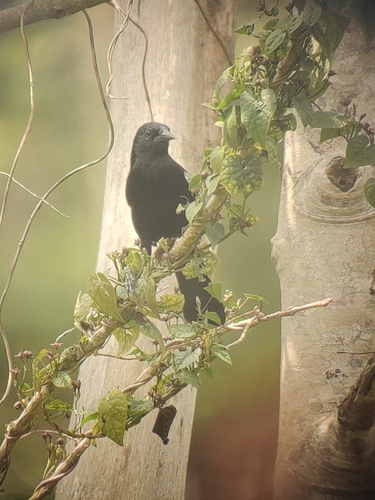
ID tip
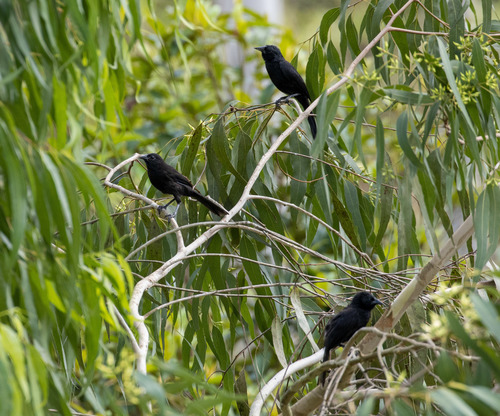
Forbes's blackbird is an average sized icterid around 21–24 cm with all black, non-glossy feathers. It has a slender, arrow-shaped bill with a straight culmen, equal to the length of its head. It has a long, slender tail with rounded feathers. As a perching bird it has an anisodactyl toe arrangement with three toes facing forward and one back. It has a harsh and buzzy call and chatters. It is often mistaken for the chopi blackbird (Gnorimopsar chopi), which can be distinguished by its glossy feathers and a distinct curve in the culmen of the beak.
Text from Wikipedia, licensed CC BY-SA 4.0.
When to see the Forbes's Blackbird
One bar for each month. Filled bars are the 8 months with records; pale bars are months with none. The wide bar is January, the month with the most records.
Where to see the Forbes's Blackbird
The map shades 1 country with regular records. Everything unshaded has no records. Countries are listed below the map.
About the Forbes's Blackbird
Forbes's blackbird is a vulnerable species of New World blackbird that is endemic to the Atlantic forest in South America. This species was named for the British zoologist William Alexander Forbes.
Text adapted from Wikipedia, licensed CC BY-SA 4.0.
Easily confused with
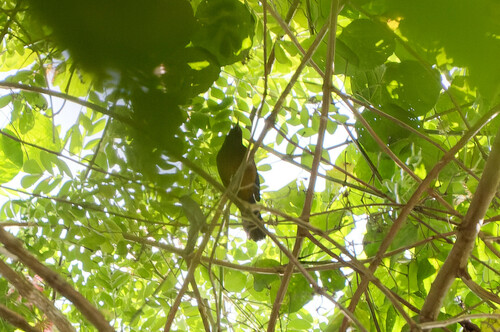 Martinique OrioleIcterus bonanaCompared to the other orioles of the Lesser Antilles, this oriole spots the most unusual plumage coloration.
 Pampas MeadowlarkLeistes defilippiiPampas meadowlark males average 21 cm (8.3 in) long.
 Bullock's OrioleIcterus bullockiorumBullock's orioles are sexually dimorphic, with males being more brightly colored than females.
Learn the Forbes's Blackbird in the BeakBrain App
Photo and call practice. Coming soon to iPhone and Android.
Play today's Daily BirdEvery photo and recording on this page is credited to its author under the licence shown. Spotted a problem with this page, or have a better photo? Contribute.