Learn what every symbol on the card means.Full credits and sources at beakbrain.com/symbols
 GrasslandCup nestSmall · 48 g
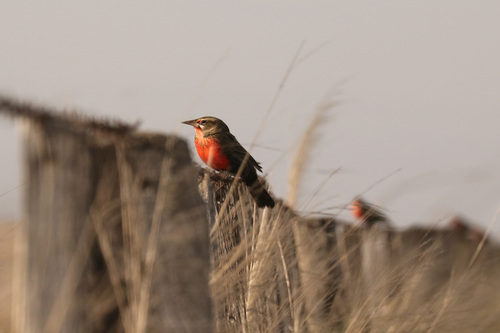
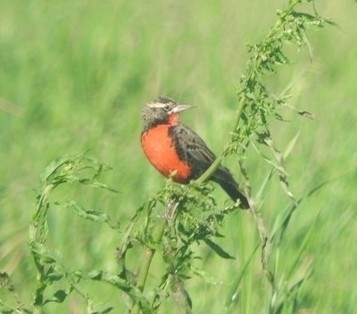
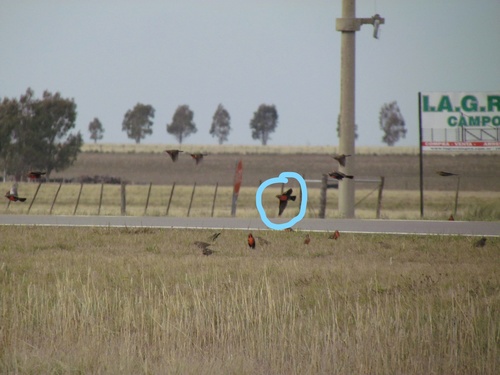
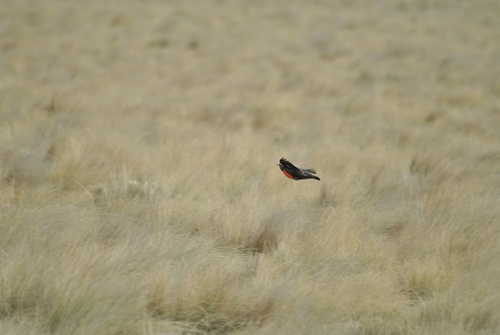
ID tip
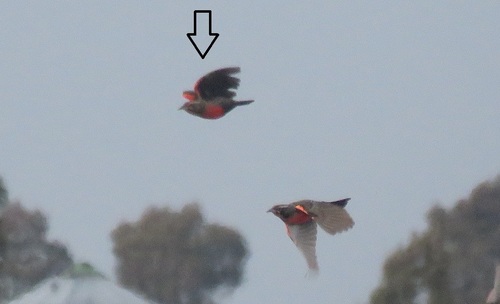
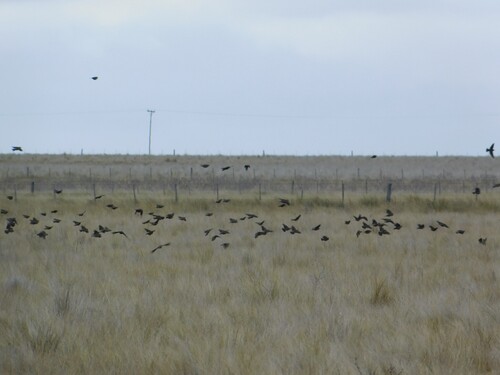
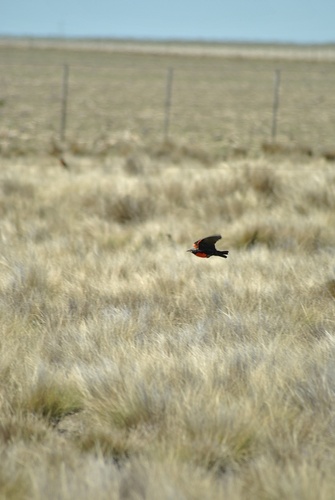
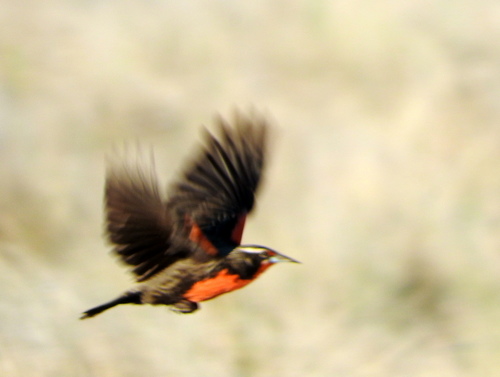
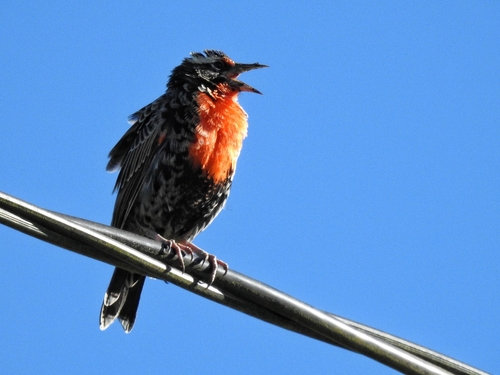
Pampas meadowlark males average 21 cm (8.3 in) long. Males weigh an average of 74 g (2.6 oz) and females 68 g (2.4 oz). Adult males have a mostly black head with a long supercilium that is red from the bill to the eye and white beyond it, a white lower eyelid, and a short white "moustache". Their upperparts and wings are mostly dusky brown with brownish streaks and some barring on the uppertail coverts. A few wing coverts are rosy red and the underwing coverts are black and red. Their tail is blackish with thin olive bars. Their chin, throat, and breast are rosy red with black sides. Voice: In their flight display the male Pampas meadowlarks' song is "variable and rather musical, often combining ascending and descending whistles with a loud sustained note, e.g. tse-tse-réé-tsew-tsee-tsew". When they sing from a perch (usually a grass clump) they add "final buzzy or rasping notes". The species' primary call is "peet".
Text from Wikipedia, licensed CC BY-SA 4.0.
When to see the Pampas Meadowlark
One bar for each month. Filled bars are the 7 months with records; pale bars are months with none. The wide bar is November, the month with the most records.
Where to see the Pampas Meadowlark
The map shades 1 country with regular records. Everything unshaded has no records. Countries are listed below the map.
About the Pampas Meadowlark
The Pampas meadowlark is a Vulnerable species of bird in the family Icteridae, the oropendolas, New World orioles, and New World blackbirds. It is found in Argentina and Uruguay.
Text adapted from Wikipedia, licensed CC BY-SA 4.0.
Easily confused with
 Peruvian MeadowlarkLeistes bellicosusThe Peruvian meadowlark is about 21 cm (8.3 in) long and weighs 61 to 78 g (2.2 to 2.8 oz); males are larger than females.
 White-browed MeadowlarkLeistes superciliarisThe white-browed meadowlark is a passerine bird in the New World family Icteridae.
 Red-breasted MeadowlarkLeistes militarisThe red-breasted meadowlark is a small icterid, 19 cm (7.5 in) long and weighing 40–48 g (1.4–1.7 oz).
Learn the Pampas Meadowlark in the BeakBrain App
Photo and call practice. Coming soon to iPhone and Android.
Play today's Daily BirdEvery photo and recording on this page is credited to its author under the licence shown. Spotted a problem with this page, or have a better photo? Contribute.