Learn what every symbol on the card means.Full credits and sources at beakbrain.com/symbols
 GrasslandPlatform nestHuge · 2.1 kg
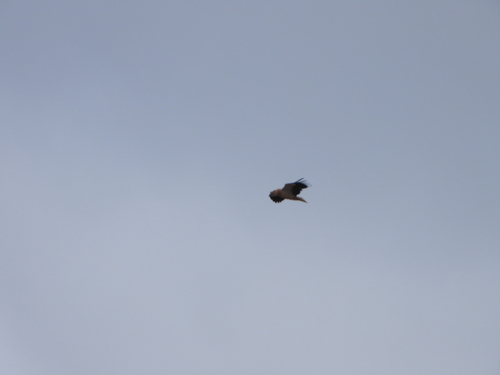

What the Egyptian Vulture sounds like

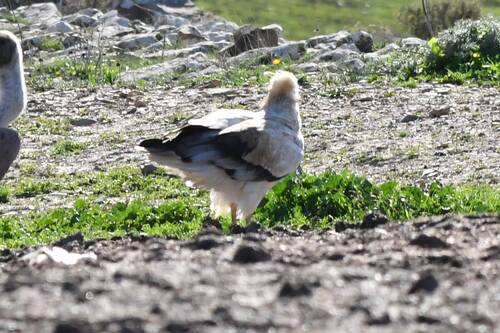
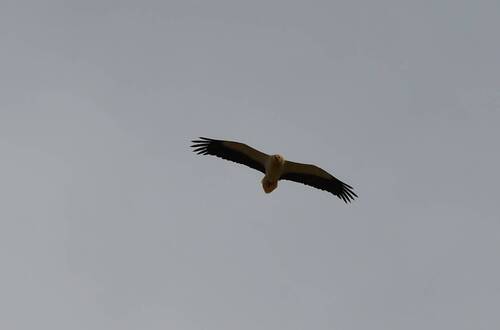
ID tip
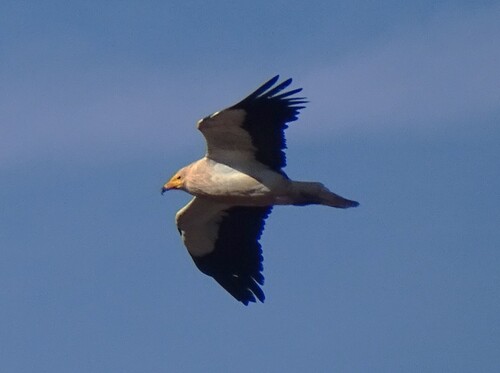
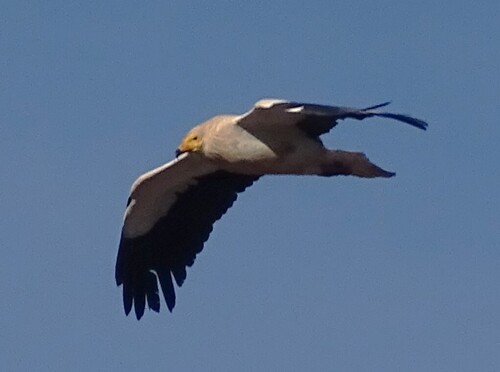
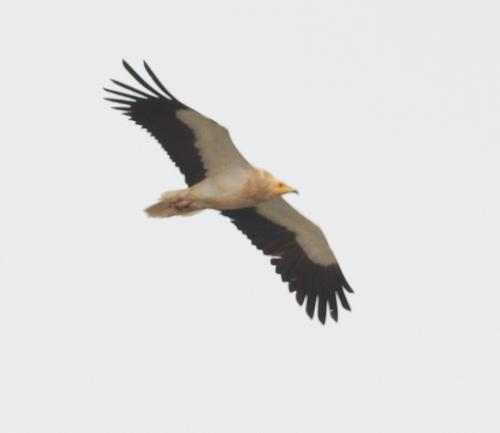
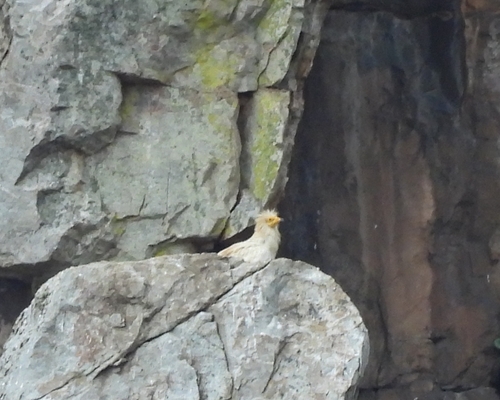
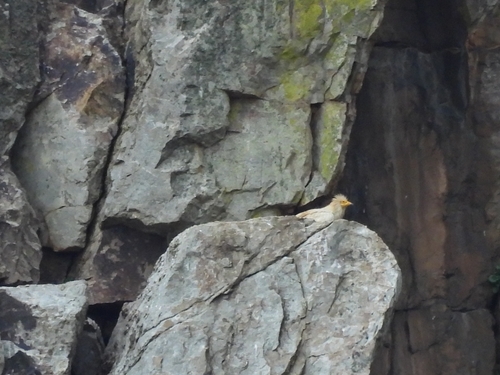
The adult's plumage is white, with black flight feathers in the wings. Wild birds usually appear soiled with a rusty or brown shade to the white plumage, derived from mud or iron-rich soil. Captive specimens without access to soil have clean white plumage. It has been suggested as a case of cosmetic colouration. The bill is slender and long, and the tip of the upper mandible is hooked. The nostril is an elongated horizontal slit. The neck feathers are long and form hackles. The wings are pointed, with the third primary being the longest; the tail is wedge shaped.
Text from Wikipedia, licensed CC BY-SA 4.0.
When to see the Egyptian Vulture
One bar for each month. Filled bars are the 11 months with records; pale bars are months with none. The wide bar is May, the month with the most records.
Where to see the Egyptian Vulture
The map shades 65 countries with regular records, and 17 more in a lighter tone where the bird turns up only as a stray. Everything unshaded has no records. Countries are listed below the map.
Recorded as a rare visitor in Norway, South Africa, Belgium, Serbia, Switzerland, Poland, Nigeria, Zimbabwe, Croatia, Gambia, Zambia, Austria, Bosnia & Herzegovina, Germany, Denmark, Moldova, Montenegro.
About the Egyptian Vulture
The Egyptian vulture, also called the white scavenger vulture or pharaoh's chicken, is a small Old World vulture in the monotypic genus Neophron. It is widely distributed from the Iberian Peninsula, North Africa, West Asia and India. The contrasting underwing pattern and wedge-shaped tail make it distinctive in flight as it soars in thermals during the warmer parts of the day. Egyptian vultures feed mainly on carrion but are opportunistic and will prey on small mammals, birds, and reptiles. They also feed on the eggs of other birds, breaking larger ones by tossing a large pebble onto them.
Text adapted from Wikipedia, licensed CC BY-SA 4.0.
Easily confused with
 White-tailed HawkGeranoaetus albicaudatusThe white-tailed hawk is a large, stocky hawk.
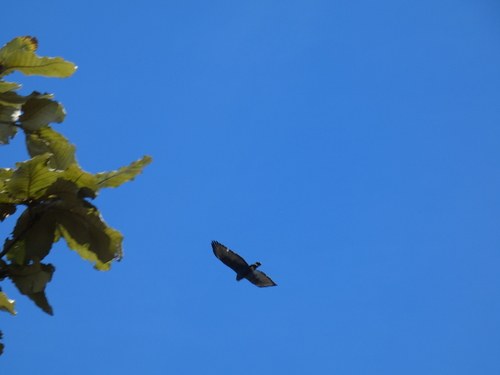 Zone-tailed HawkButeo albonotatusThe zone-tailed hawk is a fairly large but slender Buteo hawk.
 Black-shouldered KiteElanus axillarisThe adult black-shouldered kite is around 35 cm (14 in) in length, with a wingspan of between 80 and 100 cm (31 and 39 in).
Side by side: Black-shouldered Kite vs Egyptian Vulture · Egyptian Vulture vs White-tailed Hawk · Egyptian Vulture vs Zone-tailed Hawk
Learn the Egyptian Vulture in the BeakBrain App
Photo and call practice. Coming soon to iPhone and Android.
Play today's Daily BirdEvery photo and recording on this page is credited to its author under the licence shown. Spotted a problem with this page, or have a better photo? Contribute.