Learn what every symbol on the card means.Full credits and sources at beakbrain.com/symbols
 GrasslandPlatform nestMedium · 270 g



ID tip
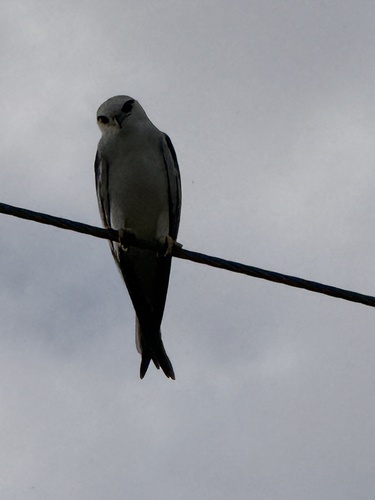
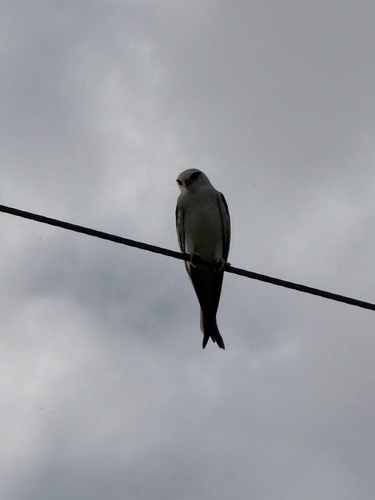
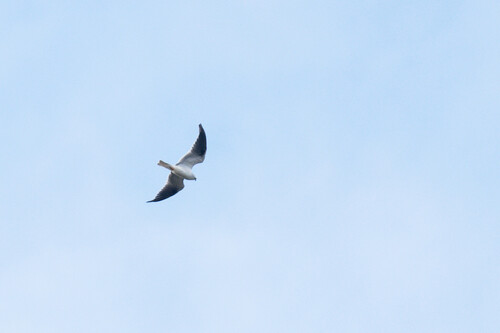
The adult black-shouldered kite is around 35 cm (14 in) in length, with a wingspan of between 80 and 100 cm (31 and 39 in). The female is slightly heavier, weighing on average around 300 g (11 oz) compared to the male's average weight of 260 g (9.2 oz). The sexes have similar plumage. The crown, neck and upperparts are pale grey, while the head and underparts are white. A black comma-shaped marking lies in front of and stretches over and behind the eye, which is deep red and surrounded by a black orbital ring. The leading edge of the outer wing is black. Voice: The black-shouldered kite is generally silent, except in the breeding season when its calls, though weak, can be persistent. It primarily utters a clear whistled chee, chee, chee call in flight and while hovering, or a hoarse wheezing skree-ah when perched.
Text from Wikipedia, licensed CC BY-SA 4.0.
When to see the Black-shouldered Kite
One bar for each month, and every month is filled: this bird is recorded here in all twelve. The wide bar is July, the month with the most records.
Where to see the Black-shouldered Kite
The map shades 1 country with regular records, and 1 more in a lighter tone where the bird turns up only as a stray. Everything unshaded has no records. Countries are listed below the map.
Recorded as a rare visitor in Kenya.
About the Black-shouldered Kite
The black-shouldered kite, also known as the Australian black-shouldered kite, is a small raptor found in open habitats throughout Australia. It resembles similar species found in Africa, Eurasia and North America, including the black-winged kite, a species that has in the past also been called "black-shouldered kite". Measuring around 35 cm (14 in) in length, with a wingspan of 80–100 cm (31–39 in), the adult black-shouldered kite has predominantly grey-white plumage and prominent black markings above its red eyes. It gains its name from the black patches on its wings. The primary call is a clear whistle, uttered in flight and while hovering.
Text adapted from Wikipedia, licensed CC BY-SA 4.0.
Easily confused with
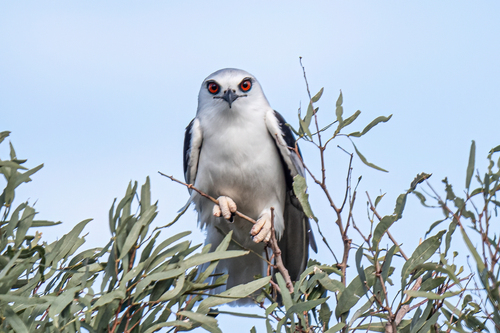 Letter-winged KiteElanus scriptusThe adult letter-winged kite is about 35 cm (14 in) in length, with a wingspan between 84 and 100 cm (33 and 39 in).
 White-tailed KiteElanus leucurusThe coloration of the white-tailed kite is gull-like, but its shape and flight are falcon-like, with a rounded tail.
 Black-winged KiteElanus caeruleusThis long-winged raptor is predominantly grey or white with black shoulder patches, wing tips and eye stripe.
Side by side: Black-shouldered Kite vs Black-winged Kite · Black-shouldered Kite vs White-tailed Kite · Black-shouldered Kite vs Egyptian Vulture
Learn the Black-shouldered Kite in the BeakBrain App
Photo and call practice. Coming soon to iPhone and Android.
Play today's Daily BirdEvery photo and recording on this page is credited to its author under the licence shown. Spotted a problem with this page, or have a better photo? Contribute.