Learn what every symbol on the card means.Full credits and sources at beakbrain.com/symbols
 ForestCup nestMedium · 73 g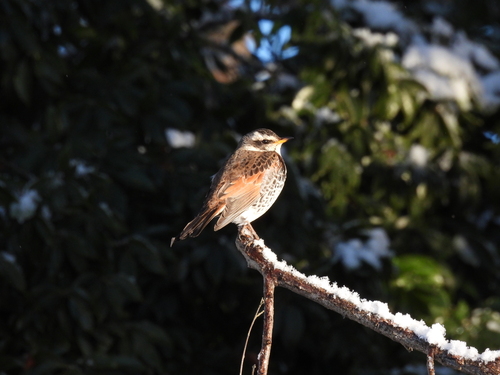
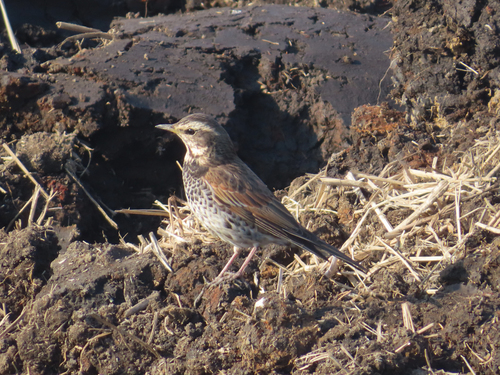
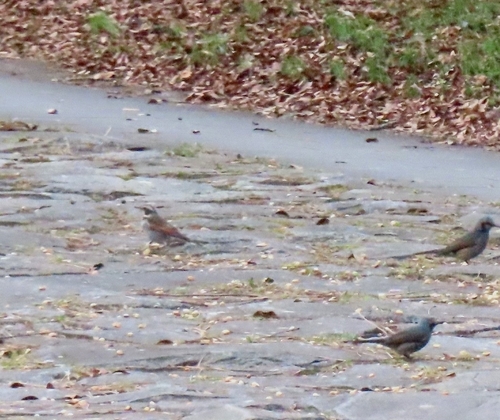
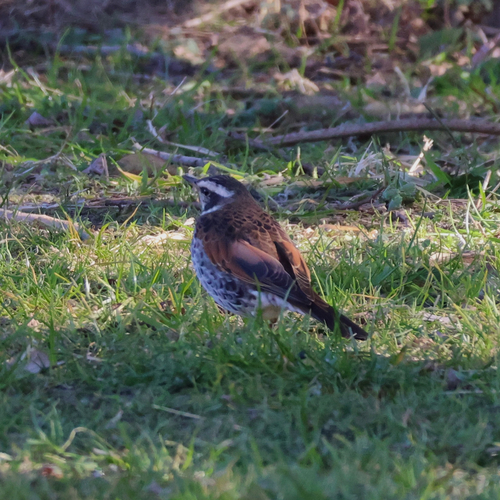
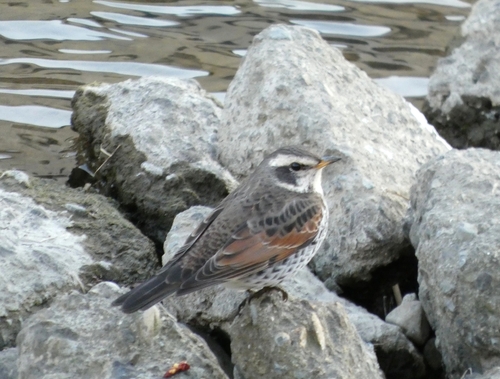

When to see the Dusky Thrush
One bar for each month. Filled bars are the 6 months with records; pale bars are months with none. The wide bar is February, the month with the most records.
Where to see the Dusky Thrush
The map shades 18 countries with regular records, and 10 more in a lighter tone where the bird turns up only as a stray. Everything unshaded has no records. Countries are listed below the map.
Recorded as a rare visitor in India, United Kingdom, United States, Canada, Belgium, Germany, Norway, Finland, Vietnam, Netherlands.
About the Dusky Thrush
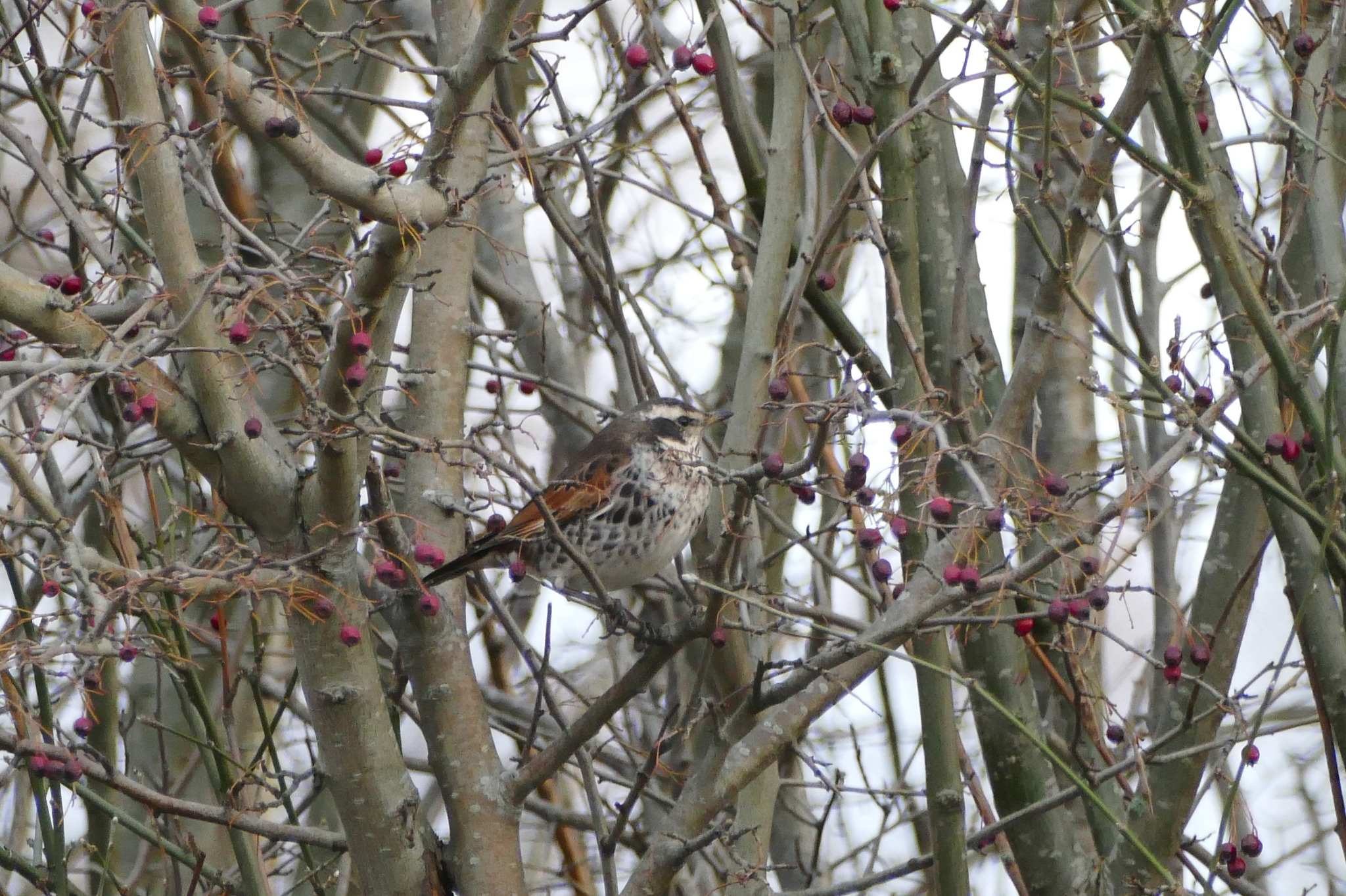
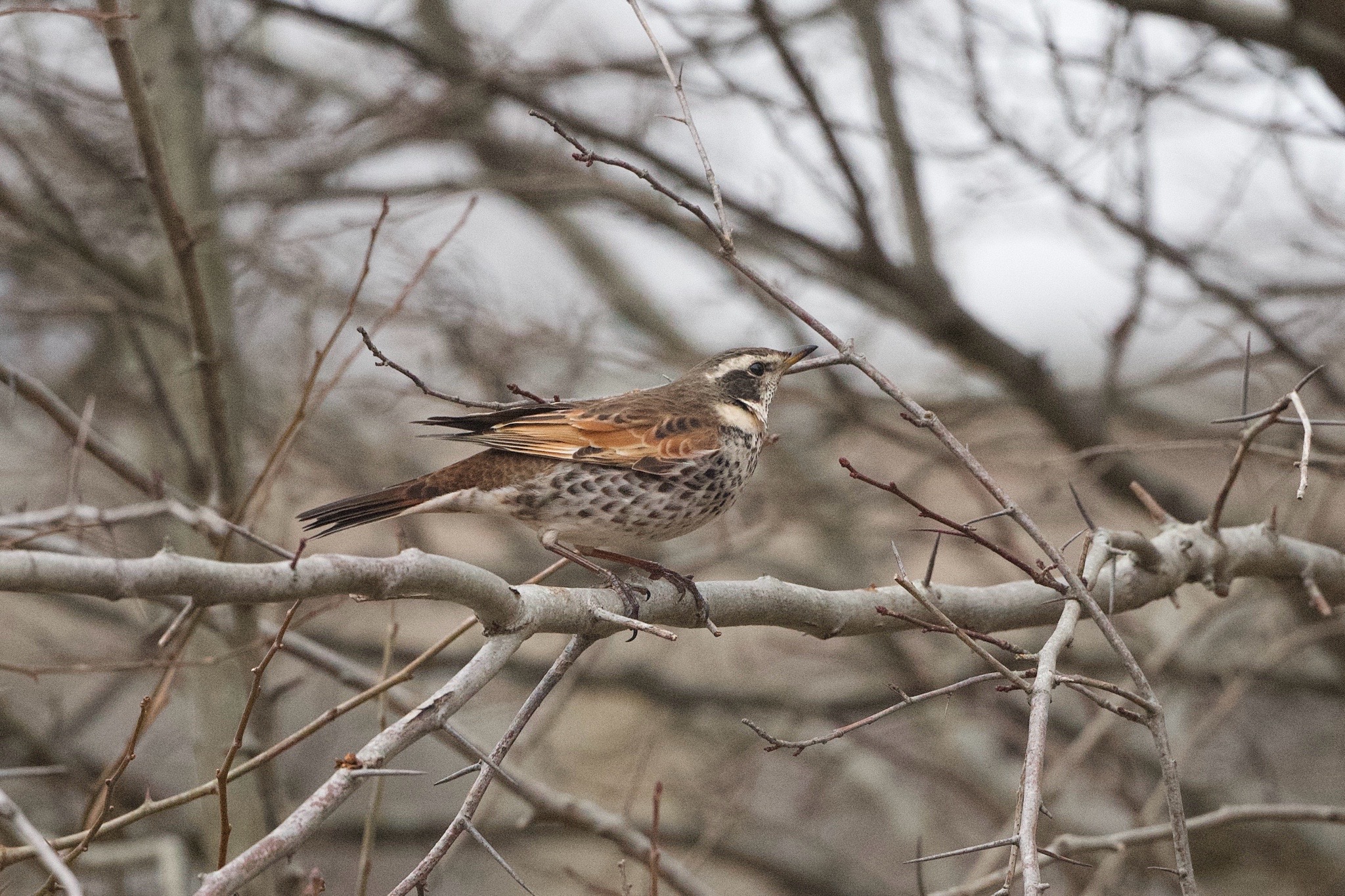
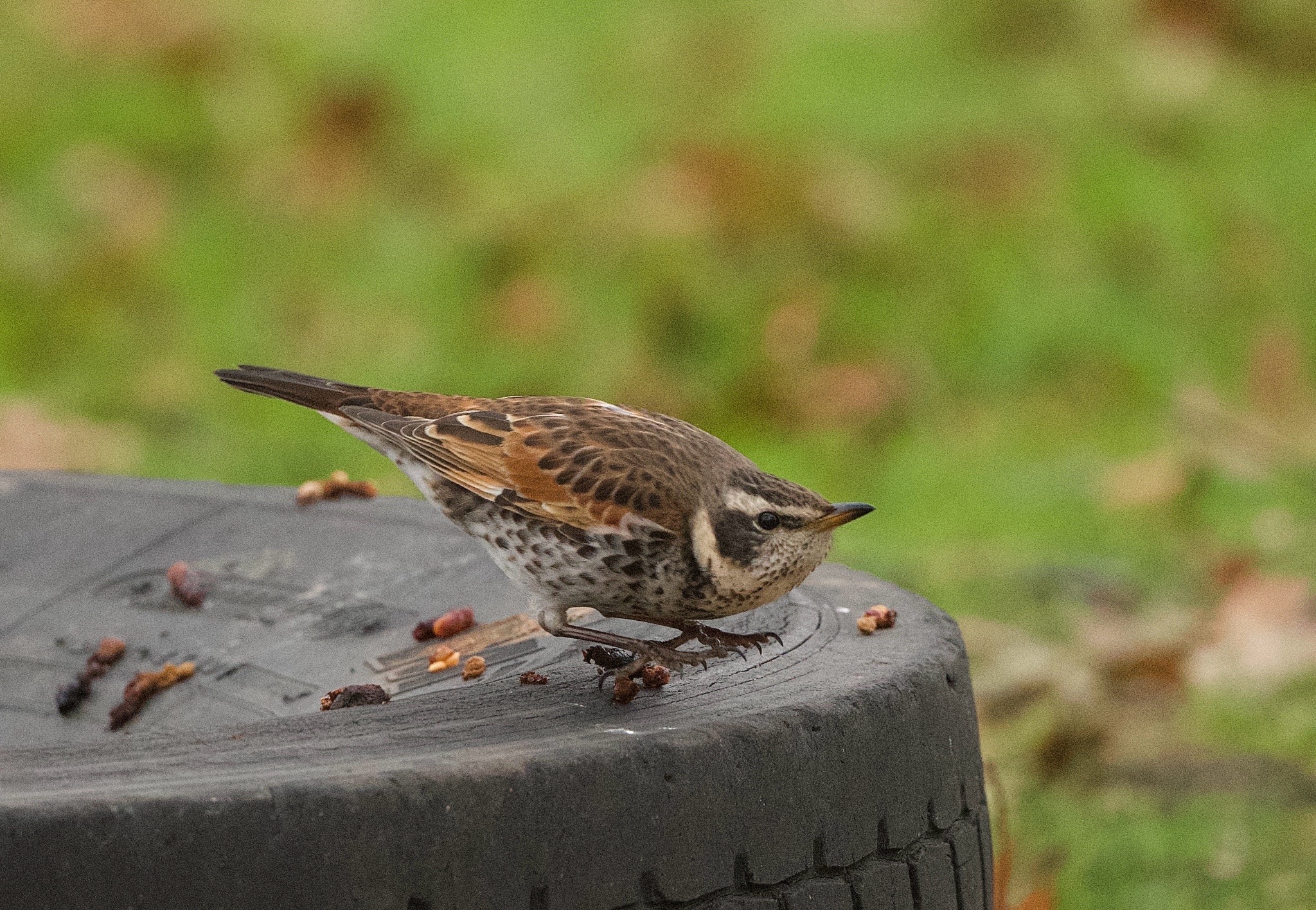
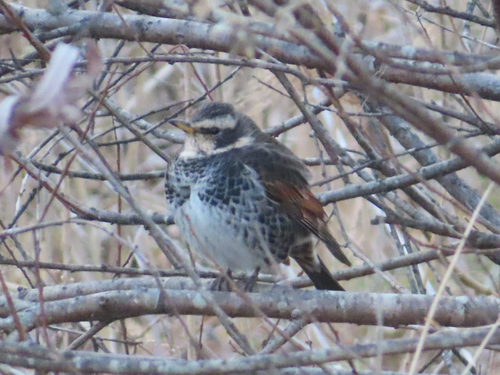
The dusky thrush is a member of the thrush family which breeds eastwards from central Siberia to Kamchatka wintering in Korea, Japan, South China and Myanmar. It is closely related to the more southerly breeding Naumann's thrush T. naumanni; the two have often been regarded as conspecific. The scientific name comes from Latin Turdus, "thrush" and Ancient Greek eunomos, "orderly".
Text adapted from Wikipedia, licensed CC BY-SA 4.0.
Easily confused with
 White-throated ThrushTurdus assimilisThe white-throated thrush is 22 to 26.5 cm (8.7 to 10.4 in) long and weighs about 61 to 90 g (2.2 to 3.2 oz).
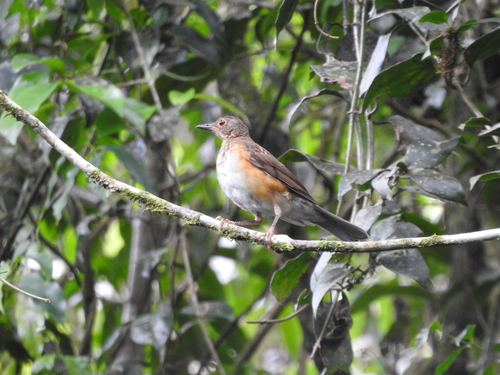 White-necked ThrushTurdus albicollisThe white-necked thrush is 20.5 to 26 cm (8.1 to 10 in) long and weighs 40 to 84.5 g (1.4 to 3.0 oz).
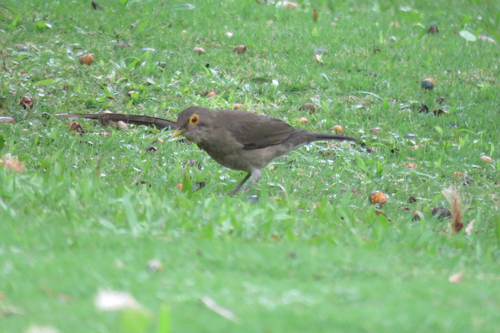 Spectacled ThrushTurdus nudigenisThe spectacled thrush is 23–24 cm (9.1–9.4 in) long and weighs 60 g (2.1 oz).
Learn the Dusky Thrush in the BeakBrain App
Photo and call practice. Coming soon to iPhone and Android.
Play today's Daily BirdEvery photo and recording on this page is credited to its author under the licence shown. Spotted a problem with this page, or have a better photo? Contribute.