Learn what every symbol on the card means.Full credits and sources at beakbrain.com/symbols
 ForestCup nestSmall · 20 g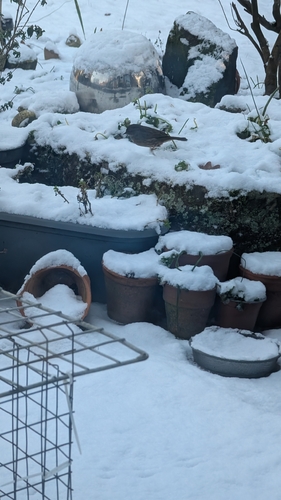

What the Dunnock sounds like


ID tip
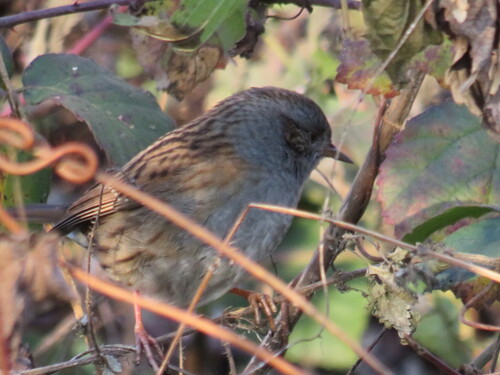
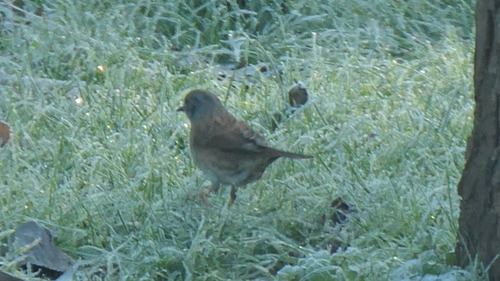
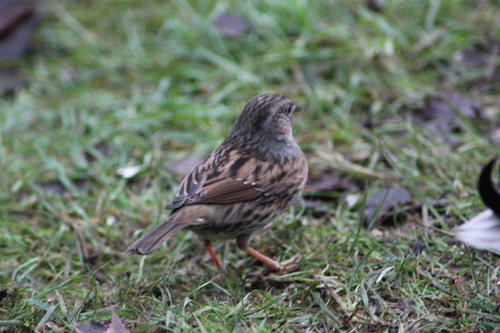
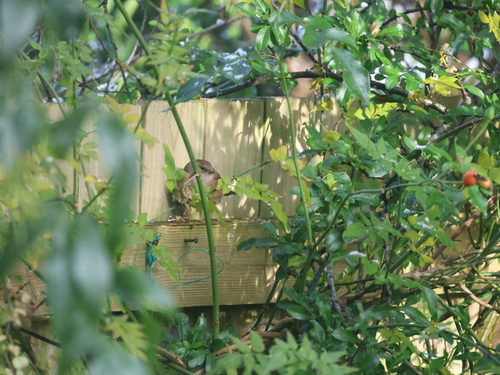
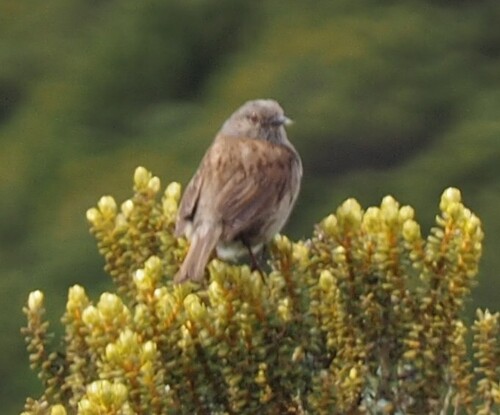
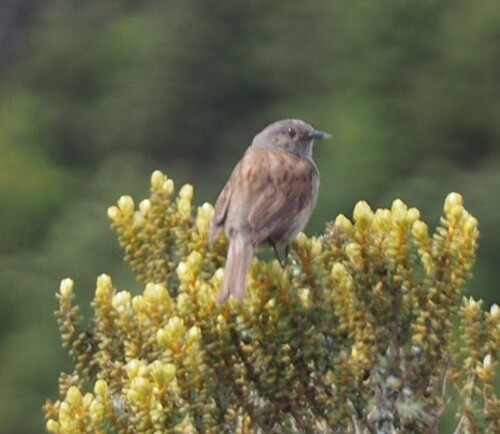
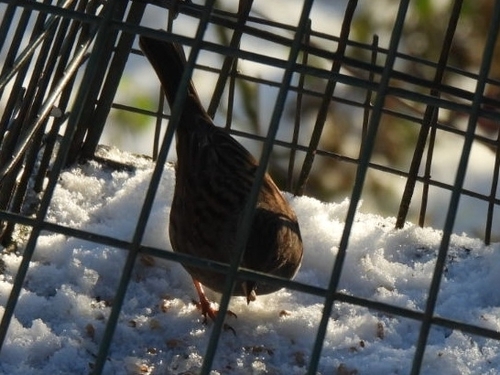
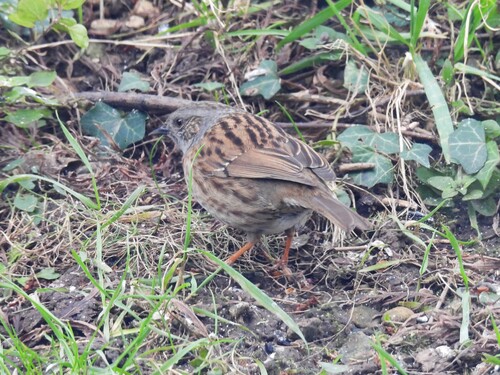
A robin-sized bird, the dunnock typically measures 13–14.5 cm (5.1–5.7 in) in length. It has a brown back streaked blackish, somewhat resembling a small house sparrow. Like that species, the dunnock has a drab appearance which may have evolved as camouflage to avoid predation. It is brownish underneath, and has a fine pointed bill. Adults have a dull grey head, and both sexes are similarly coloured; juveniles are browner on the head, looser, 'fluffy' feathering, and more obviously streaked overall.
Text from Wikipedia, licensed CC BY-SA 4.0.
When to see the Dunnock
One bar for each month. Filled bars are the 11 months with records; pale bars are months with none. The wide bar is April, the month with the most records.
Where to see the Dunnock
The map shades 60 countries with regular records, and 4 more in a lighter tone where the bird turns up only as a stray. Everything unshaded has no records. Countries are listed below the map.
Recorded as a rare visitor in Morocco, Algeria, Kuwait, Libya.
About the Dunnock
The dunnock is a small passerine, or perching bird, found throughout temperate Europe and into Asian Russia. Dunnocks have also been introduced and become common in New Zealand. It is the most widespread member of the accentor family; most other accentors are limited to mountain habitats. Other, largely archaic, English names for the dunnock include hedge accentor, hedge sparrow, hedge warbler, and titling.
Text adapted from Wikipedia, licensed CC BY-SA 4.0.
Easily confused with
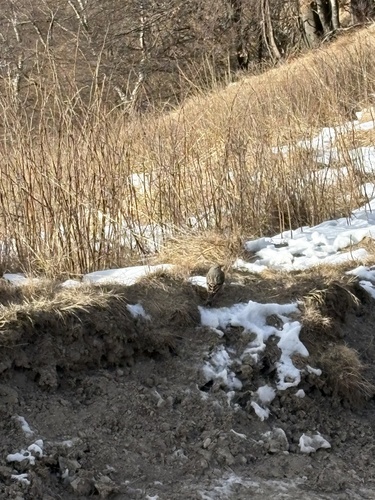 Alpine AccentorPrunella collarisThis is a robin-sized bird at 15–17.5 cm (5.9–6.9 in) in length, slightly larger than its relative, the dunnock.
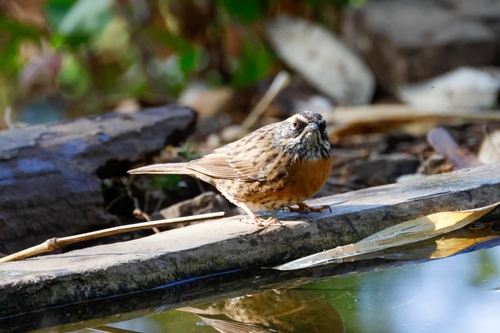 Rufous-breasted AccentorPrunella strophiataThe rufous-breasted accentor is passerine bird in the family Prunellidae, endemic to the Himalayas, descending in the winter to lower-to-middle altitudes.
 Siberian AccentorPrunella montanellaThe Siberian accentor is on average 14.5 centimetres (5.7 in) long and weighs 17.5 grams (0.62 oz).
Side by side: Alpine Accentor vs Dunnock · Dunnock vs Siberian Accentor
Learn the Dunnock in the BeakBrain App
Photo and call practice. Coming soon to iPhone and Android.
Play today's Daily BirdEvery photo and recording on this page is credited to its author under the licence shown. Spotted a problem with this page, or have a better photo? Contribute.