Learn what every symbol on the card means.Full credits and sources at beakbrain.com/symbols
 GrasslandCavity nestSmall · 27 g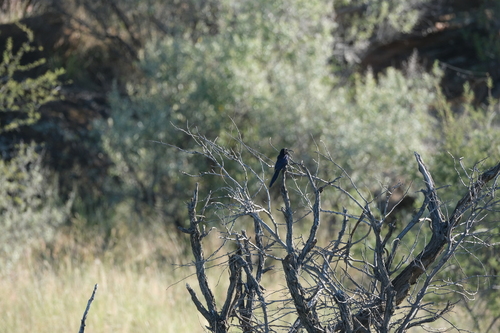


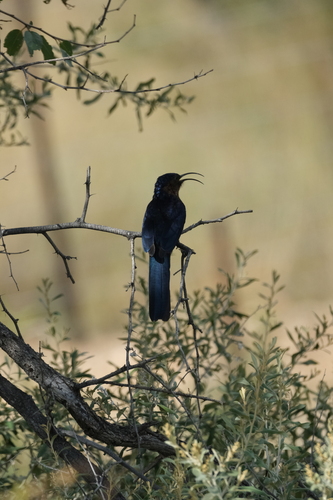

ID tip
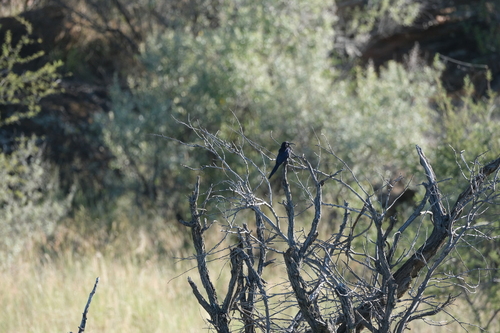
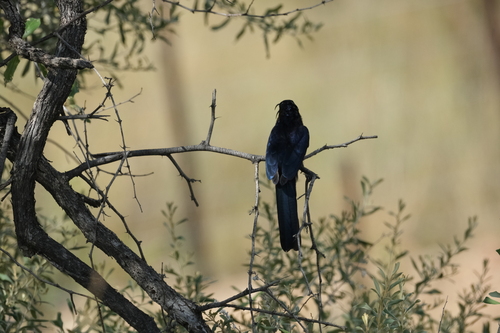
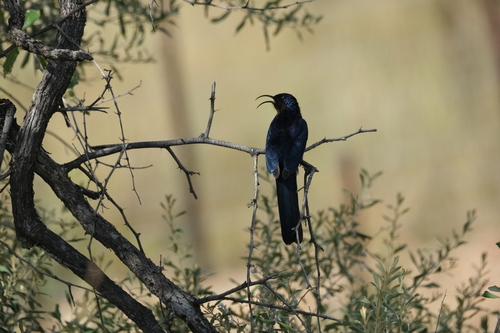
Adults weigh roughly 35 grams and 26 cm in length. As adults, their beaks are black but as juveniles, their beaks are grey. Females and juveniles are more brown on the front of their body. They feed almost entirely on insects behind the bark of a tree, which is the reason for their probing beak.
Text from Wikipedia, licensed CC BY-SA 4.0.
When to see the Common Scimitarbill
One bar for each month, and every month is filled: this bird is recorded here in all twelve. The wide bar is November, the month with the most records.
Where to see the Common Scimitarbill
The map shades 15 countries with regular records, and 1 more in a lighter tone where the bird turns up only as a stray. Everything unshaded has no records. Countries are listed below the map.
Recorded as a rare visitor in Somalia.
About the Common Scimitarbill
The common scimitarbill is a species of bird in the family Phoeniculidae. It is found in Angola, Botswana, Burundi, Democratic Republic of the Congo, Eswatini, Kenya, Malawi, Mozambique, Namibia, Rwanda, Somalia, South Africa, Tanzania, Uganda, Zambia, and Zimbabwe.
Text adapted from Wikipedia, licensed CC BY-SA 4.0.
Easily confused with
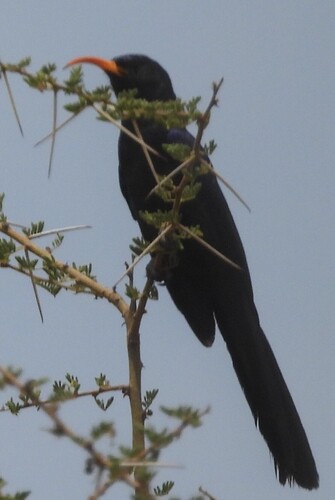 Abyssinian ScimitarbillRhinopomastus minorThe bird is all black with a blue-purple iridescence which covers their whole body and especially the back of the head.
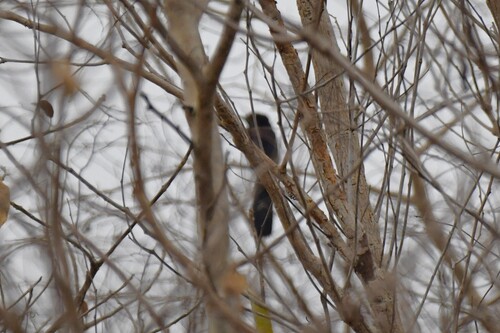 Black ScimitarbillRhinopomastus aterrimusThe black scimitarbill, also known as the black wood hoopoe, is a species of bird in the family Phoeniculidae.
 Forest Wood HoopoeRhinopomastus castaneicepsThe forest wood hoopoe is a species of bird in the family Phoeniculidae.
Side by side: Abyssinian Scimitarbill vs Common Scimitarbill
Learn the Common Scimitarbill in the BeakBrain App
Photo and call practice. Coming soon to iPhone and Android.
Play today's Daily BirdEvery photo and recording on this page is credited to its author under the licence shown. Spotted a problem with this page, or have a better photo? Contribute.