Learn what every symbol on the card means.Full credits and sources at beakbrain.com/symbols
 WoodlandCavity nestSmall · 22 g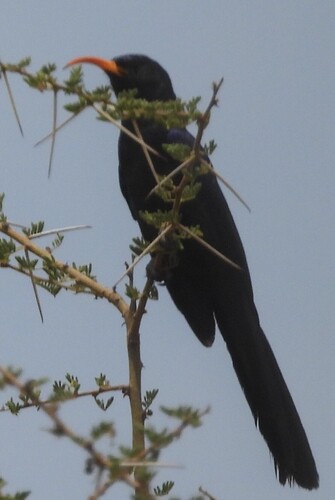
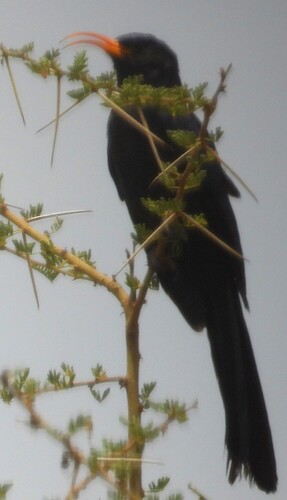
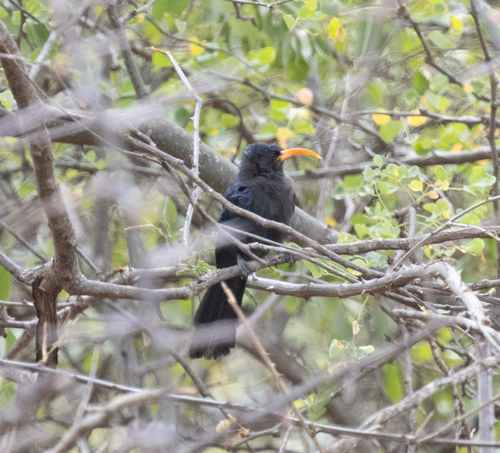
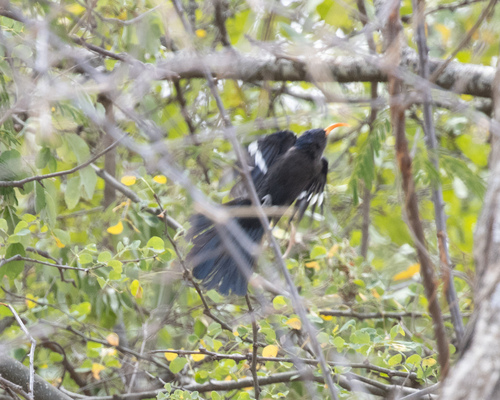
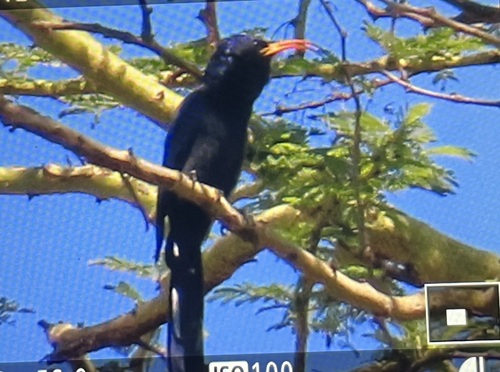
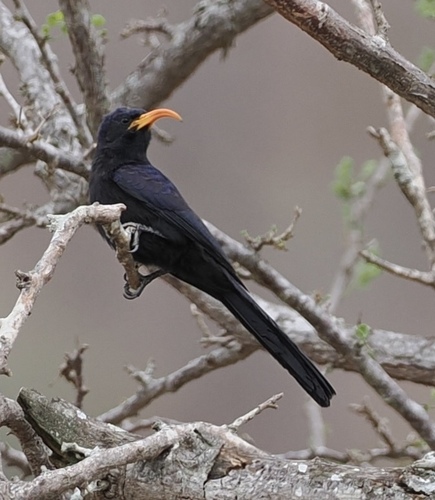
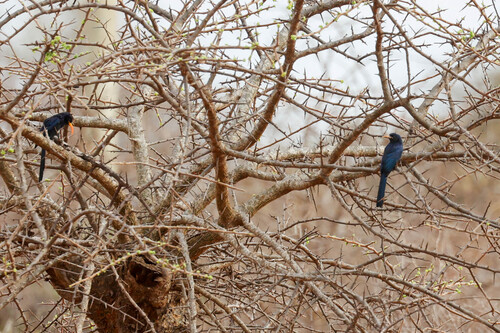
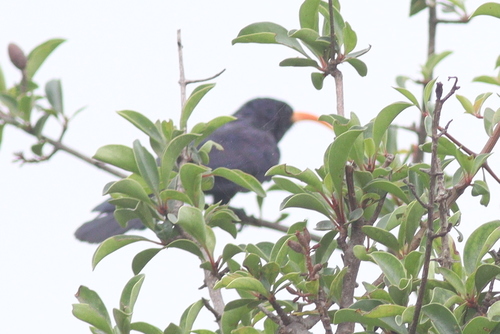
ID tip
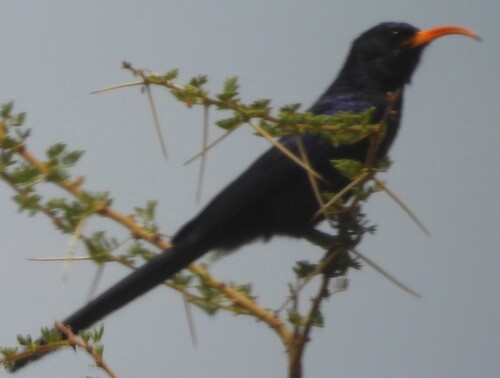
The bird is all black with a blue-purple iridescence which covers their whole body and especially the back of the head. The bird's beak is bright orange to red and is characteristically curved and pointed. It is slightly longer than the length of its head and is built to probe into cracks and crevices for insects. It can be differentiated from other wood hoopoes by its all black legs and shorter tail, which is about the length of the bird's body excluding its head. Voice: The Abyssian Scimitarbill and the Common Scimitarbill (Rhinopomastus cyanomelas) both emit sharp cries and an unpleasant odor to deter predators (Hedley & Caro, 2022). Their warning calls sound like a series of rising notes "dok". Other calls sound like shrill elongated chirps which rise and then fall minutely in pitch over the course of around eight to twelve chirps.
Text from Wikipedia, licensed CC BY-SA 4.0.
When to see the Abyssinian Scimitarbill
One bar for each month, and every month is filled: this bird is recorded here in all twelve. The wide bar is November, the month with the most records.
Where to see the Abyssinian Scimitarbill
The map shades 6 countries with regular records. Everything unshaded has no records. Countries are listed below the map.
About the Abyssinian Scimitarbill
The Abyssinian scimitarbill is a species of bird in the family Phoeniculidae. The term Abyssinia, is an old name for the region of Ethiopia, and scimitar refers to a curved sword, which its bill resembles. It is found in Djibouti, Ethiopia, Kenya, Somalia, South Sudan, Tanzania, and Uganda. The bird is non migratory, diurnal, and terrestrial. Their nests are sometimes parasitized by the greater honeyguide which are favored by some because they can guide to beehives.
Text adapted from Wikipedia, licensed CC BY-SA 4.0.
Easily confused with
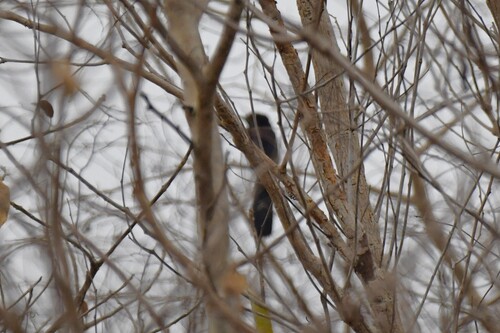 Black ScimitarbillRhinopomastus aterrimusThe black scimitarbill, also known as the black wood hoopoe, is a species of bird in the family Phoeniculidae.
 Forest Wood HoopoeRhinopomastus castaneicepsThe forest wood hoopoe is a species of bird in the family Phoeniculidae.
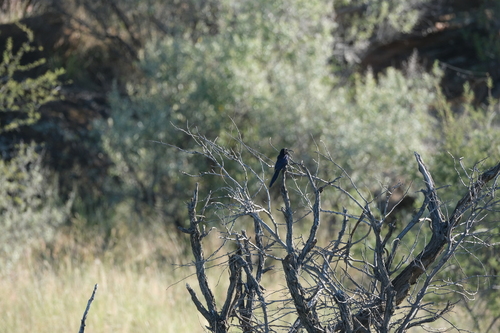 Common ScimitarbillRhinopomastus cyanomelasAdults weigh roughly 35 grams and 26 cm in length.
Side by side: Abyssinian Scimitarbill vs Common Scimitarbill
Learn the Abyssinian Scimitarbill in the BeakBrain App
Photo and call practice. Coming soon to iPhone and Android.
Play today's Daily BirdEvery photo and recording on this page is credited to its author under the licence shown. Spotted a problem with this page, or have a better photo? Contribute.