Learn what every symbol on the card means.Full credits and sources at beakbrain.com/symbols
 WetlandCup nestSmall · 18 g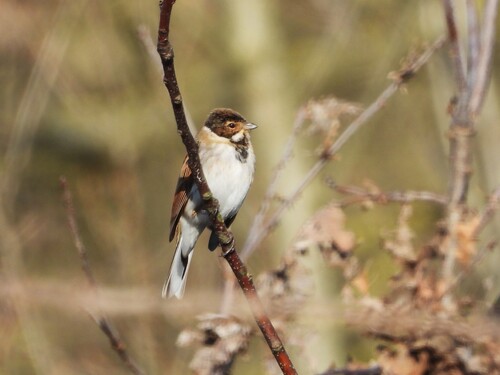


What the Common Reed Bunting sounds like


ID tip
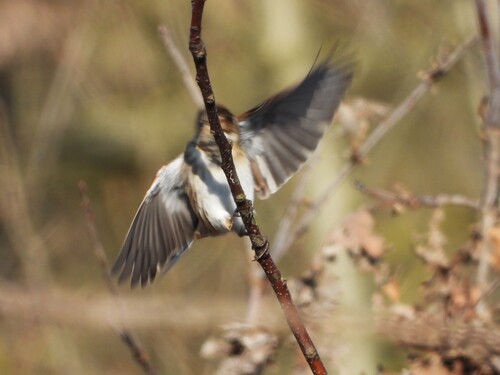
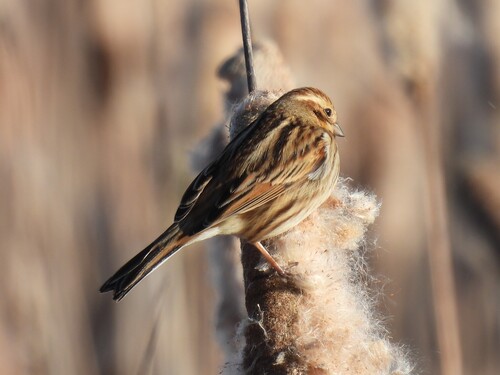
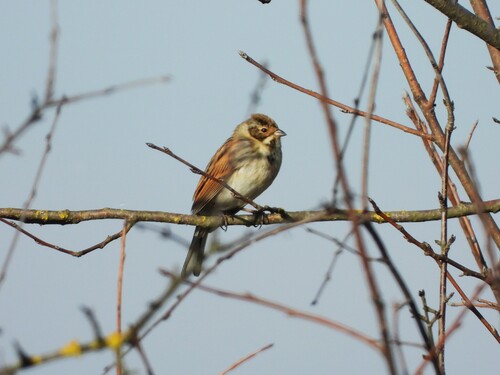
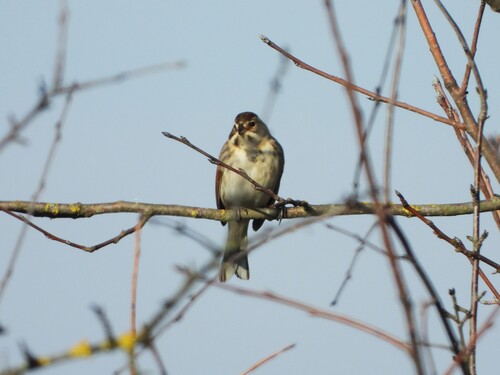
The common reed bunting is a medium-sized bird, 13.5–15.5 cm (5.3–6.1 in) long and weighing 10–28 g, with a small but powerful seed-eating bill. The male has a black head and throat, white neck collar and underparts, and a heavily barred brown back. The female is much duller, with a streaked brown head, and more barring underneath. The male's song is a repetitive srip.
Text from Wikipedia, licensed CC BY-SA 4.0.
When to see the Common Reed Bunting
One bar for each month. Filled bars are the 9 months with records; pale bars are months with none. The wide bar is May, the month with the most records.
Where to see the Common Reed Bunting
The map shades 73 countries with regular records, and 5 more in a lighter tone where the bird turns up only as a stray. Everything unshaded has no records. Countries are listed below the map.
Recorded as a rare visitor in India, United States, Iceland, Oman, Bahrain.
About the Common Reed Bunting
The common reed bunting, or simply reed bunting, is a passerine bird in the bunting family Emberizidae. This species breeds throughout Europe and much of the Palearctic region. While most individuals migrate south in winter, those in the milder south and west of the range are resident. It is a common sight in reedbeds, but also breeds in drier open areas such as moorland and arable land. For example, it inhabits purple moor grass and rush pastures, which are designated as a Biodiversity Action Plan habitat in the UK. It occurs on poorly drained neutral and acid soils of the lowlands and upland fringe.
Text adapted from Wikipedia, licensed CC BY-SA 4.0.
Easily confused with
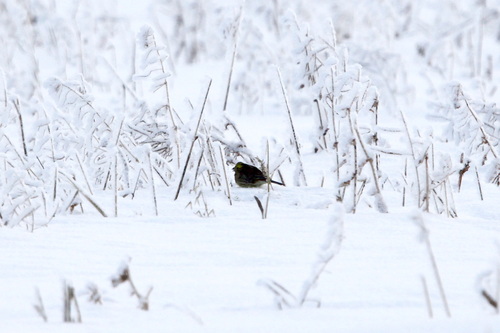 YellowhammerEmberiza citrinellaThe yellowhammer is a large bunting, 16–16.5 cm (6.3–6.5 in) long, with a 23–29.5 cm (9.1–11.6 in) wingspan; it weighs 20–36.5 g (0.71–1.29 oz).
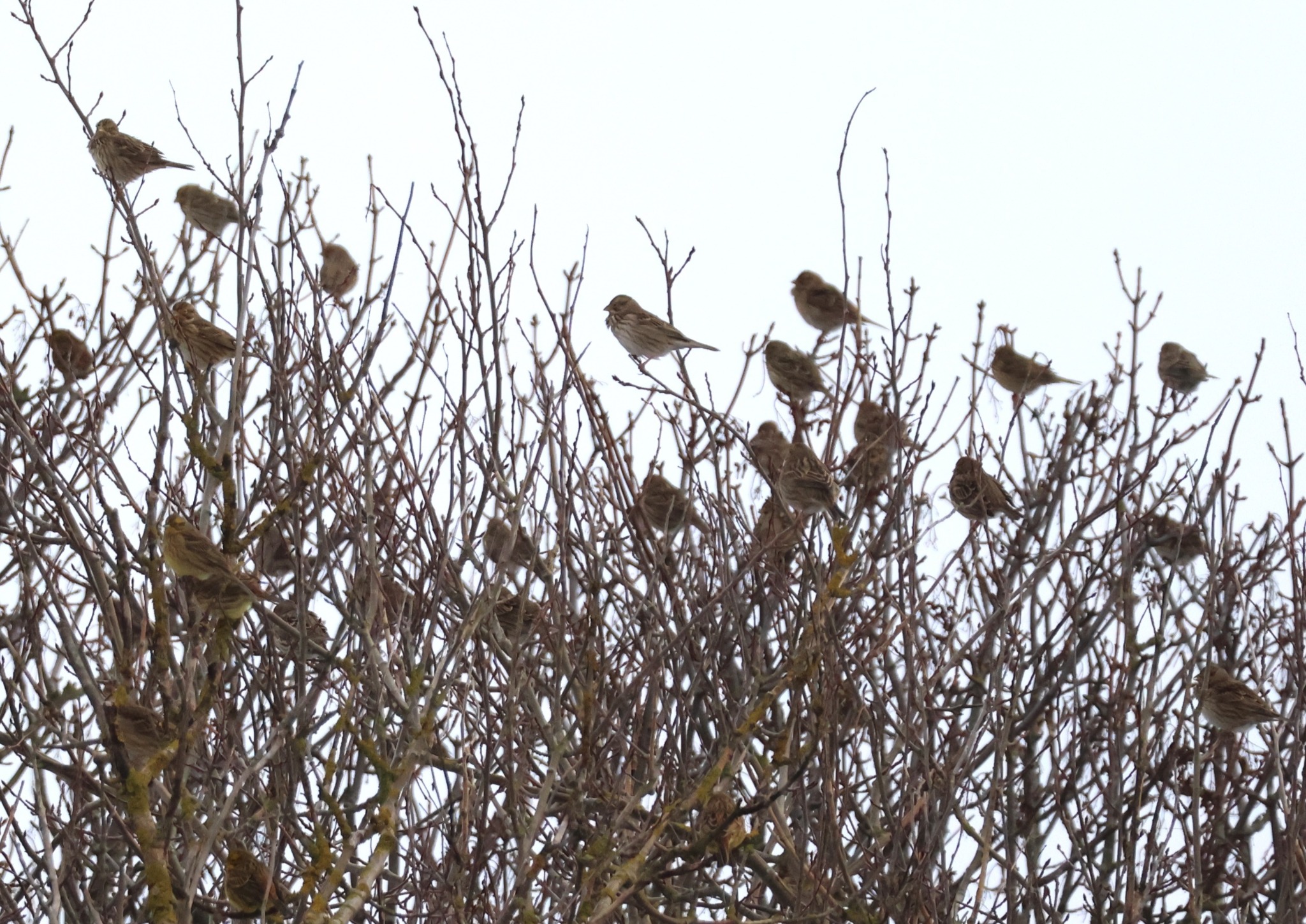 Corn BuntingEmberiza calandraThis is an unusual bunting because the plumages of the sexes are similar in appearance, though the male is approximately 20% larger than the female.
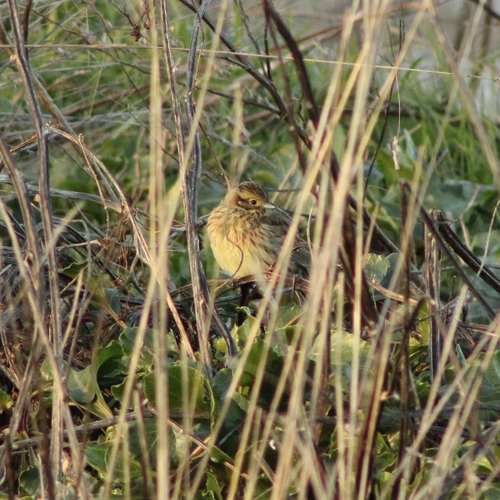 Cirl BuntingEmberiza cirlusThe cirl bunting is like a small yellowhammer (Emberiza citrinella), and is around 15.5 cm (6.1 in) in length with a wing-span 22–25.5 cm (8.7–10.0 in).
Side by side: Common Reed Bunting vs Yellowhammer · Common Reed Bunting vs Corn Bunting · Cirl Bunting vs Common Reed Bunting
Learn the Common Reed Bunting in the BeakBrain App
Photo and call practice. Coming soon to iPhone and Android.
Play today's Daily BirdEvery photo and recording on this page is credited to its author under the licence shown. Spotted a problem with this page, or have a better photo? Contribute.