Learn what every symbol on the card means.Full credits and sources at beakbrain.com/symbols
 ShrublandCup nestSmall · 30 g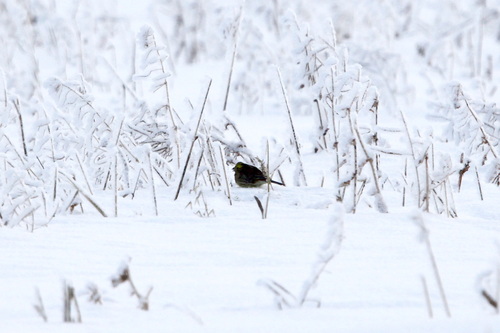
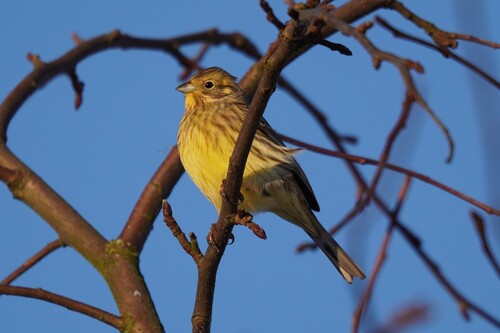


What the Yellowhammer sounds like


ID tip
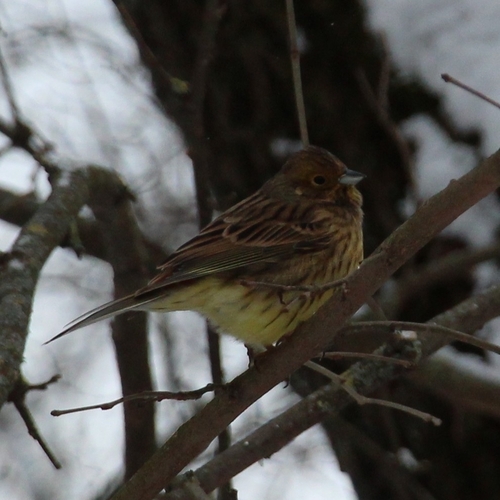
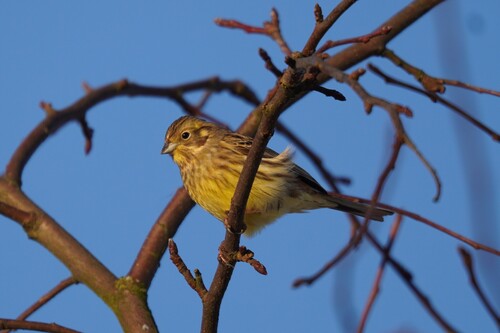
The yellowhammer is a large bunting, 16–16.5 cm (6.3–6.5 in) long, with a 23–29.5 cm (9.1–11.6 in) wingspan; it weighs 20–36.5 g (0.71–1.29 oz). The male of the nominate subspecies E. c. citrinella has a bright yellow head, heavily streaked brown back, rufous rump, yellow under parts, and white outer tail feathers. The female is less brightly coloured, and more streaked on the crown, breast, and flanks. Both sexes are less strongly marked outside the breeding season, when the dark fringes on new feathers obscure the yellow plumage. Voice: The song of the cock yellowhammer is a series of short notes, gradually increasing in volume and followed by one or two more protracted notes. It is often represented as "A little bit of bread and no cheese", and the full version can be confused with the almost identical song of the pine bunting. If the final notes are omitted, confusion with the cirl bunting is possible.
Text from Wikipedia, licensed CC BY-SA 4.0.
When to see the Yellowhammer
One bar for each month. Filled bars are the 11 months with records; pale bars are months with none. The wide bar is May, the month with the most records.
Where to see the Yellowhammer
The map shades 62 countries with regular records, and 5 more in a lighter tone where the bird turns up only as a stray. Everything unshaded has no records. Countries are listed below the map.
Recorded as a rare visitor in Nepal, Morocco, Syria, Faroe Islands, Guernsey.
About the Yellowhammer
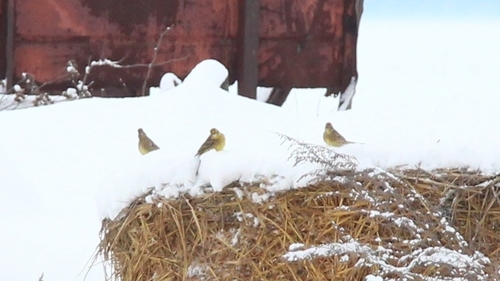
The yellowhammer is a passerine bird in the bunting family that is native to Eurasia and has been introduced to New Zealand and Australia. Most European birds remain in the breeding range year-round, but the eastern subspecies is partially migratory, with much of the population wintering further south. The male yellowhammer has a bright yellow head, streaked brown back, chestnut rump, and yellow under parts. Other plumages are duller versions of the same pattern. The yellowhammer is common in open areas with some shrubs or trees, and forms small flocks in winter. Its song has a rhythm like "A little bit of bread and no cheese".
Text adapted from Wikipedia, licensed CC BY-SA 4.0.
Easily confused with
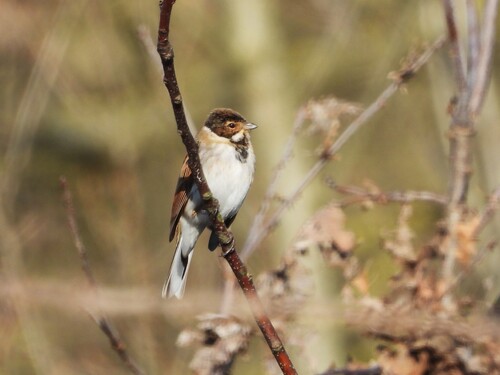 Common Reed BuntingEmberiza schoeniclusThe common reed bunting is a medium-sized bird, 13.5–15.5 cm (5.3–6.1 in) long and weighing 10–28 g, with a small but powerful seed-eating bill.
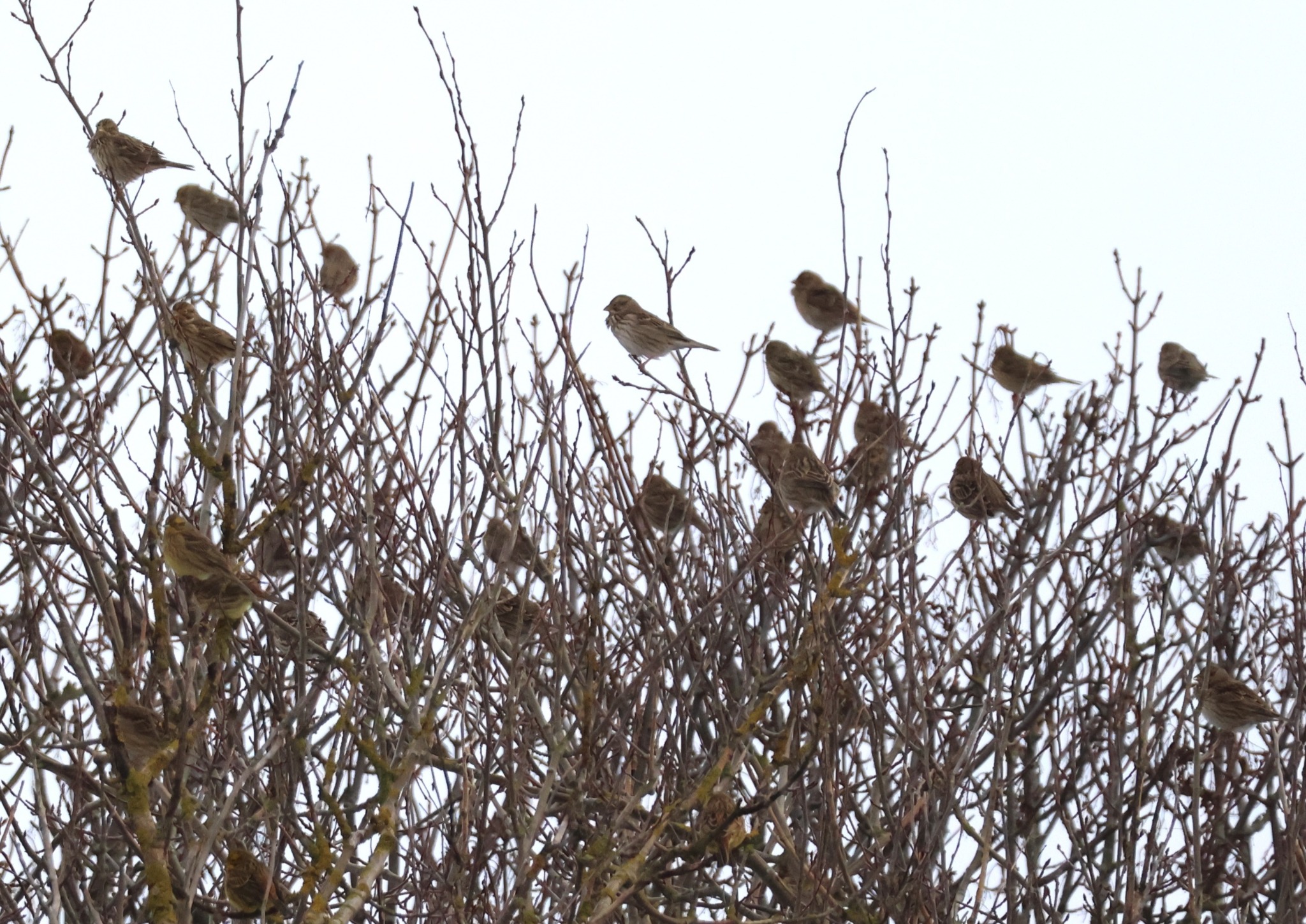 Corn BuntingEmberiza calandraThis is an unusual bunting because the plumages of the sexes are similar in appearance, though the male is approximately 20% larger than the female.
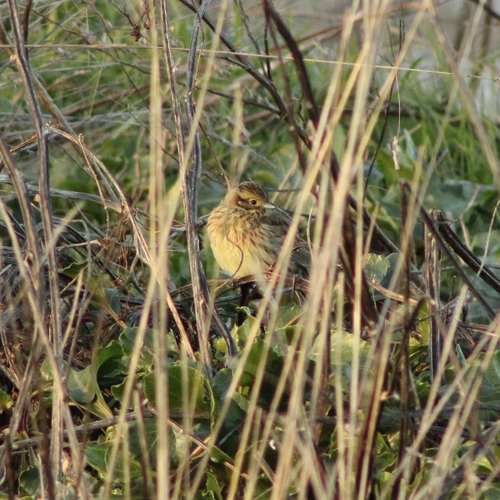 Cirl BuntingEmberiza cirlusThe cirl bunting is like a small yellowhammer (Emberiza citrinella), and is around 15.5 cm (6.1 in) in length with a wing-span 22–25.5 cm (8.7–10.0 in).
Side by side: Common Reed Bunting vs Yellowhammer · Corn Bunting vs Yellowhammer · Cirl Bunting vs Yellowhammer
Learn the Yellowhammer in the BeakBrain App
Photo and call practice. Coming soon to iPhone and Android.
Play today's Daily BirdEvery photo and recording on this page is credited to its author under the licence shown. Spotted a problem with this page, or have a better photo? Contribute.