Learn what every symbol on the card means.Full credits and sources at beakbrain.com/symbols
 ShrublandCup nestSmall · 24 g


ID tip
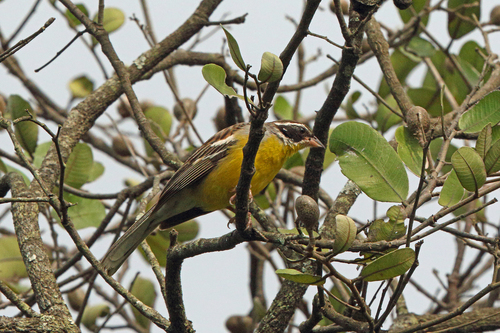
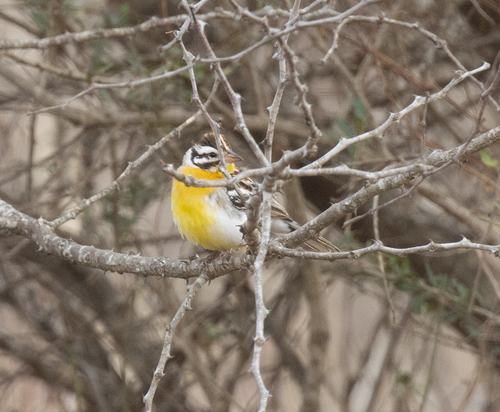
The cinereous bunting is a large (16.5–18 cm, 21–29.7 g), slim bunting with a long, white-cornered tail. The term cinereous describes its colouration. It is less streaked than many buntings and has a thick pale bill. It has a greyish back with only subdued dark markings, and a browner tint to the wings. The adult male's head is dull yellow, with a brighter moustachial line and throat. In the nominate race of south-west Turkey, the rest of the underparts are grey, but the eastern form E. c. semenowi has yellow underparts. Voice: The call is a harsh tschrip, and the song is a hoarse zru- zru-zru-zru.
Text from Wikipedia, licensed CC BY-SA 4.0.
When to see the Cinereous Bunting
One bar for each month. Filled bars are the 4 months with records; pale bars are months with none. The wide bar is May, the month with the most records.
Where to see the Cinereous Bunting
The map shades 13 countries with regular records, and 4 more in a lighter tone where the bird turns up only as a stray. Everything unshaded has no records. Countries are listed below the map.
Recorded as a rare visitor in Sweden, Ethiopia, Lebanon, Oman.
About the Cinereous Bunting
The cinereous bunting is a bird in the bunting family Emberizidae, a passerine family now separated by most modern authors from the finches, Fringillidae. This species was first described by Christian Ludwig Brehm.
Text adapted from Wikipedia, licensed CC BY-SA 4.0.
Easily confused with
Learn the Cinereous Bunting in the BeakBrain App
Photo and call practice. Coming soon to iPhone and Android.
Play today's Daily BirdEvery photo and recording on this page is credited to its author under the licence shown. Spotted a problem with this page, or have a better photo? Contribute.