Learn what every symbol on the card means.Full credits and sources at beakbrain.com/symbols
 WetlandCup nestTiny · 13 g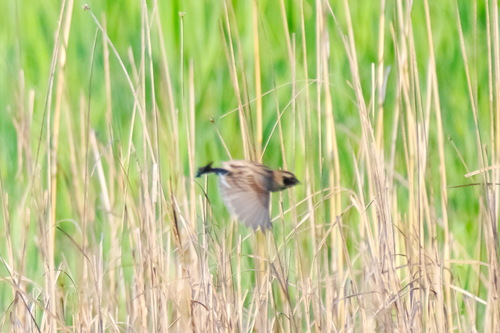
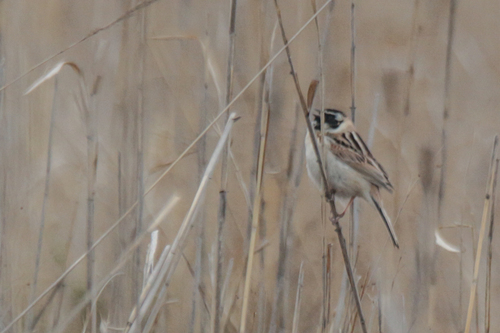
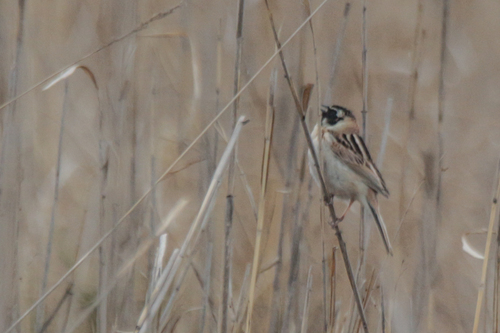
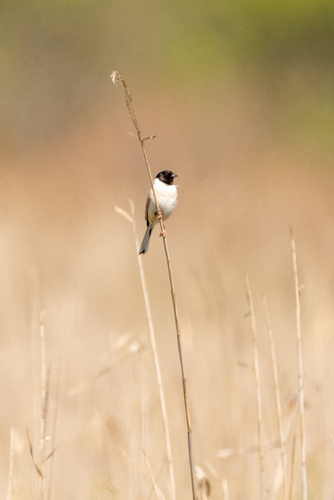


ID tip
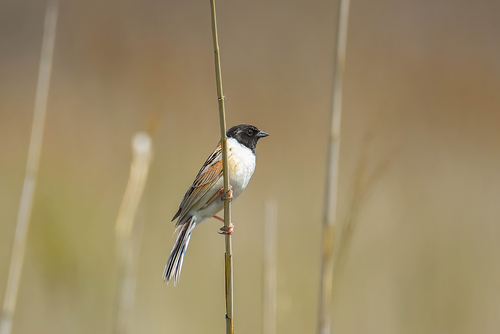
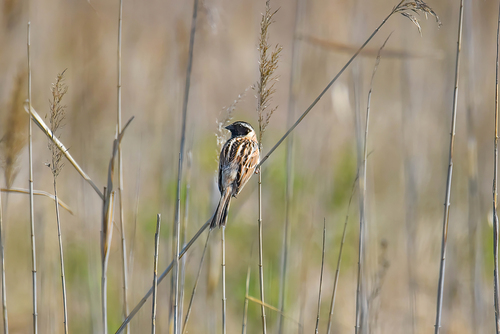
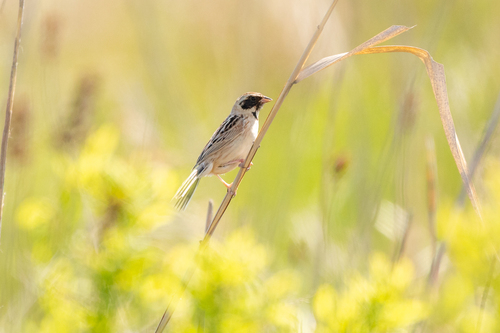
It is 15 cm in length. Typically, it is the richest-coloured of the reed buntings, with the pinkest legs and bill in winter. Adult males have a dark back, chestnut upperparts, and are striped black and buff on the breast and sides. They have a brown nape, and the sides of neck are whitish. Females have a buffy submoustachial and throat, black malar stripes, and a dark brown crown with pale streaking. Juveniles have a pale greyish-brown central crown stripe and a yellowish brown rump. The calls of the ochre-rumped bunting can be transcribed as 'sur-swee-ik' and 'tik'.
Text from Wikipedia, licensed CC BY-SA 4.0.
When to see the Ochre-rumped Bunting
One bar for each month. Filled bars are the 10 months with records; pale bars are months with none. The wide bar is May, the month with the most records.
Where to see the Ochre-rumped Bunting
The map shades 7 countries with regular records, and 1 more in a lighter tone where the bird turns up only as a stray. Everything unshaded has no records. Countries are listed below the map.
Recorded as a rare visitor in North Korea.
About the Ochre-rumped Bunting
The ochre-rumped bunting, also known as the Japanese reed bunting, is a bird in the family Emberizidae. It is found in Manchuria, Korea and Japan. Its natural habitats are temperate grassland and swamps. It is threatened by habitat loss. In South Korea it is classified as an endangered species.
Text adapted from Wikipedia, licensed CC BY-SA 4.0.
Easily confused with
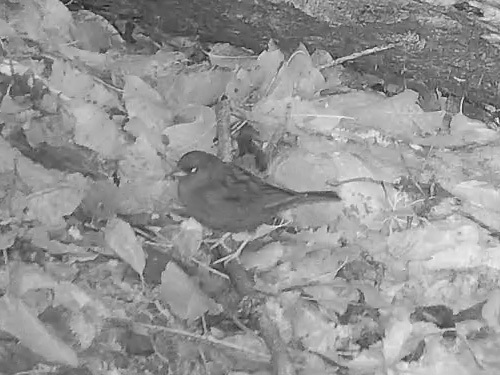 Grey BuntingEmberiza variabilisThe grey bunting is a species of bird in the family Emberizidae.
 Cinereous BuntingEmberiza cineraceaThe cinereous bunting is a large (16.5–18 cm, 21–29.7 g), slim bunting with a long, white-cornered tail.
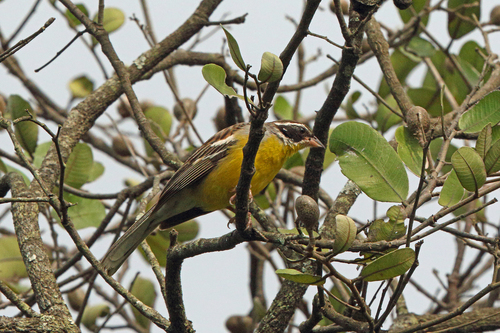 Cabanis's BuntingEmberiza cabanisiCabanis's bunting is a species of bird in the family Emberizidae.
Learn the Ochre-rumped Bunting in the BeakBrain App
Photo and call practice. Coming soon to iPhone and Android.
Play today's Daily BirdEvery photo and recording on this page is credited to its author under the licence shown. Spotted a problem with this page, or have a better photo? Contribute.