Learn what every symbol on the card means.Full credits and sources at beakbrain.com/symbols
 WoodlandCavity nestTiny · 6 g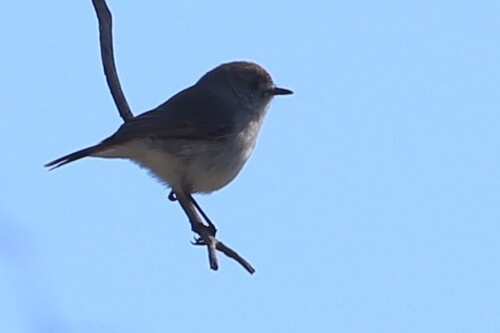

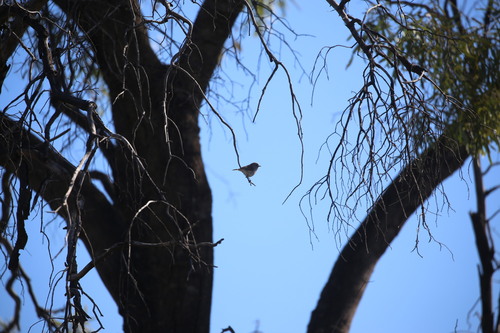
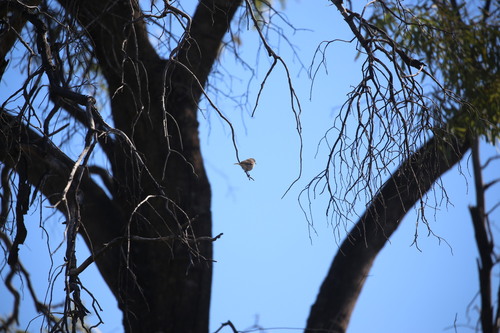
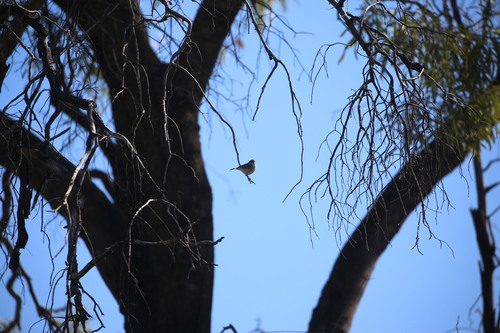
ID tip
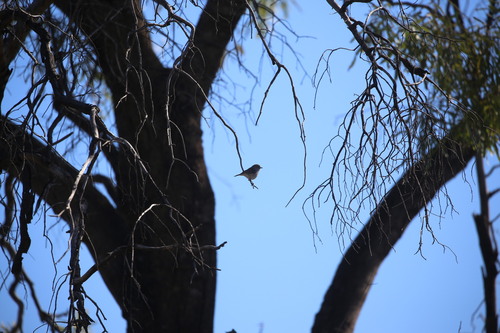
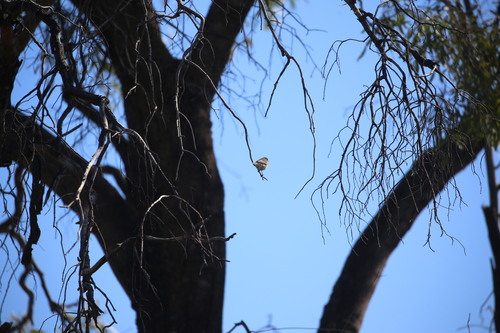
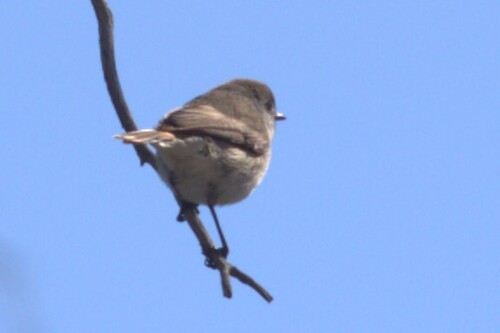
Length: 9.8 cm (9-11); wing span 15.5 cm (14-16.5); weight: 6 g. Mid-sized thornbill similar in size and shape to inland thornbill (A. apicalis) and slaty-backed thornbill (A. robustirostris). Pale and plain with pale iris similar to buff-rumped (Acanthiza reguloides), western (A.inornata), slender-billed (A. iredalei) and yellow-rumped thornbills (A. chrysorrhoa). Pale grey-brown upper, rich chestnut rump and mostly black tail with pale tips, pale mottled ear-coverts and rufous suffusion on forehead and crown. Plain whitish underbody. The sexes are alike, with no seasonal variation.
Text from Wikipedia, licensed CC BY-SA 4.0.
When to see the Chestnut-rumped Thornbill
One bar for each month. Filled bars are the 10 months with records; pale bars are months with none. The wide bar is October, the month with the most records.
Where to see the Chestnut-rumped Thornbill
The map shades 1 country with regular records. Everything unshaded has no records. Countries are listed below the map.
About the Chestnut-rumped Thornbill
The chestnut-rumped thornbill is a small passerine bird in the family Acanthizidae, endemic to Australia.
Text adapted from Wikipedia, licensed CC BY-SA 4.0.
Easily confused with
 Inland ThornbillAcanthiza apicalisThe inland thornbill is very similar to the brown thornbill (A. pusilla) in appearance, and these two species are sometimes considered conspecific.
 Buff-rumped ThornbillAcanthiza reguloidesThe buff-rumped thornbill is a small passerine bird species belonging to the genus
Acanthiza, most of which are endemic to Australia.
Buff-rumped ThornbillAcanthiza reguloidesThe buff-rumped thornbill is a small passerine bird species belonging to the genus
Acanthiza, most of which are endemic to Australia.
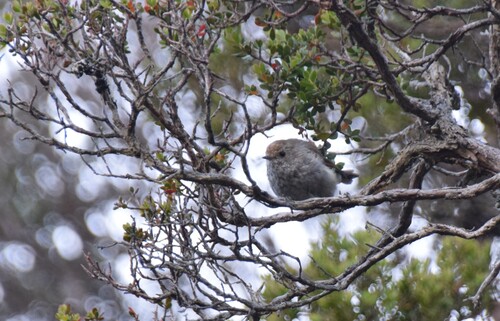 Tasmanian ThornbillAcanthiza ewingiiThe Tasmanian Thornbill is olive-brown above, darkening toward the back and tail, and can exhibit a patch of reddish-brown colouration on the forehead.
Side by side: Chestnut-rumped Thornbill vs Inland Thornbill · Chestnut-rumped Thornbill vs Tasmanian Thornbill
Learn the Chestnut-rumped Thornbill in the BeakBrain App
Photo and call practice. Coming soon to iPhone and Android.
Play today's Daily BirdEvery photo and recording on this page is credited to its author under the licence shown. Spotted a problem with this page, or have a better photo? Contribute.