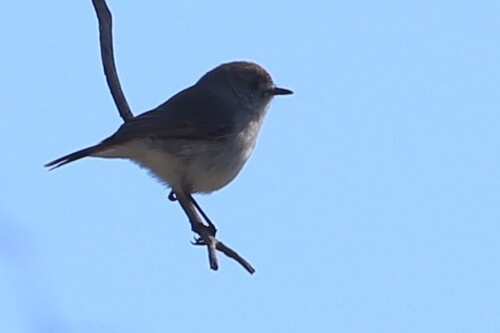
Chestnut-rumped Thornbill
Acanthiza uropygialis
Length: 9.8 cm (9-11); wing span 15.5 cm (14-16.5); weight: 6 g. Mid-sized thornbill similar in size and shape to inland thornbill (A. apicalis) and slaty-backed thornbill (A. robustirostris). Pale and plain with pale iris similar to buff-rumped (Acanthiza reguloides), western (A.inornata), slender-billed (A. iredalei) and yellow-rumped thornbills (A. chrysorrhoa). Pale grey-brown upper, rich chestnut rump and mostly black tail with pale tips, pale mottled ear-coverts and rufous suffusion on forehead and crown. Plain whitish underbody. The sexes are alike, with no seasonal variation.
ID text from Wikipedia, CC BY-SA 4.0

Inland Thornbill
Acanthiza apicalis
The inland thornbill is very similar to the brown thornbill (A. pusilla) in appearance, and these two species are sometimes considered conspecific. The brown thornbill is slightly smaller than the inland thornbill at approximately 10 cm (3.9 in) compared to 11.5 cm (4.5 in). The inland thornbill has white speckling on the forehead, while the brown thornbill has rufous speckling and is less grey than the inland thornbill. Range and habitat is the easiest way to differentiate these two species.
ID text from Wikipedia, CC BY-SA 4.0
Where you might meet both
Learn this pair in the BeakBrain App
Photo and call practice. Coming soon to iPhone and Android.
Play today's Daily BirdPhotos and recordings are credited to their authors under the licence shown. Full profiles: Chestnut-rumped Thornbill and Inland Thornbill.